
Tibet, Shangri-La, Roof of the World, a country over two-thirds the size of India or more than two and half times the size of Austria, Denmark, France and Germany put together. A country with a distinct race, with its own spoken and written language, culture, traditions, food and dress. In 1959 the population of Tibet was estimated at six million. Today, more than 150,000 of them live in exile.
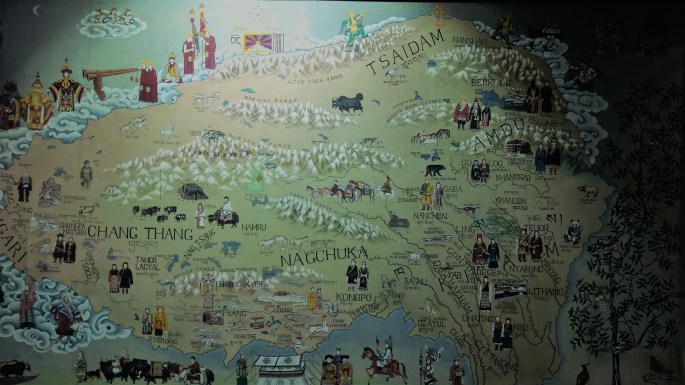
This picture was taken during our visit to the Norbulingka Institute, whose mission it is to preserve the Tibetan arts and culture. For the first time I saw how large Tibet is and how diverse is its culture and traditions that date back to centuries ago.
Norbulingka is not meant for the camera-happy, selfie-crazy species of tourists, a fact which met with my instant approval. Only those who are genuinely interested in knowing about the Tibetan arts and crafts, their history and way of life, visit here. Its quiet, serene environs consist of intricately designed gardens spanning three levels, that branch out with perfect symmetry, gurgling streams that flow past little little bridges and at the centre of it all- the temple.
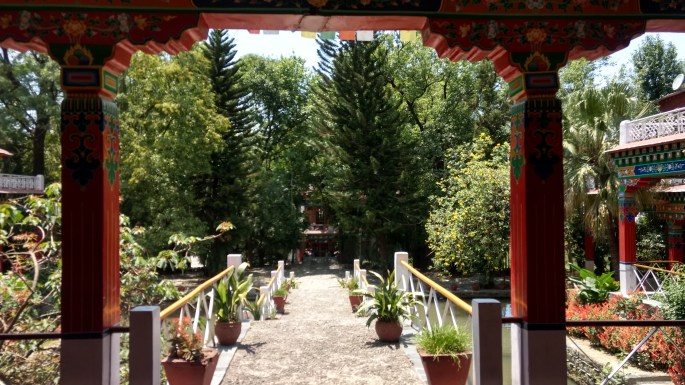

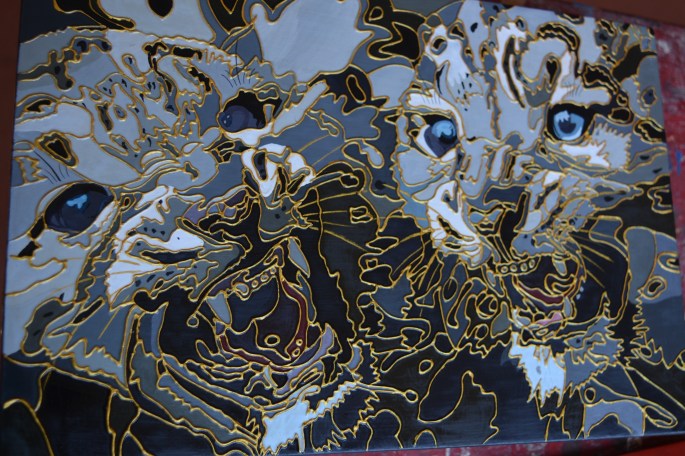
The Tibetans have made every attempt to preserve their ancient art and craft forms. There are workshops where visitors can view the artisans at work; woodcarving, wood painting, tailoring, weaving and statue-making.
My favourite section was the Losel Doll Museum with its collection of collection of over 150 dolls dressed in traditional costumes from various regions of Tibet. It was an eye-opener, a glimpse into the richness and diversity of life on the Roof of the World.

The very same diversity of culture that the Tibetans are valiantly trying to preserve and pass on to future generations. Already, with the passage of time, as their years in exile stretch ahead with no end in sight, they are slowly losing parts of their language and way of life, being compelled to take on those of the countries which have offered them refuge.
The people of Tibet are living in exile- both within their country and outside of it. Those who managed to escape their oppressors can never return. Those who stayed behind are being inexorably assimilated into the ways of the ones who oppress them. They are losing their very identity. If this goes on, a rich culture and a race will get wiped out. For, how can a culture and its traditions survive without the land that binds it to the people? Or…can it?
 butterfliesonmymindblog