During our stay at Landeda, we ambitiously volunteered to cook an Indian meal for our hosts; an offer they accepted with alacrity by inviting a few of their friends as well. We drew up a menu and made a list of the ingredients required, which was when it began to dawn on us that we just might have bitten off more than we could offer our guests to chew.
The menu was simple:
- chicken curry
- cauliflower-aloo
- peas pulao
- raitha
- rotis
Then we began to go through the ingredients we would need v/s what we could get. This is where things began to look complicated. Here’s a look at where we stood:
| Ingredient | Availability | Dimension/ Quantity/Flavour | Utility |
| Chicken | Yes | As required | Yes |
| Cauliflower | Yes | Very large, bland | Yes |
| Potatoes | Yes | As required | Yes |
| Onions | Yes | -Pink and sweet OR
-White and bland
|
Not really, but we have to make do |
| Tomatoes | Yes | As required, juicy red | Yes |
| Ginger | Yes | Large and bland | Not really, but we have to make do |
| Garlic | Yes | Large and bland | Not really, but we have to make do |
| Spices (Whole) | Yes | As required. (carried from here) | YesYesYesYesYes!!! |
| Spices (powdered) | Some | As required, bland | Not really, but we have to make do |
| Flour | Yes (refined and silky smooth) | As required | NO! can’t make rotis out of maida |
| Cooking oil | Yes | As required | Yes |
| Cucumbers | Yes | As required | Yes |
| Green peas | Yes (frozen or tinned) | More than required (tinned ones tiny and pale green, frozen- only 1 kg packs) | Not really, but we have to make do |
Next, we moved on to the tools and utensils. This is where things become more complicated:
| Tool/Utensil | Availability | Dimension/
Quantity |
Utility |
| Cooking pans for chicken, cauliflower and rice | Yes | Large, as required | Yes, thank God |
| Mixer-Grinder for ginger, garlic | No | NA | NA |
| Mortar and pestle for above | Yes | Wooden, small and lightweight | Very little |
| Rolling pin | Yes | Very large | ONLY for rolling out pastry dough. |
| Flat surface for rolling out rotis | No | NA | NA |
| Flat pan for making rotis | Yes | Yes | Non-stick but manageable |
| Tongs for flipping rotis | No | NA | NA , used spatula instead |
| Flame for roasting the rotis | No | NA | We made do… |
| Grater for ginger and garlic (to be used along with lightweight mortar or pestle) | Yes | As required | We made do… |
We spent the better part of the morning peeling and chopping or grating and pounding. The only tool we were confident of handling was…the chopping board. Everything else was learnt – the best example being the electric stove with 4- burners. Each burner came with its own size, settings and knob. It took us some time to discover which went with what and how, till we finally decided to figure things out as we went along.
Meanwhile, the cauliflower-aloo was still looking pale and colourless, the onions were taking forever to brown and the dough for the ‘rotis’ ended up as a sticky lump. We began to panic.
Finally, my friend, who’s the determined and innovative sort, took out the largest saucepan, upended it and rolled out the ‘rotis’, while I made them into something that was a combination of a ‘roti’ and a ‘paratha’
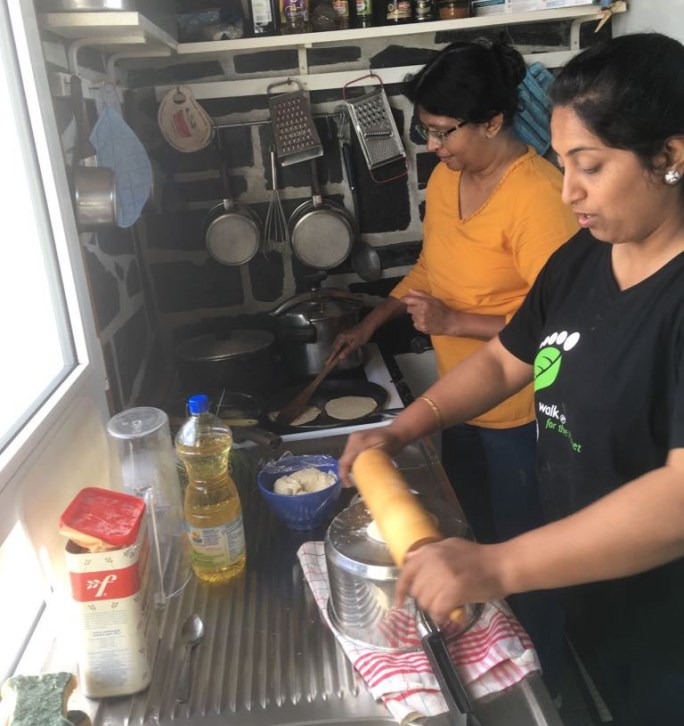
By which time the entire kitchen and living-room was beginning to smell like home. And we had learnt to never take our humble chakla-belan-tava-kadhai for granted, ever again.
We also discovered that cooking by trial and error in an unfamiliar kitchen can be great fun. And that much pleasure can be found in the simplest of tasks. Perhaps our laughter added flavour to the food, because the meal was a success and greatly appreciated by one and all. Hooray for home-cooked food!
And to all those wanting to cook home-type food abroad: carry your own home-type spices and mixes.
 butterfliesonmymindblog