Google informed me that today happens to be the 87th birthday of Amrish Puri, and clicking on the doodle led me to a page detailing his life and his filmography. I scrolled through the 400 films he had acted in and the villainous characters he had essayed. I didn’t linger over names like Rakka, Jaggu Ustad, Zalim Khan, Baba Bhaironath and of course, Mogambo, but one was remarkable because it was so unlike the others- Chief Instructor Varghese.
From there it was but a step to YouTube and this forgotten gem of a film that I had seen decades ago- ‘Vijeta’. Long before ‘Top Gun’ or ‘Lakshya’ and certainly much before surgical strikes or Wg. Cdr Abhinandan had even made headlines, here was a beautifully made film that was about the Air Force just as much as it was about its characters.
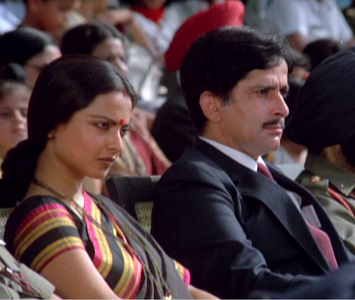
Released in 1982, ‘Vijeta’ was directed and impressively shot by Govind Nihalani. It’s principally the coming of age story of a confused and rebellious teenager who joins the forces and his journey of self-discovery. The film stars Shashi Kapoor and Rekha as the parents of Angad (Kunal Kapoor), who apart from all the teenage angst, is also affected by the simmering tension that exists between his parents. Since he has no clue as to what he wants to do in life, his uncle (Om Puri) suggests he join the NDA. Once in NDA, he makes it through the grueling three-year course, makes good friends and discovers that he has both determination and a fighting spirit.
He joins the Air Force and also falls in love with the truly delightful Anna (Supriya Pathak), daughter of his flying Instructor- Group Captain Varghese. (Amrish Puri, looking uncannily like a Varghese, if you get what I mean!) The rest of the film is about how he overcomes his fears to become a fighter pilot, how he works out the kinks in his relationship with Anna, his father and himself.
The film left an impact on me at many levels and for varied reasons. It’s quite a list, so bear with me:
1. NDA.
2. NDA
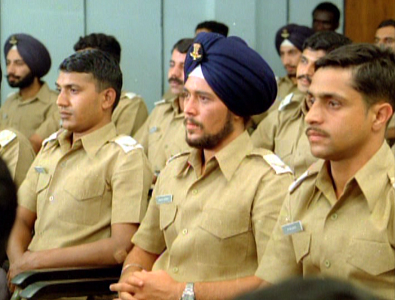
3. NDA. Yes, a large part of ‘Vijeta’ was shot in NDA, I remember how excited my friends and I had been,and how eagerly we used to hang around the Officer’s Mess, hoping for a glimpse of the stars. When the film released, we wanted to watch it just to see our beloved NDA on screen. Even though we were still living there! What a thrill it was to see familiar places on the big screen! And how nostalgic I felt to see it all again. The sight of Angad and his friend doing a punishment run along one of the roads made me smile. Watching the Passing out Parade brought a lump to my throat once more. This time I also recognized the imposing pillars of St. Mary’s Church, Pune, it’s stained-glass windows and the altar where Anna goes to pray for her dying father.
4. I absolutely loved how subtly and seamlessly the film put across the message of national integration. Shashi Kapoor (Nihal Singh) was a ‘cut’-Sikh who had lived through the horrors of Partition, his wife Rekha (Nileema) was a Maharashtrian (a Punekar!!), and their son Angad had been brought up a Sikh on the wishes of his ‘Beeji’. Angad’s friends in NDA are Wilson, Aslam and Venkat. And his Flying Instructor is a Varghese as is his girl-friend. No religion is highlighted or stereotyped. Nor is any community. Everyone just IS. Their lives intertwine and play out and take the viewer along.
5. The relevance of ‘Vijeta’ is more so today than it ever was. Angad is conflicted before going to war (Indo-Pak War of 1971) because he is aware that he will be dropping bombs on the land of his ancestors. His father and Anna wait anxiously by the radio for news about the war and on one occasion the father tells Anna that riots are worse than war. He says that during war, the enemy is unknown, but during riots you are fighting someone who was a friend or a neighbour. When Flying Officer Aslam Khan’s aircraft is shot down he ejects and lands on the Indian side of the border. But he finds it difficult to convince the villagers that he is not the enemy. They are ready to beat him up because; as they say, across the border their own people are also beaten up and tortured. Only the old ‘sarpanch’ tries to stop it from happening. Luckily an IAF helicopter arrives and rescues him.
6. For a film shot in and around 1982, the cinematography is amazing. The aerial photography of combat aircraft, in flight, in operation, is a fitting tribute to the air force (the film released in the golden jubilee year of the IAF). The climax showing the combat between the aircraft above and the enemy tanks below is gripping even today. Angad is no Maverick nor are the other pilots Goose or IceMan or ‘Cougar’. They look and feel real and that’s what makes them heroic. War is not glorified and the victory is over ones fears and weaknesses.
7. There are no heroic speeches, no grand gestures, no drama. I don’t think there were even voices raised! Or wailing music and tears. Angad at the deathbed of his ‘Beeji’, losing his mother in an accident, Anna at the grave of her father and later seeing off her young pilot friends as they leave for the border, all these episodes are so quietly wrenching that any added effects would be more of an intrusion. Even at the end when Angad is lost in the desert after his plane has crashed and his father is in hospital with a stroke, he sees his father in a vision exhorting him to get up, to live. “Mrtitunjay arpan, vijeta arpan” (May you conquer death and emerge victorious) says his father. The final scene is the father opening his eyes in hospital to see his son standing at his bedside. They have both faced death and they are both ‘Vijeta’
FOOTNOTE: Chemistry be damned, I think Shashi Kapoor and Rekha made a far more endearing couple than Amitabh and Rekha!
 butterfliesonmymindblog