“In every curving beach, in every grain of sand, there is a story of the Earth.”
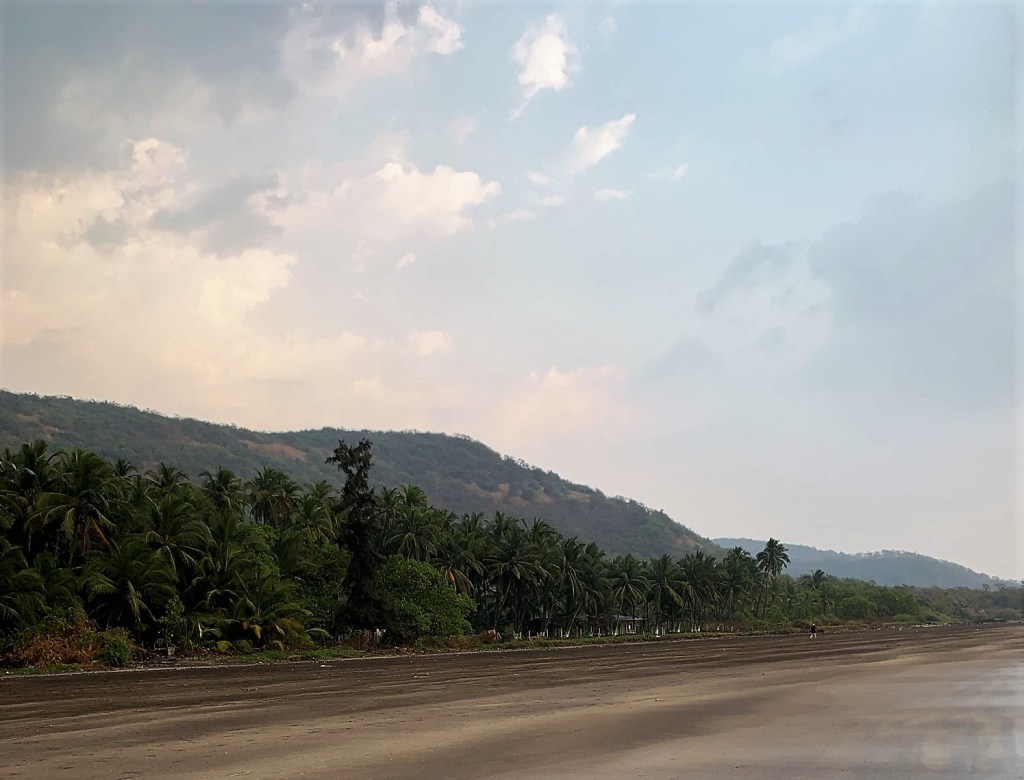
Who would have thought that beaches can have so many stories to tell? We see them as sandy or rocky, smooth or rough, white or golden and (unfortunately) polluted or clean. After visiting the beaches at Dapoli, I added ‘black or grey’ and ‘with or without patterns in the sand’ to the above list. And then I started surfing the net to find out why some beaches have black sand.

And here’s what I learnt, or at least what little I could make out. All this sand is what’s happened to rocks due to weathering and erosion; over thousands, maybe millions of years. These rocks have journeyed down rivers, bumping and breaking down along the way. Once they reach the oceans, the waves and tides get into action, eroding them even further. Voila- sand. Which is washed up on beaches and left there for humans to build castles in.
Anyway, black sand comes from volcanic material like lava and other dark coloured rocks found in the vicinity volcanic activity- think molten lava bubbling up from the depths of the earth, cooling down and then getting eroded over millions of years as the waves toss them around, buffeting them till they become grains of sand that form the beaches along our coastlines. Wikipedia knowledgeably informs me that the Deccan plateau – where this beach is situated- lies on basalt rocks that were formed during an eruption 66 million years ago. I suppose that would account for the colour of this sand. Surprisingly, the beach right next to this one has white sand. It’s a mystery!
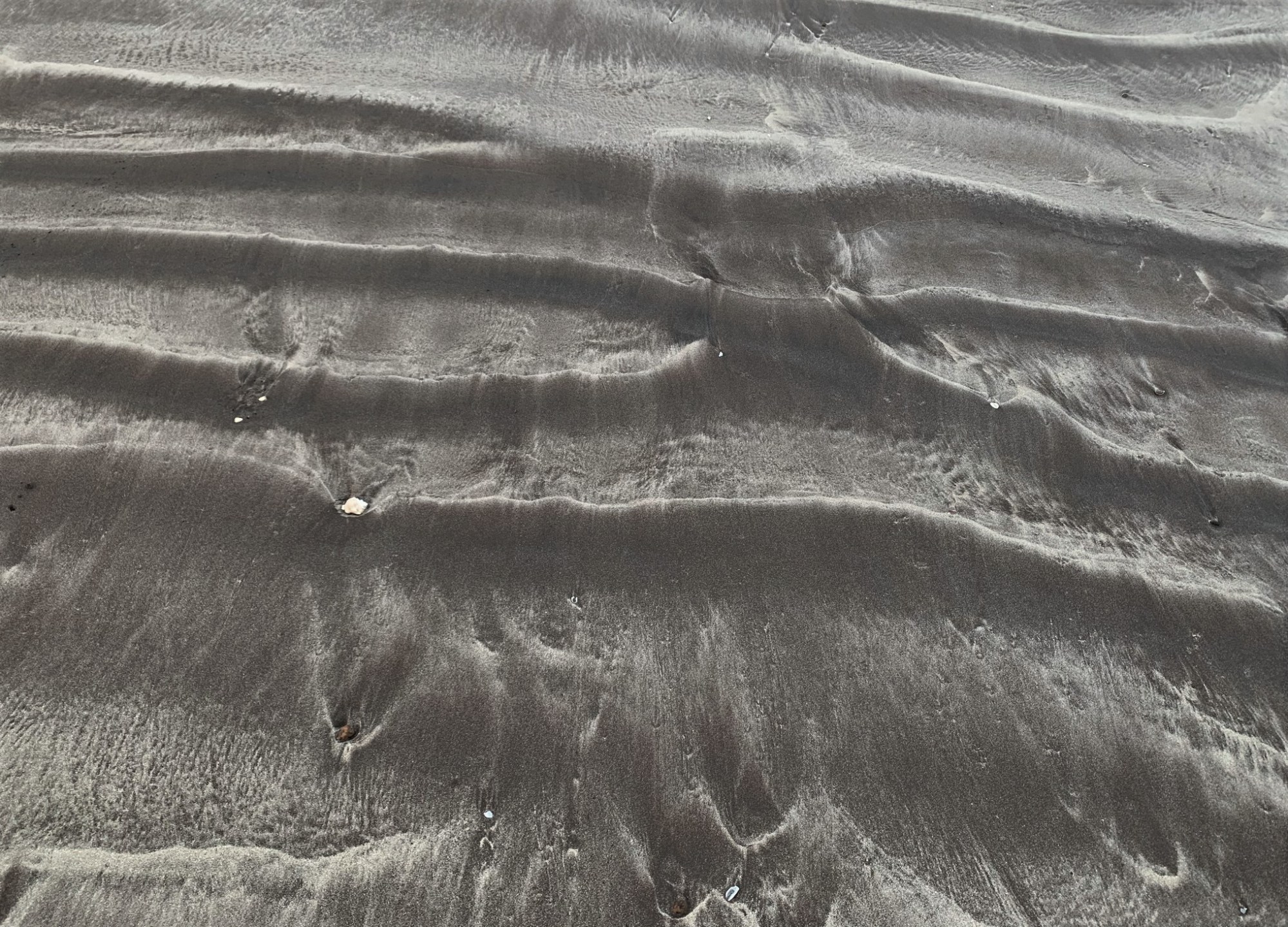
Another thing that puzzled me were the different patterns and ripples that I saw on some stretches of the beach.


Apparently, the same ripples and patterns can be seen in ancient seabeds, petrified for millions even billions of years. According to researchers from MIT- the spacing between ripples is proportional to the depth of the water and the size of the waves that molded the underlying ripples. https://news.mit.edu/2018/beach-sand-ripples-ancient-weather-0928
According to some geologists, wave conditions create these ripple effects. And by studying these patterns, they can make out all sorts of interesting details, such as the size of the waves, depth of the water and the tides or storms that occurred and caused a change in the seabed. Not all geologists think the same. For some, these patterns reveal nothing more except for the fact that waves passed from there. But I prefer to believe the other ones. I like to think that the patterns in the photographs above could be millions of years old!

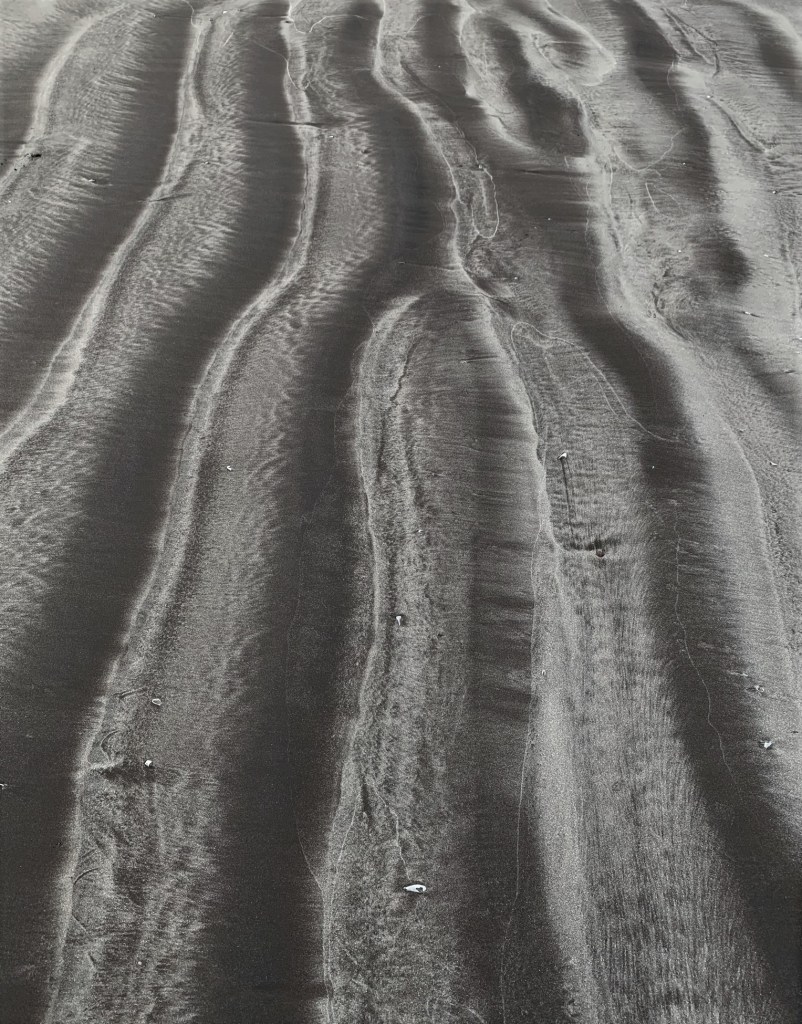

I wonder, should I visit this beach again next year to see if the patterns are still there? Or have been washed away by the rains and the tides? Maybe they aren’t formed on the sediments of a million years after all. Or maybe they are- I’d rather not know either way. Let the mystery remain.
 butterfliesonmymindblog