
Based on the novel written by Jhumpa Lahiri, The Namesake is a gentle, evocative film. The pace is slow and lingering, with no dramatic moments or dialogues. But it’s a film that stays with the viewer long after it gets over.
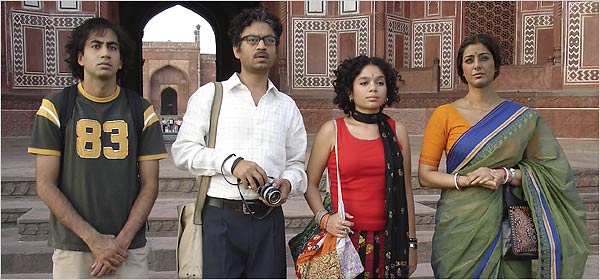
The film is set in New York at a time when the dollar was worth 8 rupees- yes, that long ago! America was the land of opportunity and the supply of gas in the kitchen was ‘for 24 hours’. It was also a cold, lonely place for the newly married Ashima (Tabu in a lovely, understated performance) who arrives there with her husband Ashoke (Irfan Khan, as stellar as always). They proceed to build their life there as first generation Indian immigrants: Indian food, Bengali friends and traditions, even clothes; Ashima is always dressed in a sari.
(I had read the book before watching the film so the concept of ‘dak’ or pet name and ‘good’ name had already been introduced to me). Ashima and Ashoke have a son who they name Gogol because the hospital wouldn’t let them leave until the baby’s name was registered. And the letter from India with the ‘good’ name had not yet arrived. So Gogol aka Nikhil grows up with the name of a Russian novelist without really knowing why he was thus named. There’s an amusing scene when he wonders why he couldn’t have been named Leo or Anton instead!
One conflict arises when young Gogol finds himself the target of taunts because of his name and finally changes it officially to Nikhil. It’s only later that he learns from his father the reason why he was given that particular name in the first place. The other conflict is the age-old one of two different generations trying to navigate two very different worlds- Gogol has a white girlfriend who addresses his parents by their first names. The slight shock and recoil when this happens for the first time is very expressively conveyed by Tabu, without her saying a word.

There are several poignant moments in the film: the scene where Ashoke takes young Gogol to a shoreline and tells him to remember that they went together to a place where there was nowhere left to go, when Ashoke leaves for Ohio without Ashima; never to return, only neither of them know it then or in the end where Ashima says her goodbyes to New York and says that for her; it will always be the city where she fell in love with her husband.
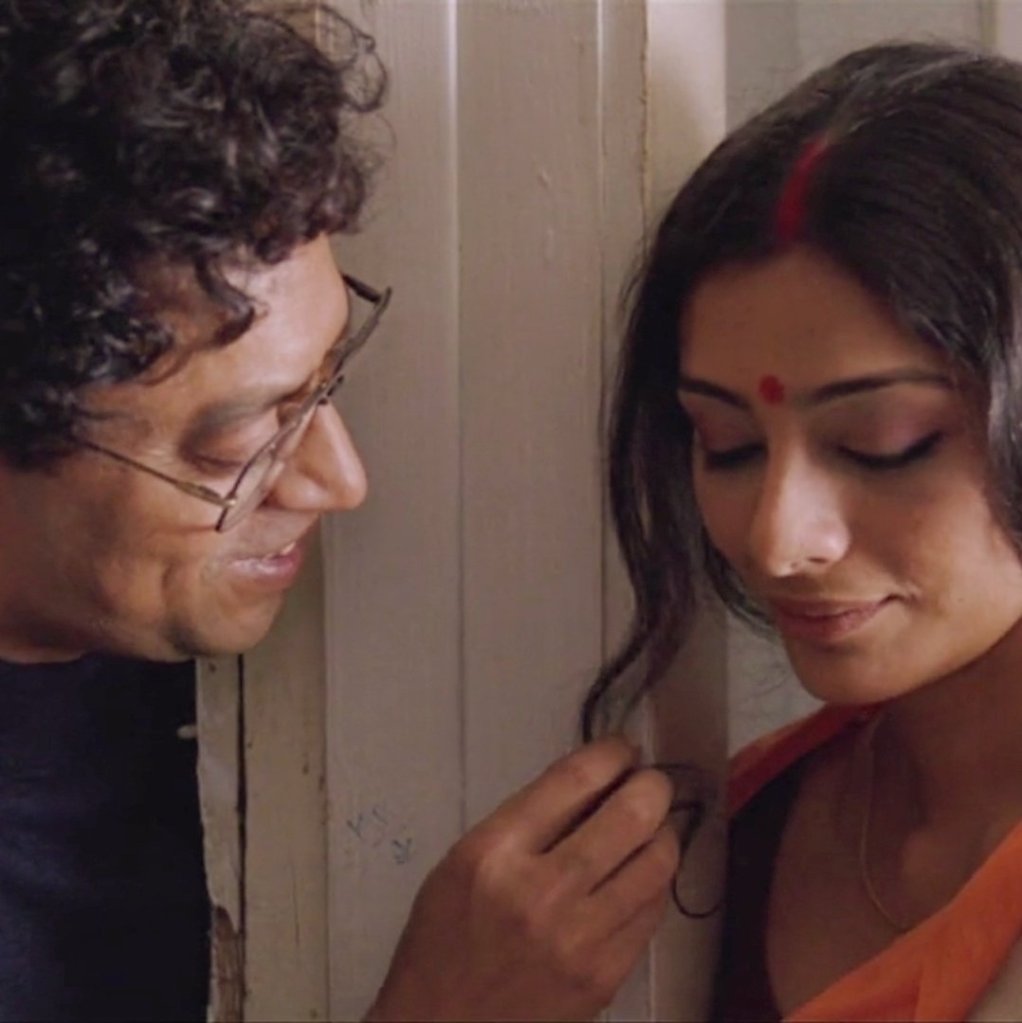
The Namesake is a story of how Gogol comes to terms with his roots and realises the depth of his feelings for the father he had taken so much for granted. It’s a simple story, but the depth lies in what is remain unspoken. The film invites the viewer to soak up the atmosphere of Calcutta with its trams, crowded lanes and the imposing Howrah bridge- a visual delight. Watch it even if you haven’t read the book. But remember- once you do- Irfan and Tabu will become Ashoke and Ashima when you do get around to reading the book.
 butterfliesonmymindblog