
IMDb calls this movie a ‘comedy-drama’, another review calls it a stirring satire and Rotten Tomatoes says it’s a cultural renovation. I say it’s a bit of all the above. But mainly it’s a film that makes you question stereotypes and prejudices. Your own, that is.
But let’s start at the very beginning. Axone or ‘akhuni’ as it is pronounced; is an iconic dish from Nagaland. It’s made with fermented soya bean and pork and is known for its strong, pungent aroma. That’s the dish. Axone is a movie that released in 2019 and is showing on Netflix. It stars actors from the north- eastern states of India and is about the kind of life that immigrants from these states lead in Delhi.

Upasna, Chanbi and Zorem are out early one morning to buy ingredients for the axone. That’s because their friend Minam is getting married that day and they want to give her a surprise wedding feast. That’s it. That’s the story, plot and premise. The main ingredient of axone is the fermented soya bean and it is the one food that connects many different parts of north-eastern India. The other thing that connects them is the prejudices that the people of these regions face when they arrive in Delhi to try and make a life for themselves.
For most of us, the ‘North-East’ is a collection of states that are exotic but remote. What we know about the people who live their, their culture, their history; is a motley collection of stereotypes. Axone- the film- brings together many of these stereotypes when the characters in the film try to prepare axone- the dish.
From racial slurs to sexual abuse, violence, taunts and insensitive, thoughtless remarks or ‘humour’ Upasna and Chanbi maneuver their way around all of these as they plan the wedding feast. The first obstacle is -the aroma. Their landlady has told them that they are not to prepare any ‘stinky’ food on her premises. She is already extremely suspicious of their male visitors and is vociferous in her refusal to allow a wedding party in their room.
There are many other characters in the film- all from different parts of the north-east and played by actors from the north-east. Surprise! Surprise! (Remember the film in which Mary Kom was played by Priyanka Chopra?!) There’s Bendang, a musician who was a victim of racial violence, Zorem who runs a shop selling food items for the migrant north-eastern community in Delhi. All of them speak different languages and belong to different tribes or communities. But they are united as the ‘outsiders’ in a city which feels alien to them. They try to create their own space, a sense of home and of belonging. Upasna is the only one who as a Nepali; does not really belong. She is the outsider in the group and in the city.

At the end, Minam’s friends do manage to prepare the axone for her- on an old-fashioned stove on the terrace of a building; so the stink won’t offend the nostrils of the residents. The wedding ceremony itself is a surprise because it takes place online. The groom is not in Delhi but at his home in the north-east. The bride’s sister stands in for her during the ceremony. And the ceremony is performed according to some ancient ritual which is no longer practiced.

The film makes several statements on racial discrimination, intra-racial discrimination (among the various tribes in the north-east), and the casual racism that we have all at some point indulged in; unknowingly or foolishly. It certainly made me do a rethink about the concepts of ‘acceptance’ ‘belonging’ ‘assimilation’ and ‘being the other’. The motto ‘Unity in Diversity’ is all very well in text-books and speeches. But to actually live up to it requires a lot of effort, introspection and empathy.
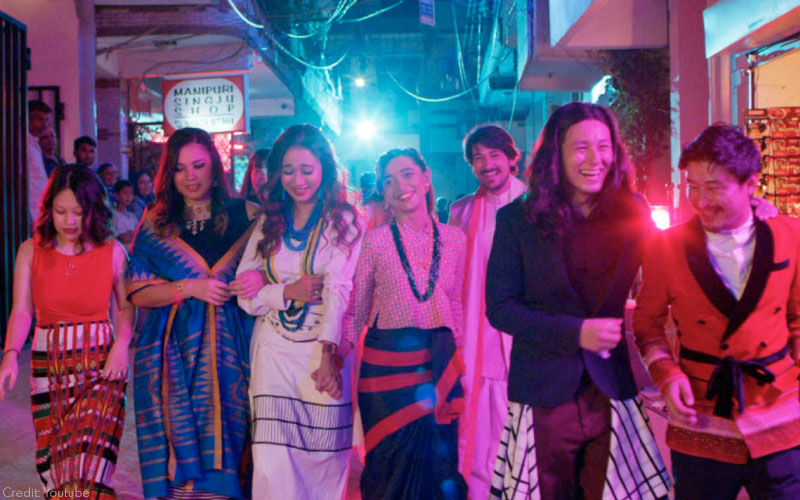
What I liked best in the film was the last part where all the characters, dressed in their best, walk down the dingy lanes of their neighbourhood on their way to the online wedding ceremony. Each one of them differently, beautifully dressed. And not a single dress like anything that we have ever seen.
Watch the film but be prepared to do some soul-searching afterwards. But since it’s a film that centres around food, the soul-searching will also be quite palatable.
 butterfliesonmymindblog