
A Chinese proverb advises “Don’t listen to what they say, go see”. The more I travel, the more I realise the truth of this. Yes, travel expands the horizons and broadens the mind but for me, it works more in reverse. I read up a little about a place before visiting it and on my return; hunt down more information about it because the visit has stirred up my curiosity and interest even more. And I’m going to stick my neck out here and say that my way is better. What’s the point of knowing all about a place before going there? It would take away the thrill of discovery and the excitement of seeing something new. Far better to head to a place with some tidbits of information as an appetizer so the actual visit becomes the main course. And then, on returning; indulge in some more findings as the dessert. Oh, and leave space for the next visit!
My trip to the Kaas plateau or ‘Kaas Pathar’ as it is locally known, was a bit like this. Apart from the basics about this ‘plateau of a million flowers’ I didn’t know much else. My search on the internet threw up the usual travel sites rhapsodizing about the 850 species of endemic flowers that carpet the plateau towards the end of the monsoon. They waxed eloquently about how the plateau is a UNESCO World Natural Heritage Site. And they flooded the viewer with a slew of dazzling photographs of the numerous flowers that can be seen there. Yes, quite a menu. But my jaded palate was left unmoved. So, when I visited Kaas, it was after a few appetizers- a handful of salted peanuts, at best.
And now that I’m back after the main course and longing for dessert, I went in search of some on the net. After scrolling past dozens (and dozens) of sites all breathlessly eulogizing the place with titles like ‘What to see’, ‘How to get there’ and ‘Where to stay’, peppered with the usual photographs, I finally landed on some that actually gave out information about Kaas. So, here is some that I found the most interesting. The photographs are all mine, and links to the articles are given at the end. My answer to the question ‘What’s so khaas (special) about Kaas Pathar- Part I’ is: The History and the Geography.
THE HISTORY
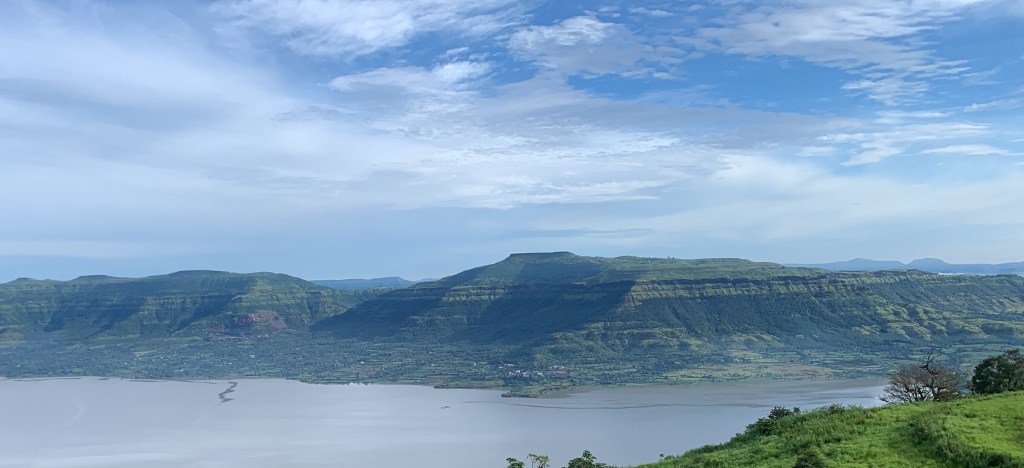
- Kaas is a part of the Deccan Plateau which is a volcanic plateau.. The Deccan Plateau has, over a period of 200 million years, seen some of the longest flows of lava on earth. Twenty-nine times lava erupted from the fissures in the land from where it spread across what are now the Western Ghats of India. When the lava finally stopped flowing, valleys and gorges began to form because of water erosion. Many slopes of the Sahyadri mountains have layers that reveal the time-zones that they have endured.


2. THE GEOGRAPHY
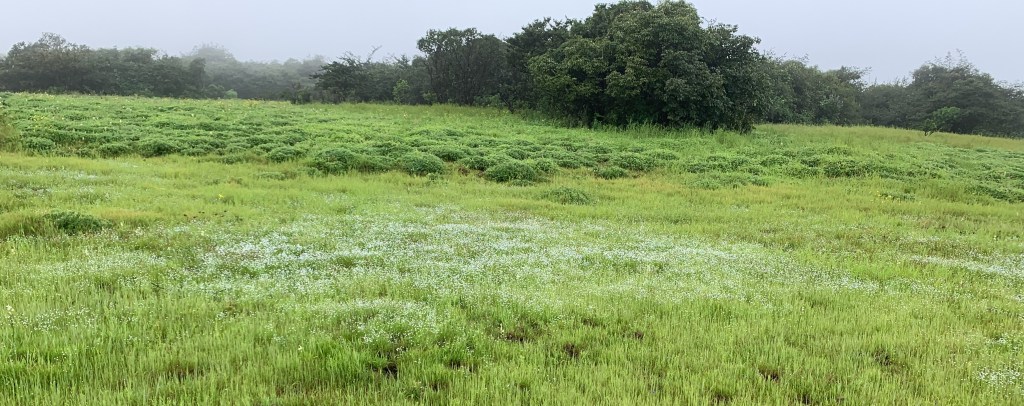
Kaas plateau is a flat, rocky surface of a mountain and is covered by a thin layer of soil. It has hardly any vegetation, for obvious reasons. But it lies in a region that gets around 2500 mm of rainfall in just about 3 months. And it is this life-giving rain that transforms Kaas Pathar into a marvellous landscape of wildflowers; all of them blooming in profusion and in turns, so the plateau gets a differently patterned and coloured carpet every two weeks or so.
There are many puddles that form on the plateau because of the water that collects on the uneven surfaces. These are home to marshy flora and amphibious flowers. But most of the water seeps through the lateritic layers of rock to accumulate in the valley below.



3. THE NAME
Why is the plateau named ‘Kaas’?
a) Because the local goddess is called Kasani
b) Because the Kaasa tree ((Elaeocarpus glandulosus) grows in the forests around the plateau.
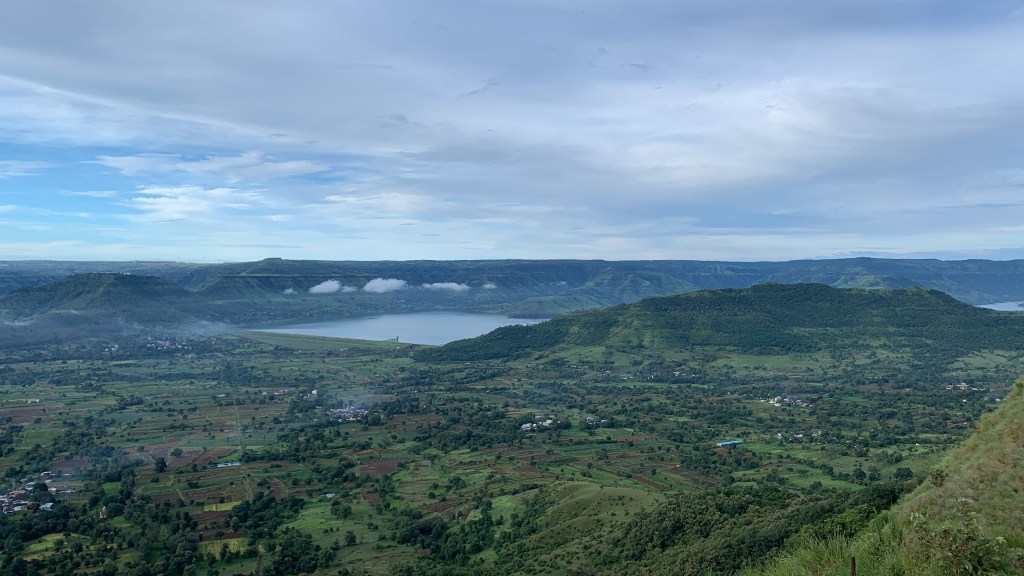
c) Because Kaasa also means lake and there is a lake here which is the source of the Urmudi river and dam.
d) all/any of the above.
4. THE ECOLOGY
The Circle of Life on the Kaas plateau is formed at the start of the monsoon. Once the rains start falling on the thin layer of soil, the thousands of flowers that had been sleeping below it stir to life and emerge in all their glory. Small they may be, but they attract a large number of insects and bees which in turn attract birds and frogs. Then come the biggies- the predators like snakes and eagles. An entire ecosystem is buzzing with activity here: bloom, pollinate, devour or be devoured! The rains cease after three months, the soil dries up and the myriad little flowering plants go underground again, to await the arrival of the next monsoon. The predators also leave and Kaas is quiet once more.
Although we didn’t see too many of the 850 endemic species of the flora or fauna that the travel sites endlessly tom-tommed, I was quite pleased to observe that quite a few varieties in my collection matched the ones displayed on this very informative site about Kaas. Without further ado, here they are!


Disclaimer: I could have done a reverse search on Google Images to get the names of the others but that wouldn’t have made them less or more beautiful so I let it be.
Here are the sites which provided answers to my queries about Kaas
https://heritage-india.com/plateau-of-a-million-flowers-kaas/
Click to access nletter_kaas.pdf
More about what is ‘Khaas about Kaas’ coming up soon. (I hope!)
 butterfliesonmymindblog
Lovely & Informative.
Really Khaas🤗👏👏
LikeLiked by 1 person
Thanks for reading. And liking!
LikeLike
Waiting for the more! Lovely photos.
LikeLike
Enjoyed seeing Kaaba Pathar through your eyes and lens. Looks very beautiful
LikeLiked by 2 people
Autocorrect is terrible – I mean of course Kaas Pathar 🙄
LikeLiked by 1 person
Haha! I get you!
LikeLike