
CONTEXT:
- Chausath or 64 is an important number in tantric rituals. The number 8 is regarded as having great power and it is the square root of 64. Which means that 64 has even greater power and is more auspicious. In tantric literature it is considered sacred, mystical and is used in rituals to acquire magical abilities.
- A yogini can be a goddess or a woman with magic, supernatural powers. Yoginis are considered to be a cult that arose in the 6th and 7th century, gaining in popularity in the 9th century and reaching its peak in the 12th. The origin of yoginis was said to be the small, isolated villages that were scattered around ancient India. Yoginis were their Guardian Goddesses or Grama Devatas. They then transformed and came together in numerical groups of 8. Yoginis do not appear by themselves, nor are they associated with any male deity as a consort, they are self-sufficient and independent. They are warrior goddesses, considered to be representations of the various forms of Goddess Kali because they were formed from her voice, cheeks, forehead and so on.
- Yogini Temples are different from the usual temples- these are circular and open to the sky. The yoginis sat in their own circles to perform their rituals, each had her own seat and they all faced the centre of the temple. At the centre there is usually a main temple dedicated to Lord Shiva, to whom the yoginis owe their allegiance. But the yoginis themselves are independent. They can have any form and any attribute. And since they did not fit into any of the orthodox, patriarchal practices of that era (or the present!) they were also considered as having supernatural powers associated with black magic, destruction and (horrors!) sex or desire. They were also built away from the main settlements as they did not conform to the religious rituals of the day. There were 15 Yogini temples in India, out of which only a few remain standing. The others are in ruins or completely destroyed.
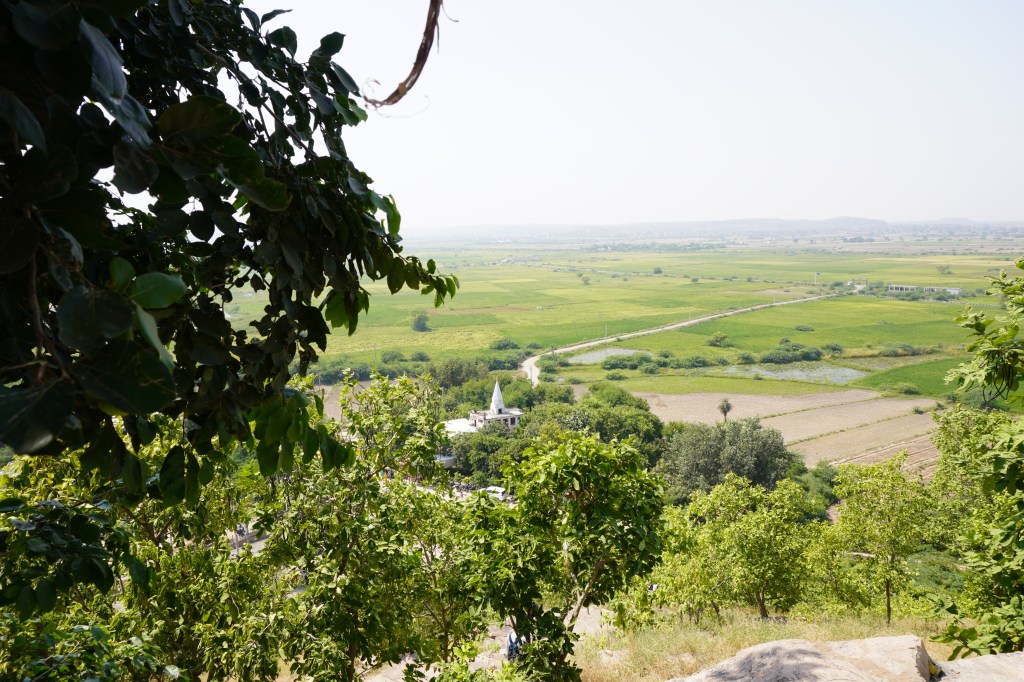
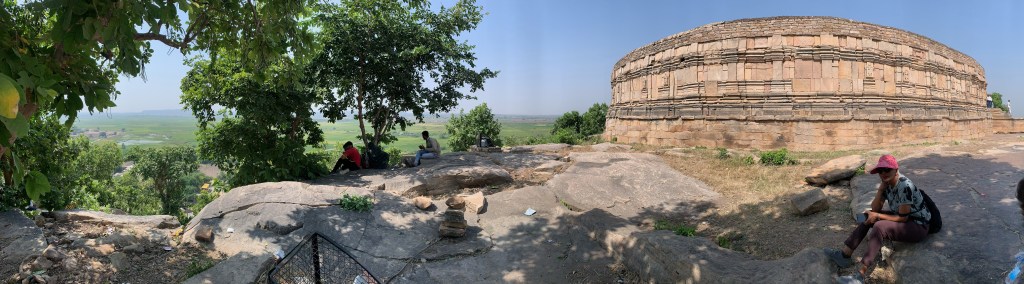
So much for context, now about my visit to the Chausath Yogini Temple of Mitawali. It is located in the Morena district- once notorious for the presence of dacoits- some 35 kms from Gwalior, MP. It sits atop a hill and can be accessed by climbing around a 100 steps. From the top, one can see an expanse of green paddy fields, a few villages, and the mandatory temple.
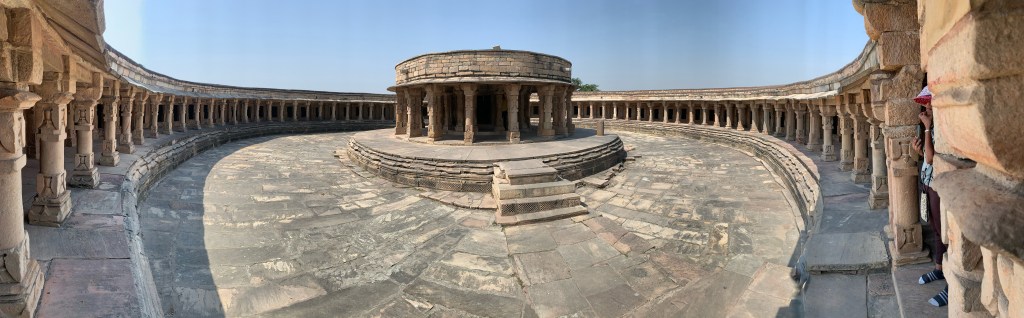
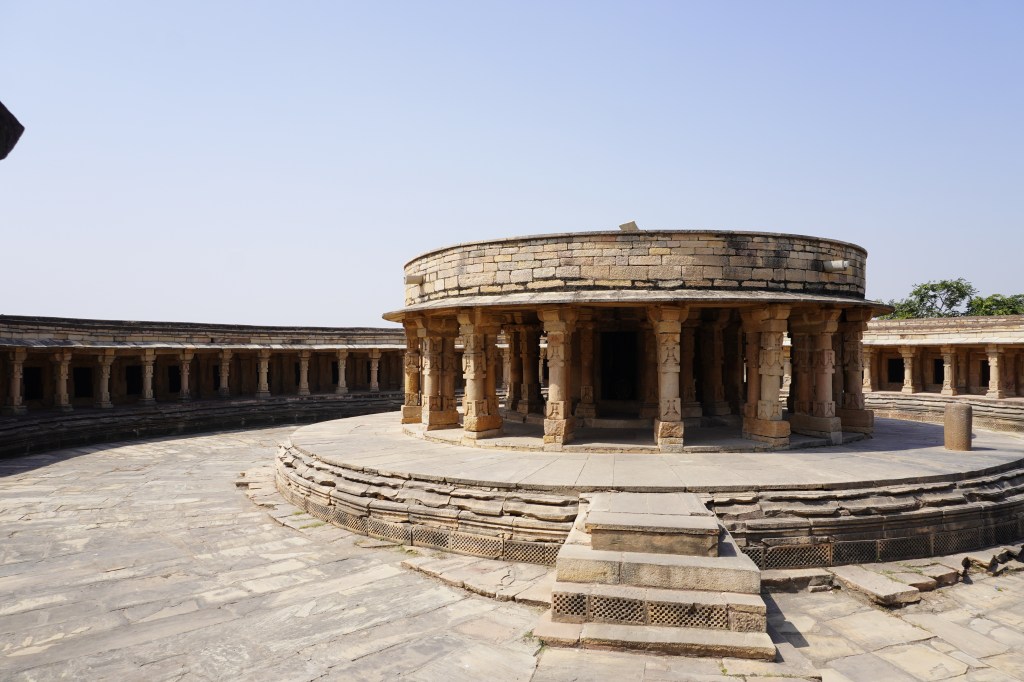
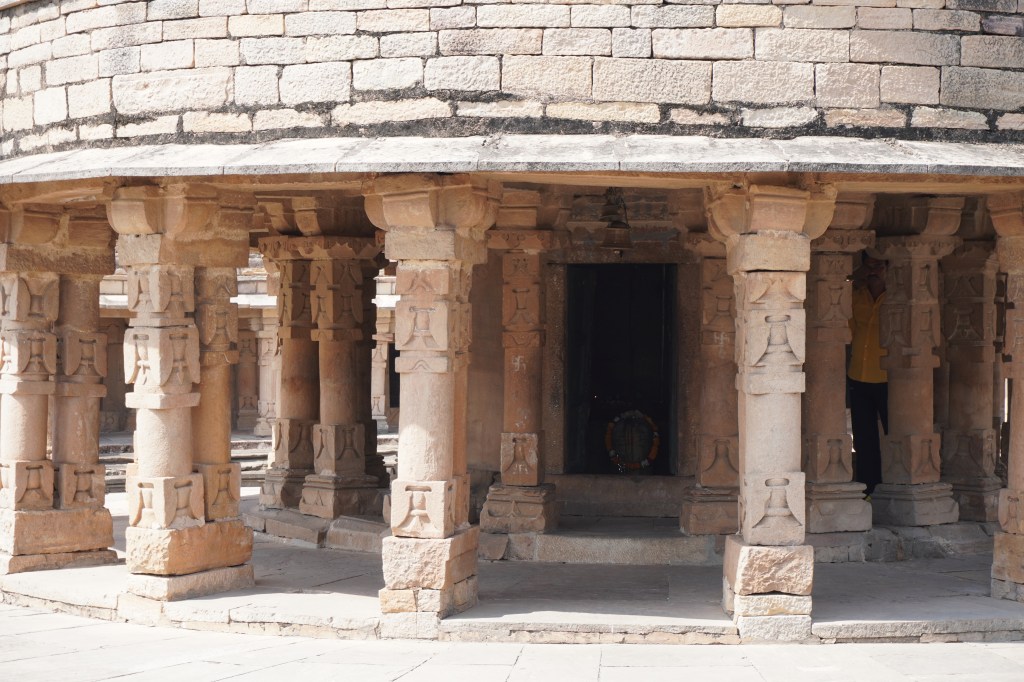
The Chausath Yogini Temple itself is a fascinating structure. The outer, circular wall has 64 enclosures and a passageway that goes around it. In the centre is a smaller, round temple with a Shiva linga. The idols of the yoginis are however missing from the enclosures- they may have been removed (patriarchy rears its head again?) or destroyed.
It is claimed that this is the structure that inspired the Parliament House in Delhi but I am not sure. We had visited the 8th century sun temple in Aihole, Karnataka that also makes a similar claim and is better known. Aside: I wonder, what was the inspiration behind the Central Vista? Hmm…
CONFESSION: When we set out to visit this temple at Mitawali, I had no idea about its fascinating history. Not a clue. It was a hot day, the sun was blazing down and those 100 steps looked like a 1000. My friend had to coax/drag me out of the vehicle to climb them. Had I known that we were about to visit a unique and unusual structure, I would probably have raced her to the top, coming a poor second in the process!
The temple is truly beautiful, even to someone ignorant of its interesting and evocative back story. We walked around the outer circumference, admiring the symmetry of the pillars and the precision of their design. At the time we didn’t know how many enclosures there were so we asked one of the local people who were also visiting. They told us there were a 100, which we believed. Then one of them went all around the structure, counting each one, returned and told us there were 64! And now we know why.
We also encountered a large group of school children who had been brought there for a field trip. They were scampering up and down the steps like goats, perching on the edge of the hilltop for pictures, while their teachers tried to marshal them into some order. One of them; after observing the view from the top, turned to a teacher and asked’ ” Ma’am, hum yahan kyun aayen hain?” (Why have we come here?) The question, so typical of a student, took me right back to my teacher days and I gave the harried Ma’am sympathetic look, laughing inwardly all the time.
It’s true- we have to know so much to realise how little we know. Every time I travel, I understand that a little better. Every trip leaves me with mixed emotions: wanting to go back to the same place and absorb more of it, and an urge to move on, visit different places and have new experiences. Either way, the learning continues.

 butterfliesonmymindblog
Quite intriguing!
LikeLike
Wow. Deeps. Interesting. Wonder since when the focus of the temple has moved from the yoginis to Shiva?
LikeLiked by 1 person
Probably after the 12th century, which was the peak of the yogini cult?
LikeLike