
Through the centuries, Malwa region in Central India changed hands several times. It was ruled over by the Parmars, the Sultans of Delhi, the Mughals, the Marathas before ending up as a princely state controlled by the British. It was Dilawar Khan Ghuri who formally established the Sultanate of Malwa in the 12th century with its capital at Dhar. This was later shifted to Mandu which was renamed Shadiabad. Renaming places appears to have been popular with rulers, hundreds of years ago as well!
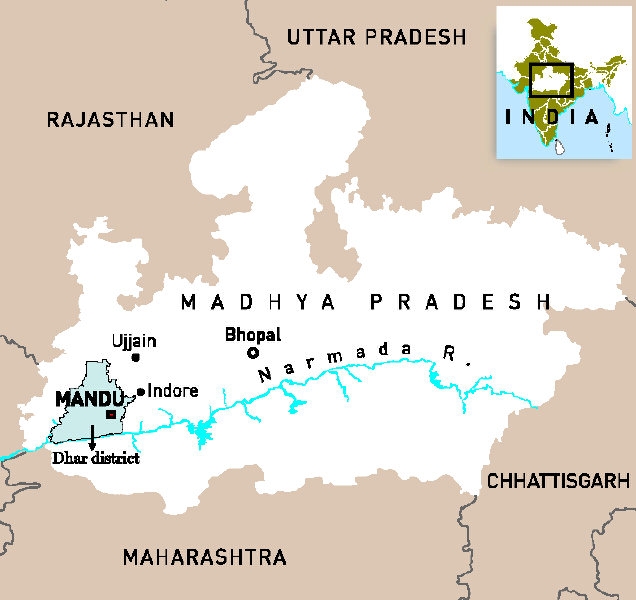
The Ghuris were overthrown by the Khiljis who were then defeated by the Mughals led by Humayun. There was some back and forth between the two which was finally ended when Sher Shah Suri, an Afghan, defeated the Khiljis and appointed Shua’ajat Khan as Governor of Malwa. (Do stay with me, I’m getting to the point in the next few lines!) Shua’ajat Khan departed for his heavenly abode not long after. He left behind three sons, of whom the eldest; Baz Bahadur (here we are!) took control after disposing off the other contenders in the time-honoured traditions of those days.
Which brings us to Mandu, known more as the place where the romance between Baz Bahadur and Roopmati blossomed and flourished before being snuffed out by Adham Khan, the general of Emperor Akbar.
“Long after thy pavilions crumble down,
When age-forgotten Mandu’s dying fame,
When Rewa’s godhead, desecrate, departs,
Still shall thy songs be sung by sage and clown,
And green, as Malwa’s monsoon hills,
thy name Live on her children’s tongues and in their hearts.” (Taken from ‘The Lady of the Lotus’ by Ahmad-Ul- Umari)
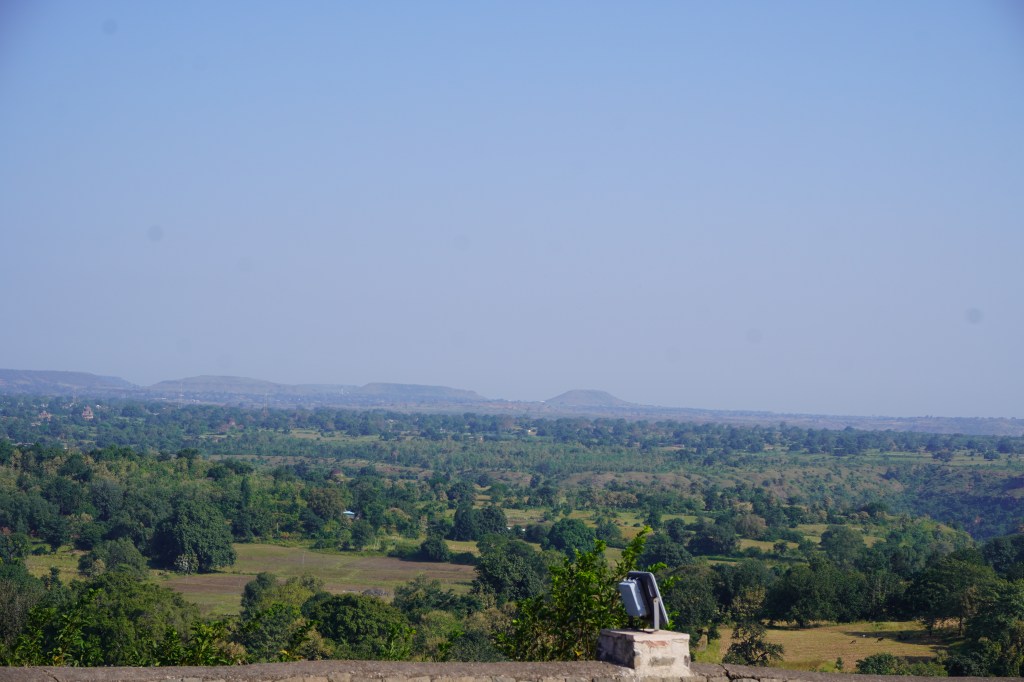
Mandu, or ‘City of Joy’ was a political, military and cultural centre in the 15th and 16th century and is one of the hidden gems of Central India. It is dotted with parks, lakes, forests and palaces that once served as the retreat for the Sultans of Malwa. They had constructed stepwells and underground water tanks, all connected by secret passages that channeled the water to the hamams and chambers where they could soak away the cares of ruling over a region surrounded by enemies on all sides!
Baz Bahadur was the last of these sultans. His skill with the sword was as renowned as his proficiency at music. If folklore is to be believed, when he sang Raag Deepak, the lamps in his palace would light up by themselves. One day when he was out hunting; near the banks of the river, he saw a beautiful young woman singing Raag Megh Malhar- a song to the rain gods. Baz Bahadur joined her in her song and as they sang together, the rain began to fall around them. And this is how Baz Bahadur found Roopmati- his muse, his love and his consort.
Roopmati was the daughter of a local villager and Baz Bahadur asked her to come and stay with him in his palace as his companion. However, this generous offer was turned down- Roopmati said that she could not be separated from her beloved mother- the river Narmada. She is said to have told Baz that she would be his companion only when the Rewa (Narmada) flowed through Mandu. And thus was conceived Rewa Kund.
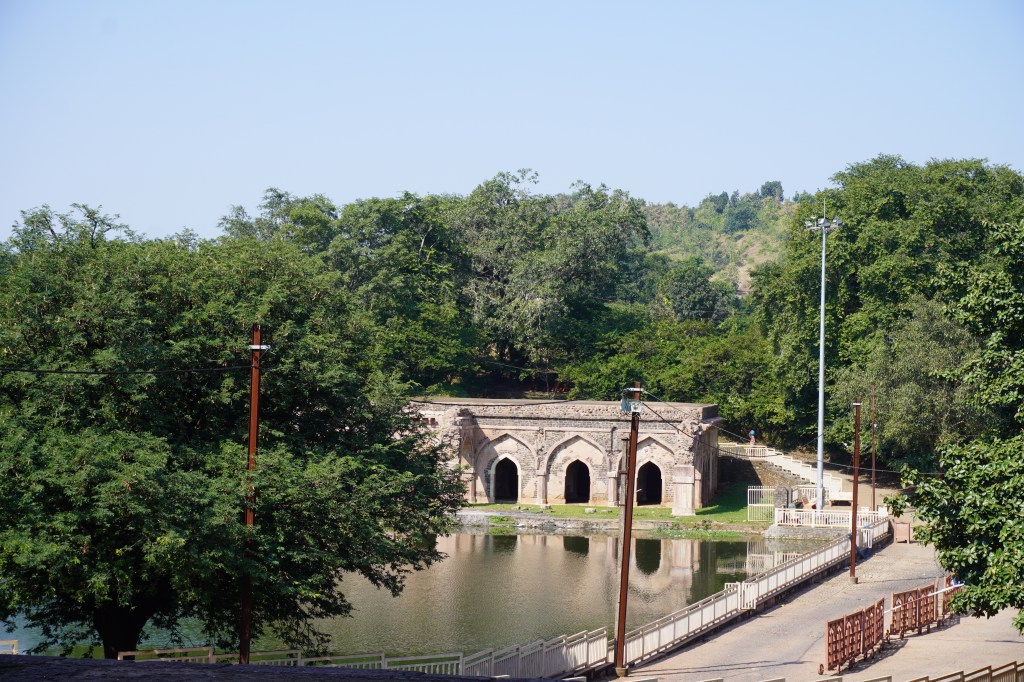
Baz Bahadur then built a palace for Roopmati with a pavilion from where she could glimpse her beloved Narmada river in the distance. In this pavilion, Roopmati would do her ‘riyaz’ and the cool breeze would waft the melody down to the palace of Baz Bahadur, a few kilometers away.
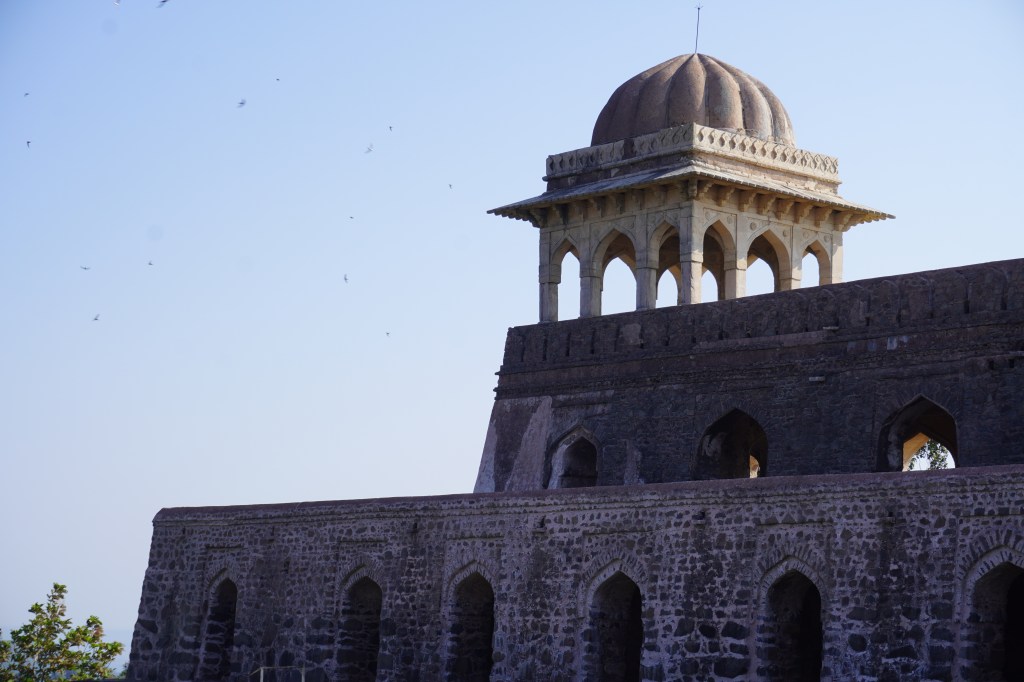
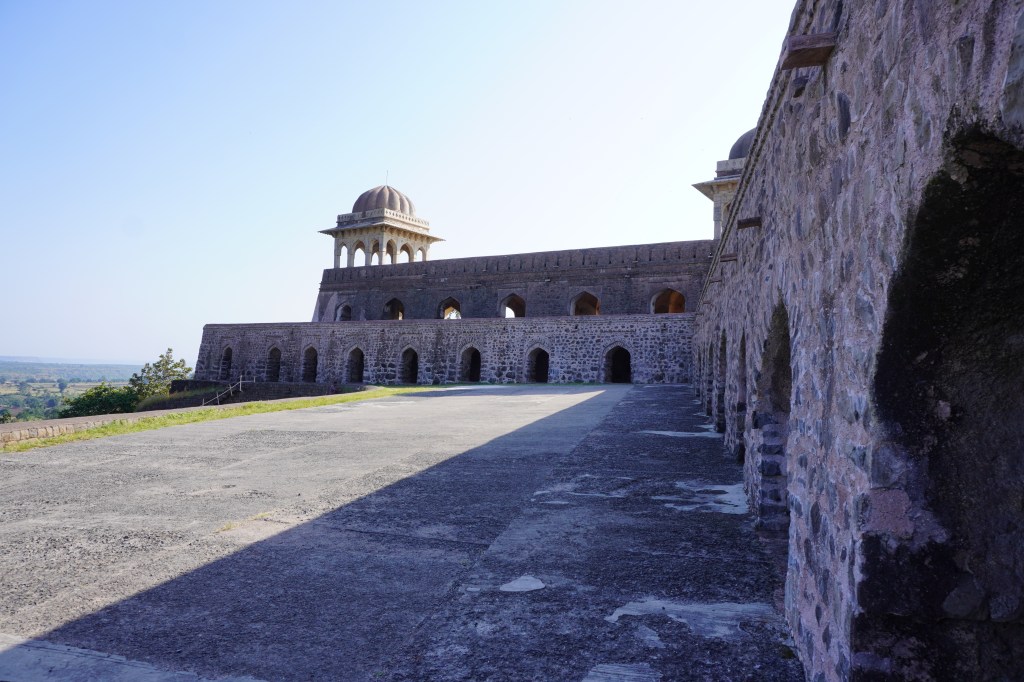

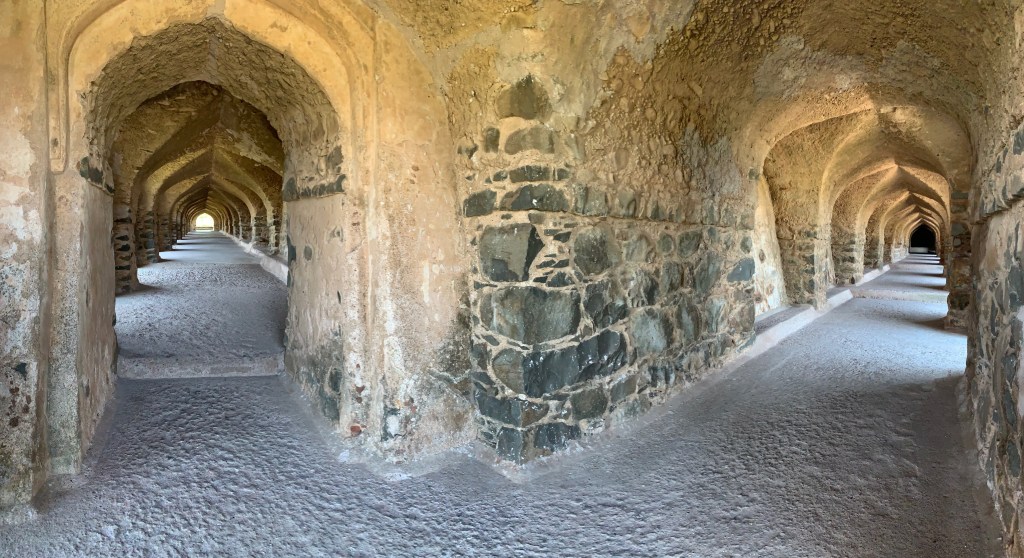
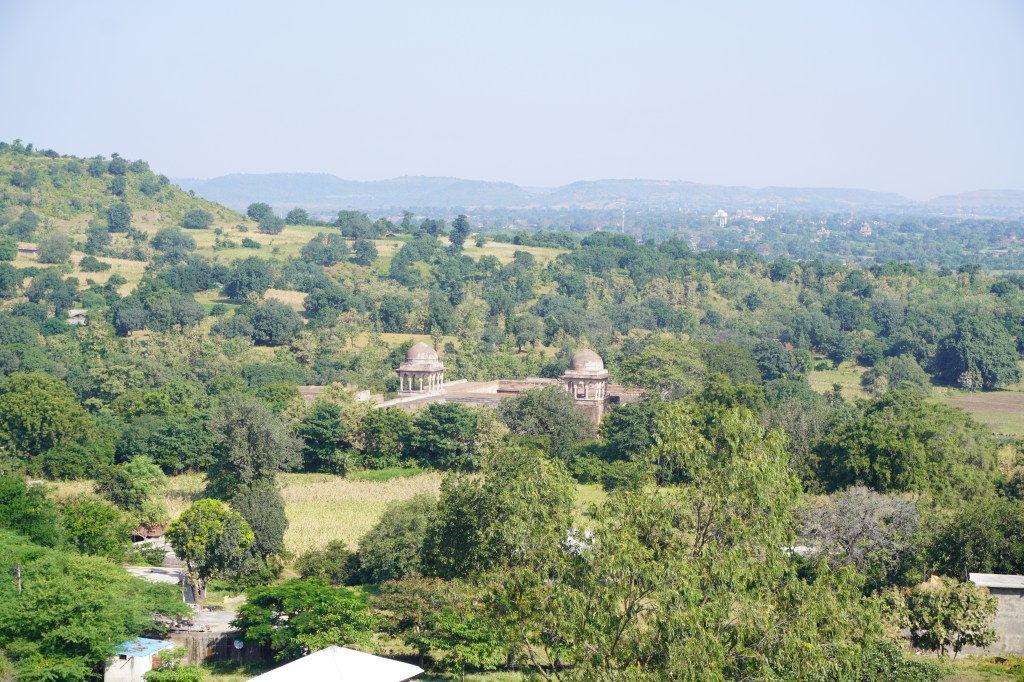

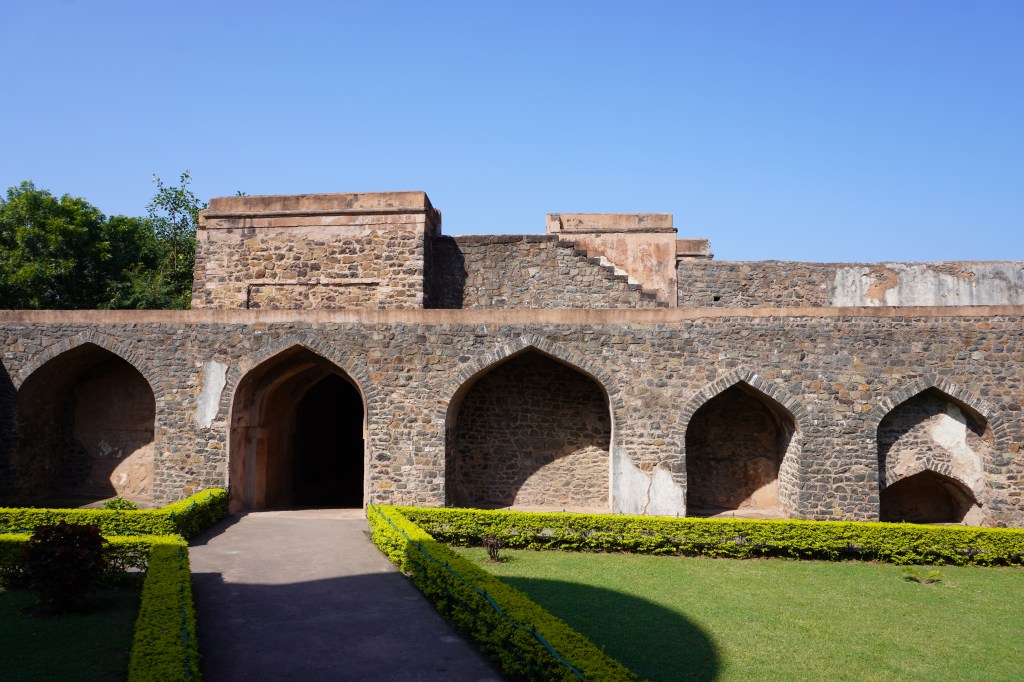
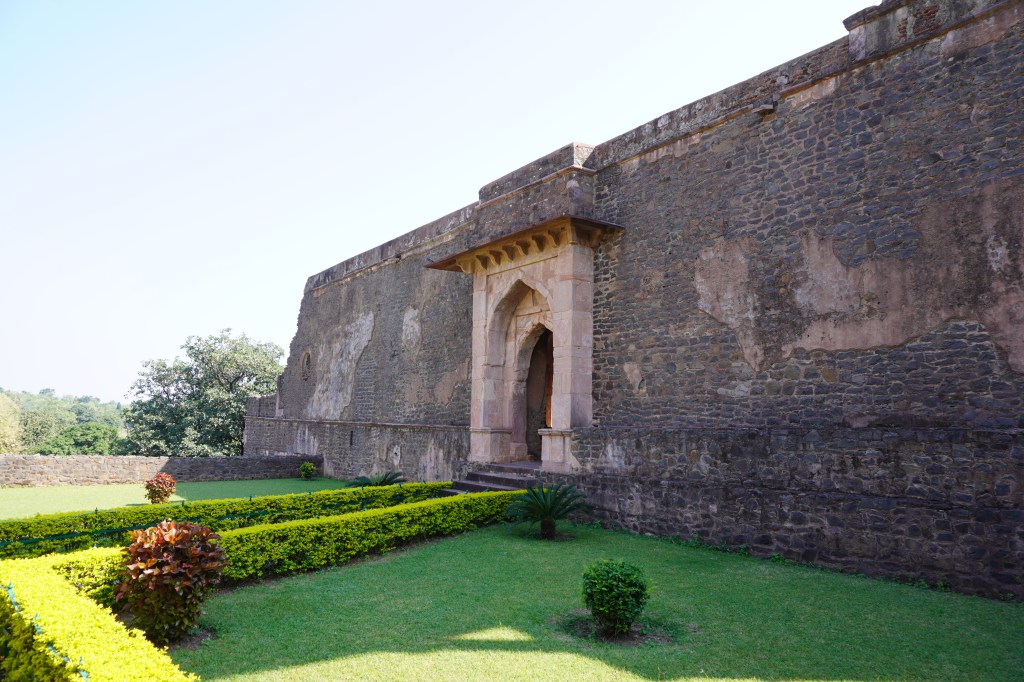
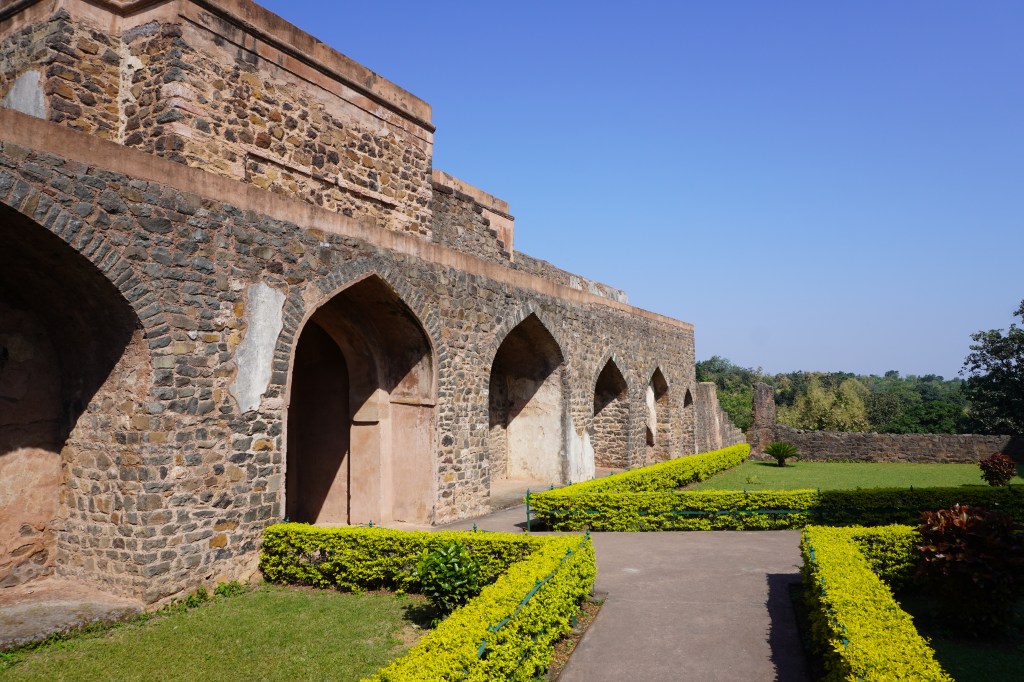
Like all legendary love stories, this one too was doomed. Baz Bahadur was so lost in his love for Roopmati and their combined passion for music, that he neglected his duties, the rumblings around his sultanate and the gathering storm clouds of war. In far-off Delhi, Emperor Akbar had decided to take over Malwa in his quest for expansion. Adham Khan, one of his strongest generals; set off for Malwa at the head of a large army. Baz Bahadur’s fewer and badly equipped soldiers were no match for the Mughal forces and he had to escape from the battle field.
The story of Baz Bahadur and Roopmati has been told and retold so many times that it is difficult to know which version is closest to what really happened after Adham Khan marched into Mandu. Tales of betrayal, lust, treachery and loss abound. Some say that Adham Khan wanted Roopmati for himself and this was the reason behind the attack on Malwa. Others claim that Baz Bahadur deserted Mandu to save himself and left Roopmati at the mercy of Adham Khan. But all agree that Roopmati took her life by swallowing poison because she did not want to surrender to the enemy. And for her, life held no meaning without Baz Bahadur.
“The loved one gives the heart the peace it craves,
But, lacking thee, Roopmati knows no peace,
For thou art fled! and life holds naught for her
But swift surcease. (Taken from ‘The Lady of the Lotus’ by Ahmad-Ul- Umari)
All that remains now are the legends and the monuments that bore witness to the love between Baz Bahadur and Roopmati.
 butterfliesonmymindblog
Beautiful story, beautifully told. It evokes wonderment about kings and rulers of these bygone eras could simply transform their most fanciful dreams into everlasting stone, as if it were just an extension of thought! For the structure to reverberate his songs, for the location so precise that her music would drift down to her beloved in the palace, far away, for the river to be made to bend it’s natural course! Where is that kind of devotion now? We seem to have collectively destroyed and lost it for ever!
LikeLiked by 1 person
Mandu is a very evocative place. And we had an excellent guide who really made these stories come alive for us.
LikeLiked by 1 person
…bygone eras who* could…
LikeLike