
Awadh! That region in Northern India (now a part of Uttar Pradesh) which was carved out of the Mughal Empire and governed by a long line of Nawabs.
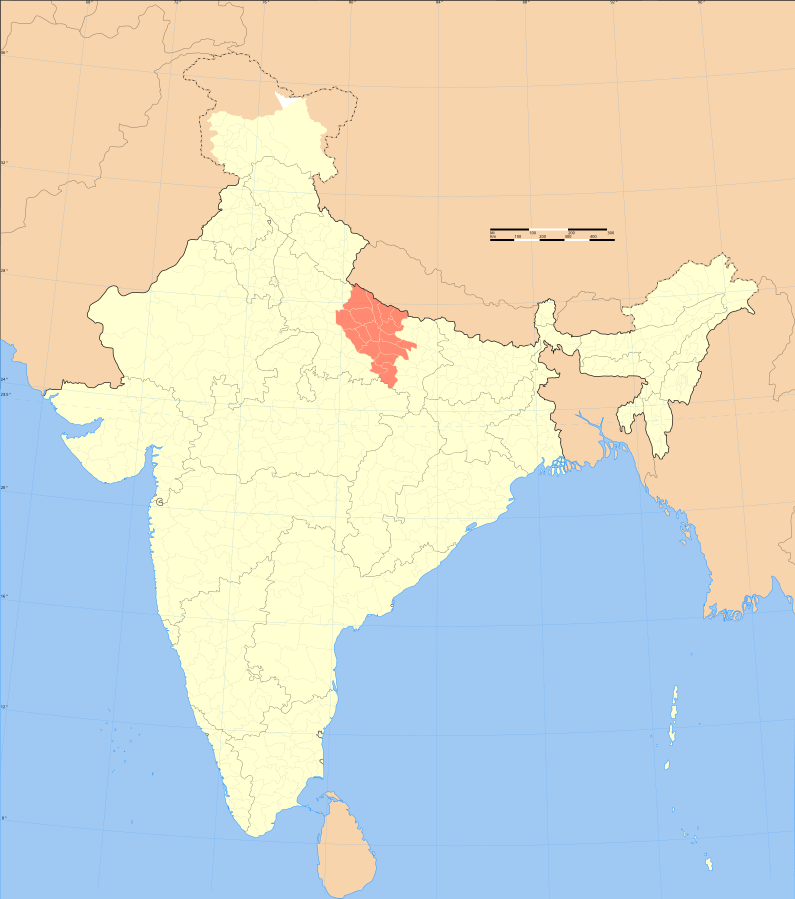
Awadh! The region known for it’s unique blend of Indian and Persian influences- a cultural richness that encompassed art, music, poetry, literature and architecture. The Nawabs of Awadh; along with being patrons of art, also implemented administrative reforms which in turn led to a flourishing economy.
Is it any surprise then, that when the British arrived in India, the Governor-General Lord Dalhousie referred to Awadh as “a cherry that will drop into our mouths one day.” And so it was. In 1856, the kingdom of Awadh was annexed by the British. This was a milestone moment in the colonial rule in India and was followed by the fall of the Mughal Empire and the establishment of the British Raj.
Rewind to 1775 when Asaf-ud-Daula became the fourth Nawab of Awadh and moved the capital from Faisabad to Lucknow. Under his rule, the court of Lucknow thrived and flourished, becoming a renowned intellectual centre. It was said “Jab Dilli Ujadi, Lucknow Bani” meaning that when the glory days of Delhi (and with them the Mughal Empire) were coming to an end, the Nawabs of Lucknow showered their patronage on the performing arts of music, dance and poetry thus helping in their revival and renaissance.

This renaissance was also reflected in the architecture of Lucknow. Asaf-ud-Daula was passionate about building palaces, mosques and gardens. The most famous among these are the Rumi Darwaza, the Bara Imambara and the Asfi Mosque.
During the reign of Asaf-ud-Daula, most parts of Northern Indian were struck by a terrible famine, also known as the Chalisa (fortieth) famine of 1784. The famine lasted 10 years and it is said that around 10 million lives were lost during this time. It is during this period that the Nawab ordered the construction of the Bara Imambara- a magnificent monument that was built to create employment for the famine ravaged populace of Lucknow. An imambara is a prayer hall where the faithful congregate during Muharram.
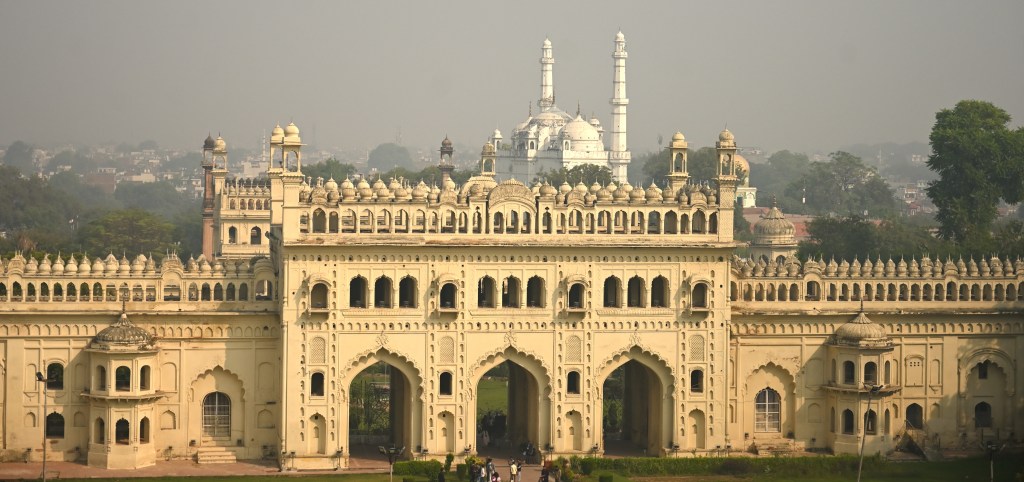
As a famine relief measure it was highly effective- the work on the imambara continued for as long as the famine lasted. The local people (read commoners) would work during the day- building the edifice brick by brick. Come night and the elite (read noblemen) would get to work, bringing the structure down. The elite worked at night so that no one would observe them labouring away, you see! This cycle continued till the imambara was finally completed.
Nawab Asaf-ud-Daula was known for his generosity and benevolence. So much so that it was said ‘Jissko na de Maula, usko de Asaf-ud-Daula’ meaning ‘He who does not receive from God, will receive from Asaf-ud-Daula’
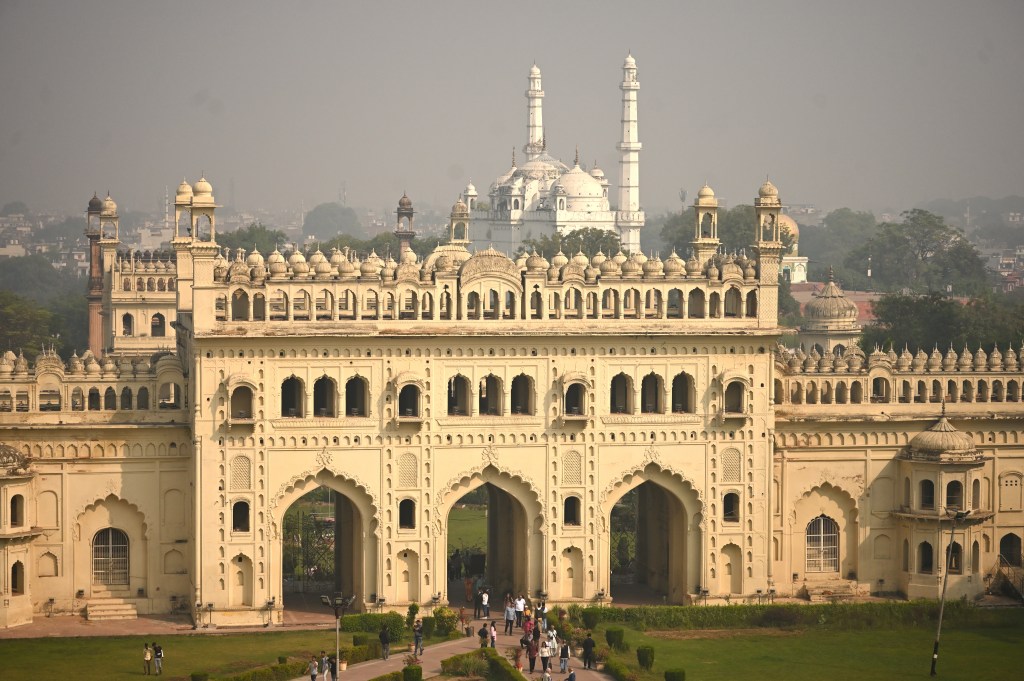

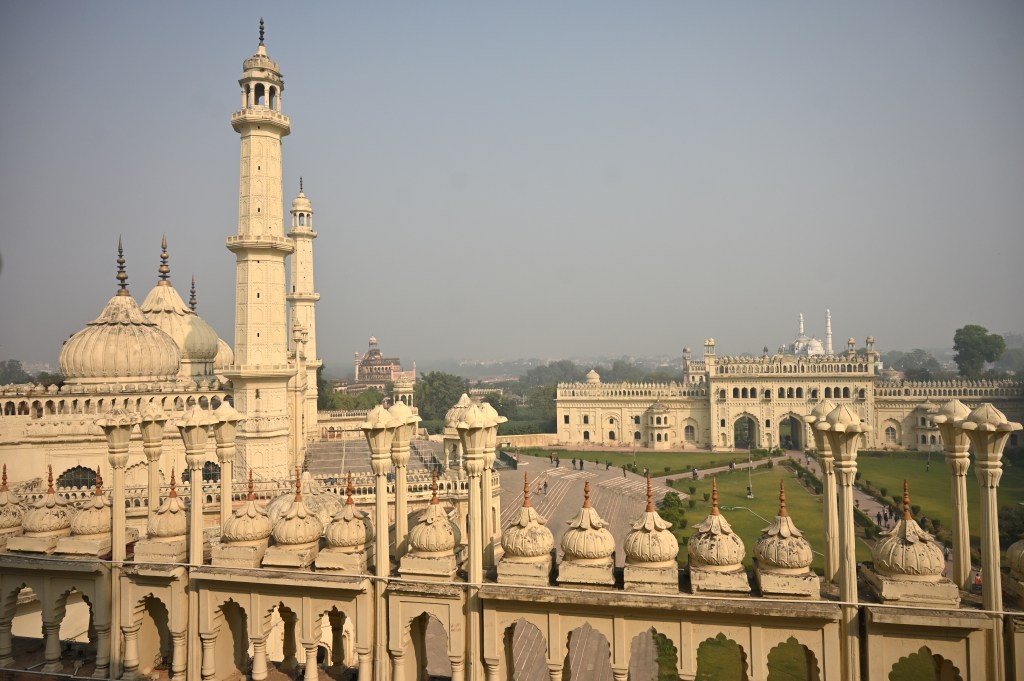
Bara Imambara is truly a splendid monument, spread out over an area of 50,000 sq ft. It is an architectural wonder because it has the world’s largest arched structure built without any pillars or beams. The architect designed it in such a way that immense vaulted ceiling would be supported by a series of arches. The construction of these arches with almost 500 identical doorways created a labyrinth of balconies and passages which are known as the Bhool Bhulaiya of Lucknow. This maze forms the upper part of the imambara and is nearly impossible to navigate without a guide.


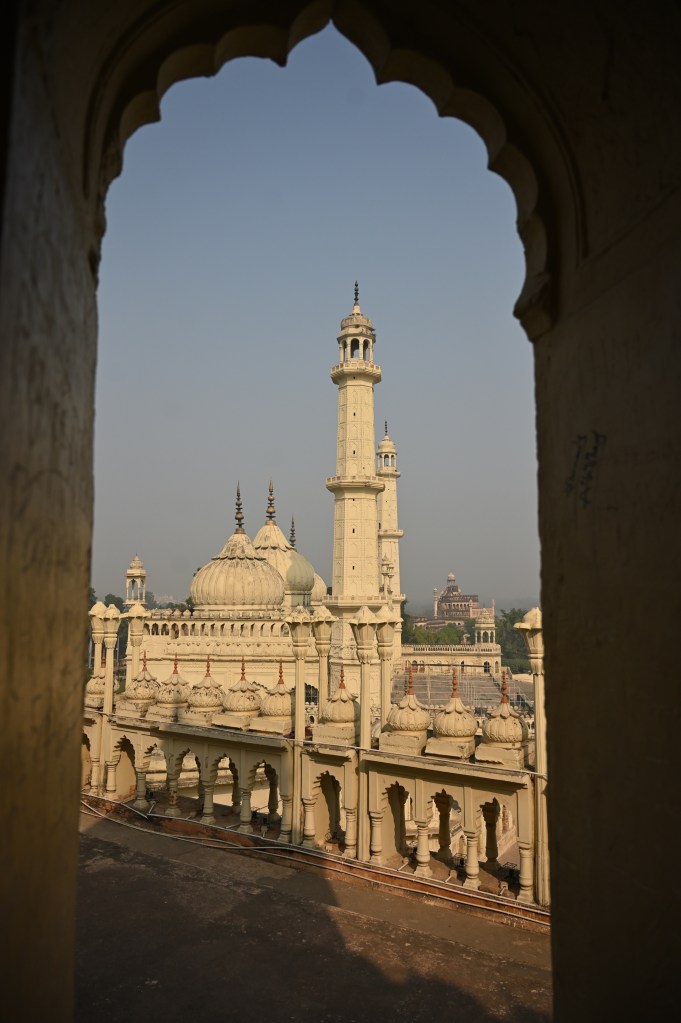
From the rooftop of the imambara one can see various other domes and minarets that make up the skyline of Lucknow now marred by 21st century granite high rise buildings.
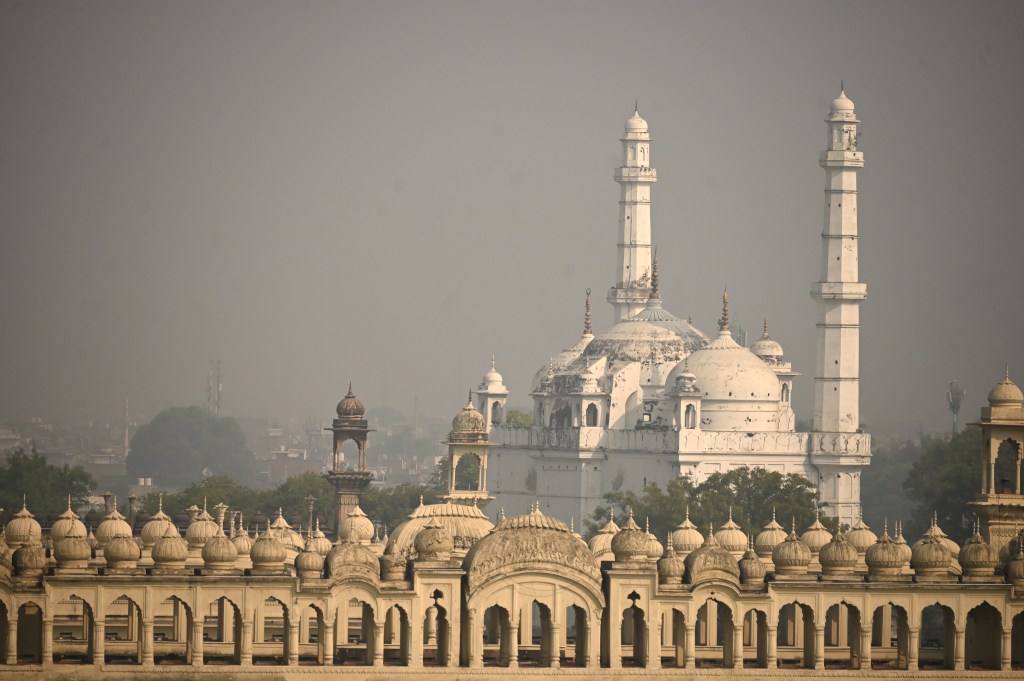
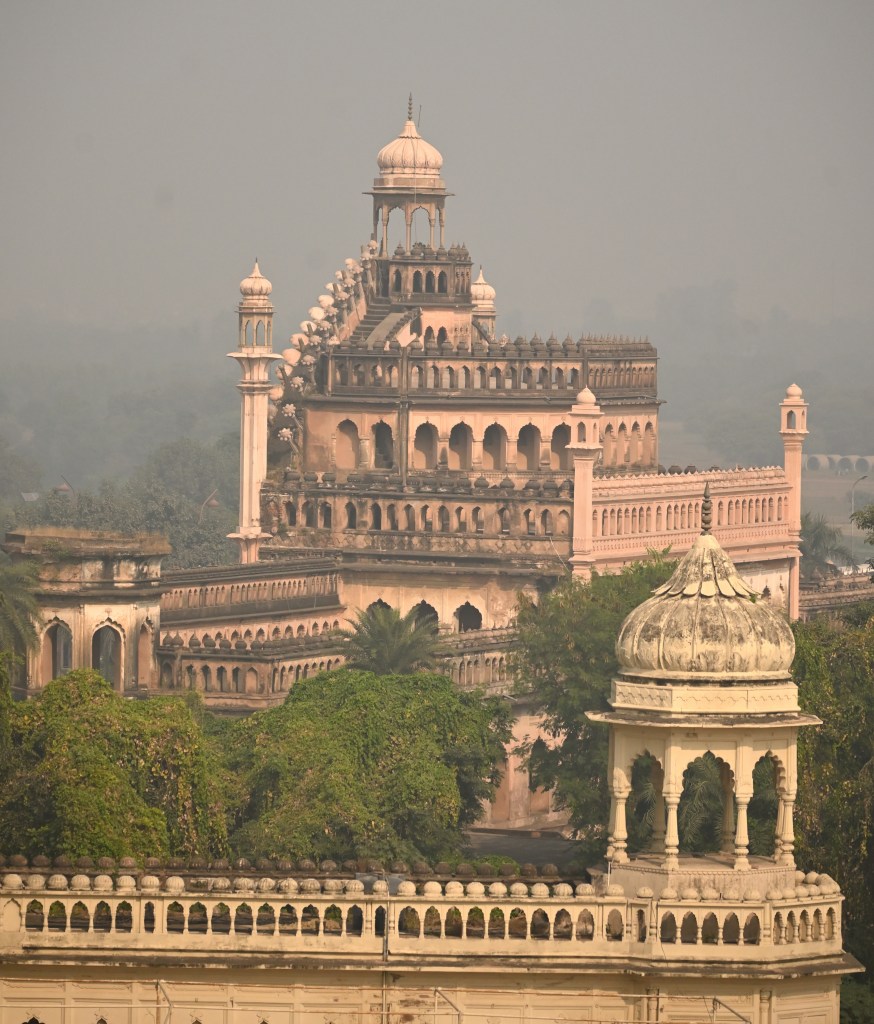
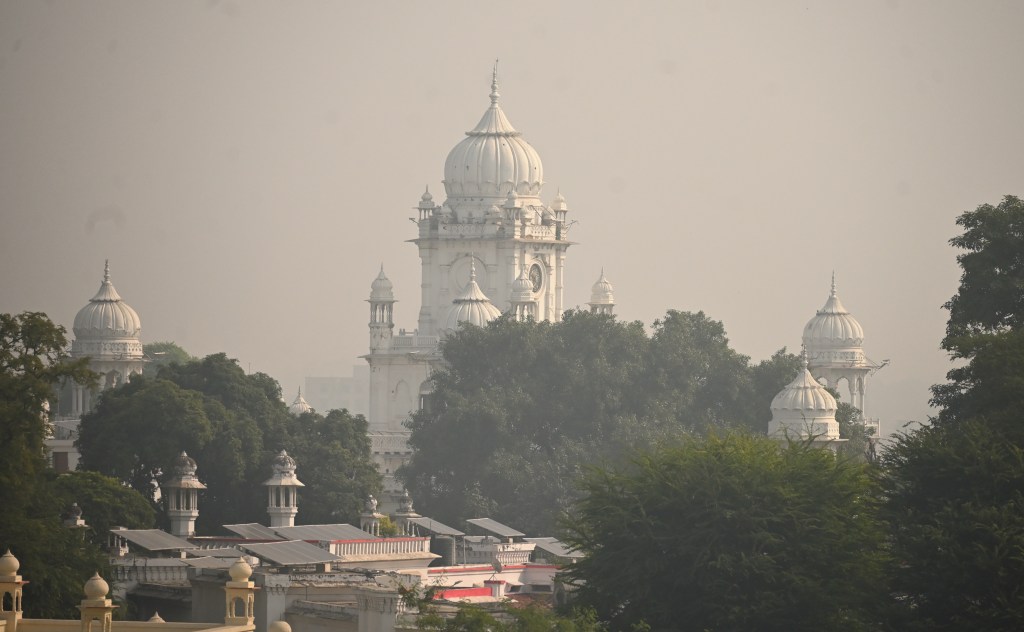
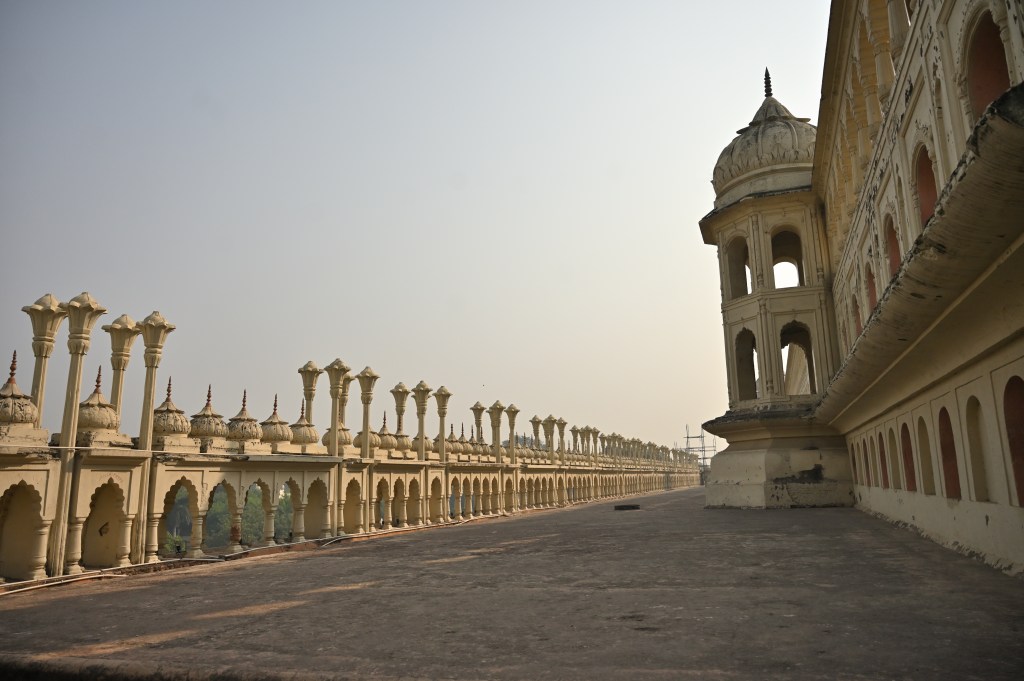


The Asfi Mosque which stands adjacent to the imambara is considered to be an iconic tribute to the Nawabi architecture of Lucknow. Its lofty, elegant minarets soar up towards the sky and the graceful domes overlook a courtyard and steps where visitors flock to marvel at this 200 year old monument that stands tall and intact- a testimony to the skill and workmanship of its time.

We visited the Bara Imambara and soaked up its beauty and history but neither words nor photographs can express the awe one feels just wandering through the halls that make up the imambara. And then to look up and up towards the gravity-defying high vaulted ceiling supported by innumerable arches. Since photography is no longer allowed within the premises, we could only wish for a photographic memory to preserve these images in our minds!
 butterfliesonmymindblog