
“Take only memories” they say, “Leave only footprints” they say. Being the obedient and responsible tourist that I am, I willingly follow both instructions. I take loads of photographs as memories and leave behind nothing except a prayer of gratitude for the opportunity to see the place. And sometimes a hope that I may revisit.
On my recently concluded trip to Pahalgam however, I had every intention of breaking the first rule. I had gone there determined to bring back as many pine cones as I could accommodate in my luggage. Lack of space at home and luggage restrictions of predatory airlines were not going to deter me. And when I saw the trees loaded with pine cones; growing on the mountain slopes, my mouth literally watered at the sight.
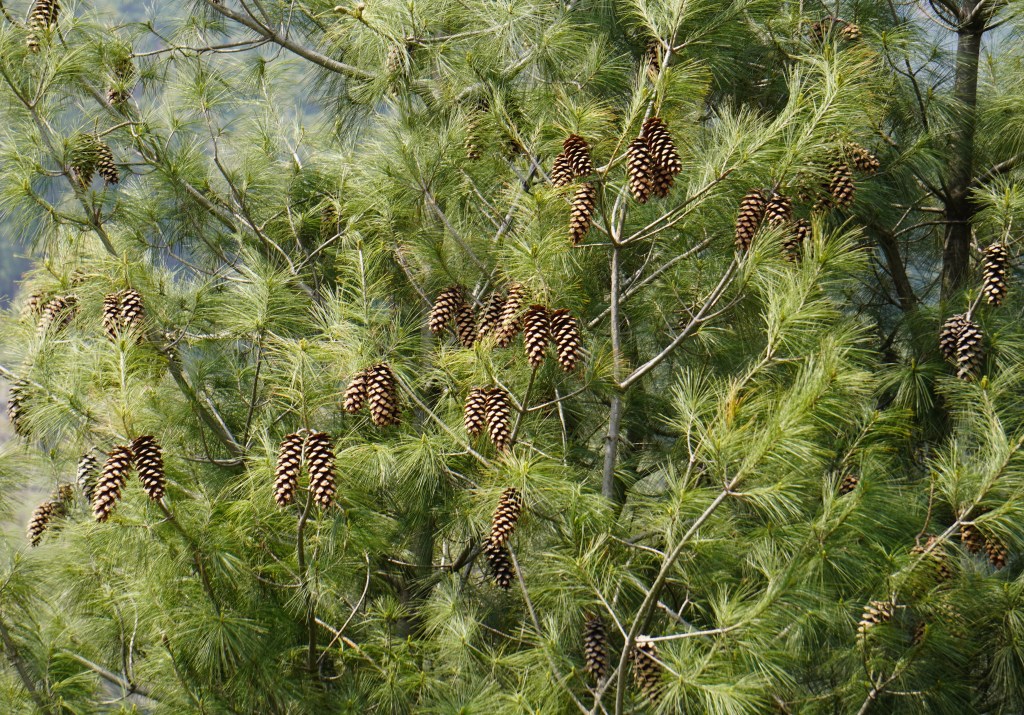
A bit of trivia here: the tree whose cones I hoped to gather is called the Himalayan Blue Pine or ‘kaayur’ in Kashmiri. It’s also called the ‘poor man’s deodar’ which I feel is very unfair to such a beautiful, evergreen tree. A popular saying in Kashmiri declares ‘Kaashur yaar guv kaayur naar’ which means that the ‘burning timber of the kaayur is a friend of the Kashmiri’. It clearly shows that the local people value and appreciate this tree. So much for the poor man’s deodar. Hah!
And because this piqued my curiosity, I went in search of local names of the pine cones. The first few pages of Google were quite unhelpful but after digging a little deeper I got lucky. I present to you, gentle reader, the names for pine cones in 4 different Kashmiri languages. Khingroo in Gojri, Fitte in Bhaderwahi, Kongru in Dogri and Yari Kandor or Chaangh or Yaadi fitun in Kashmiri.
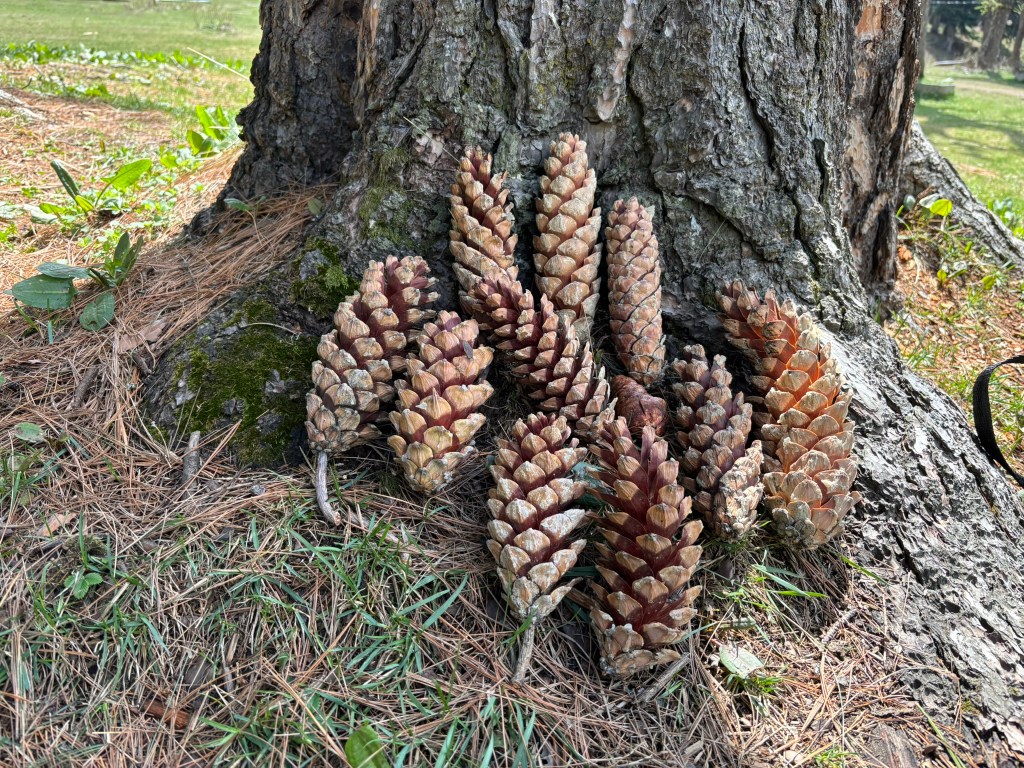
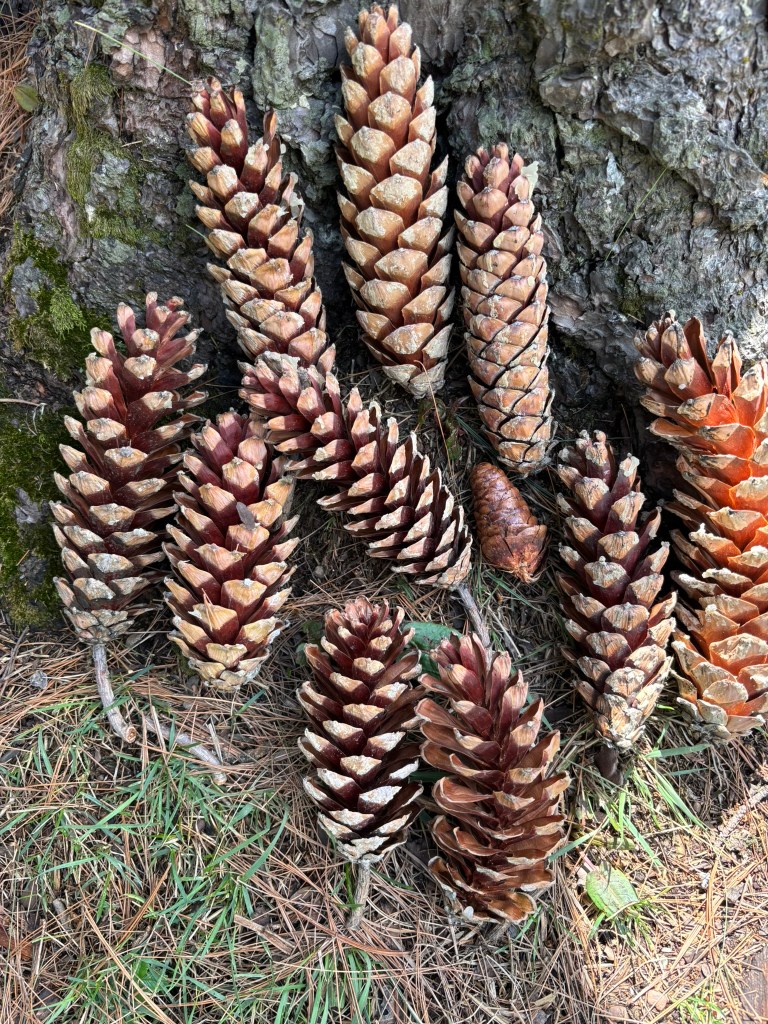
But if you think I am now going to wax poetic about all the pine cones that I gathered and how I’ve decorated my house with them- you’re mistaken. Because I was able to bring back not a single pine cone from there. Nope, not a one. And that’s because when the cones drop from the trees, they carry with them a sticky white sap or resin that makes it difficult for a badly equipped cone-collector to gather. I had nothing to wrap them up in and no bag to keep them in. So I did the next best thing- picked up some of the best looking ones, arranged them at the foot of a ‘kaayur’ tree and took photographs. Maybe I’ll take printouts and arrange them around the house!
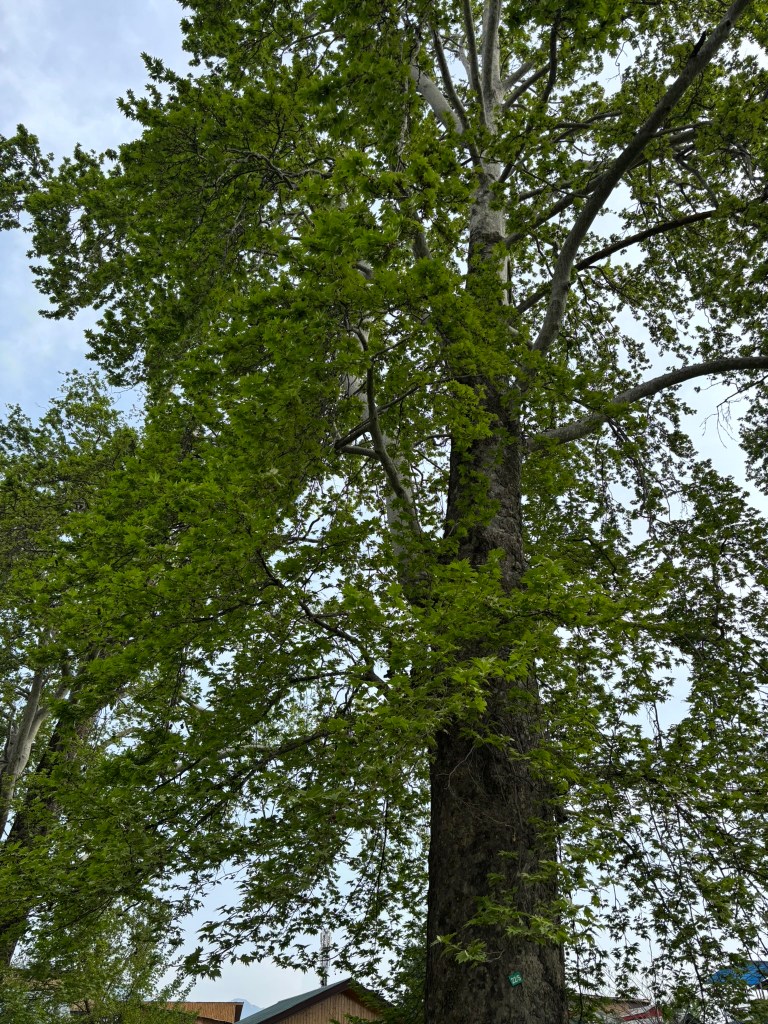
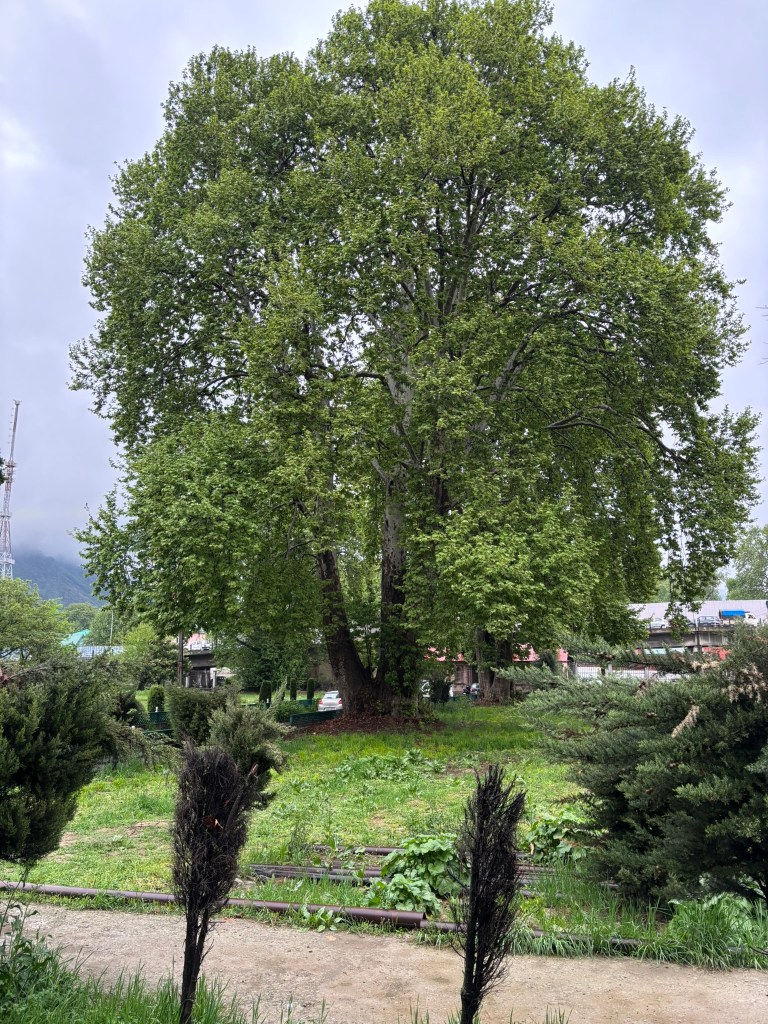
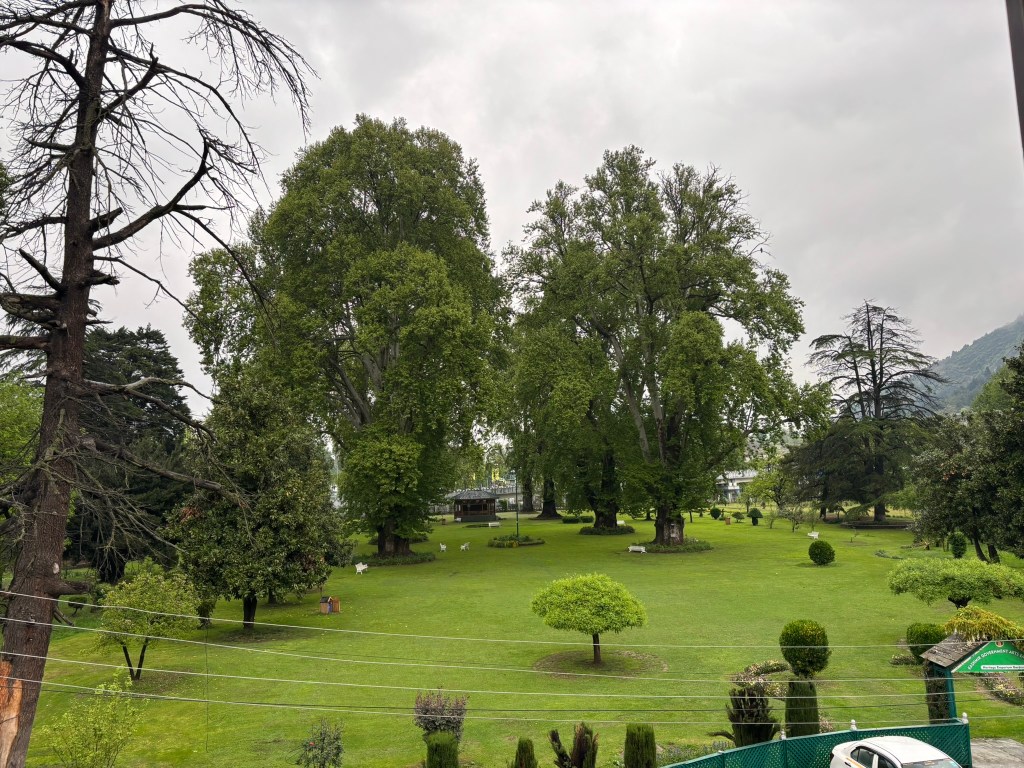
The other tree that fascinated us was of course the Chinar or ‘booen’. It is a majestic yet graceful looking tree that can grow up to a height of 100 feet and have a trunk that’s 40 feet in circumference. It’s origin is traced back to Greece but it is an inseparable part of the life and culture of the Kashmiris. The chinar was worshipped as Goddess Bhawani (hence the name Booen) and planted near temples by pandits and near shrines and holy sites by Sufi saints. The tree had traveled to Central Asia from Greece, so when the Mughals arrived in Kashmir and saw it, they gave it the name ‘chinar’ and planted it in their gardens. The chinar trees are considered sacred and are blessed with a lifespan of centuries- so unless they are felled in the name of ‘development’ they should be around for a long time.
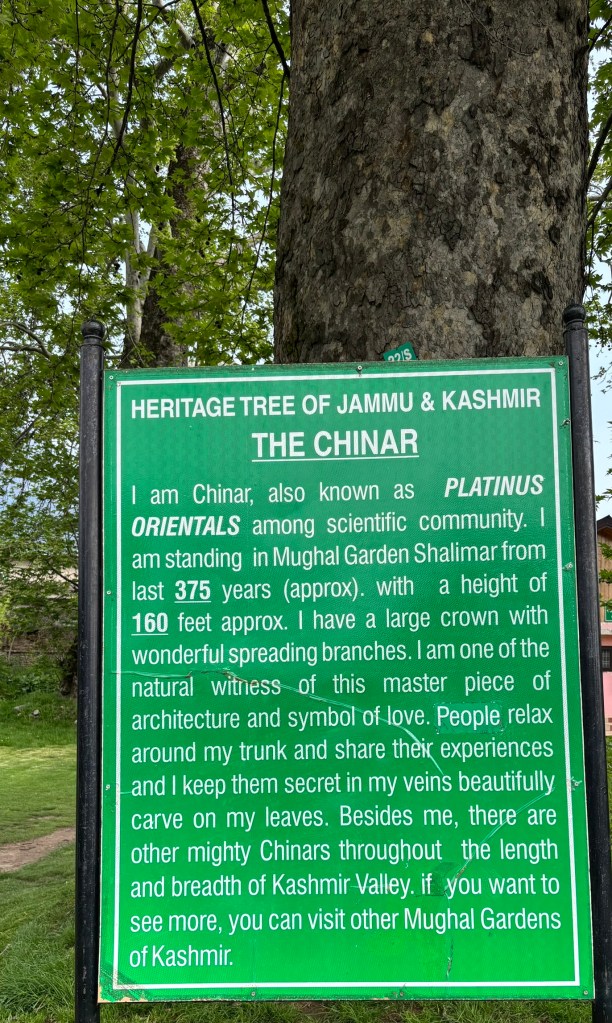
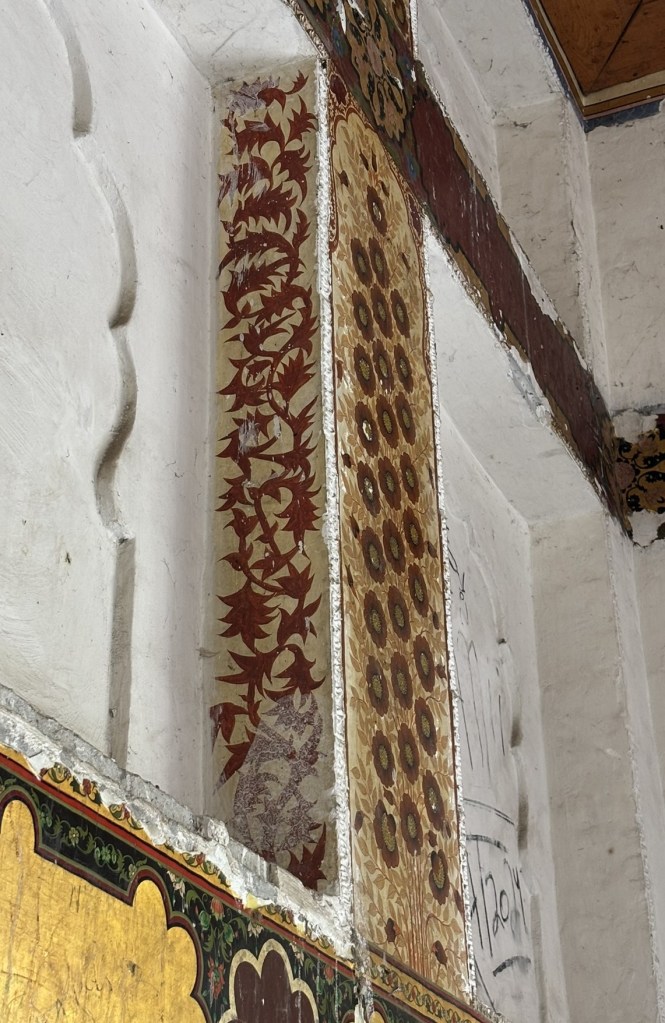
The crimson hued leaves of the chinar tree in autumn- adorning the walls of one of the terraces in Shalimar Bagh. The garden was built in 1619 by the Mughal emperor Jahangir. (Please ignore or unsee the graffiti on the wall and other signs of neglect.)
DISCLAIMER: I’m writing this in the aftermath of the terrorist attack that occurred on 22nd April 2025, in which so many innocent lives were lost. It will take the region and the families of those affected; a very long time to recover from this horror. If at all. For those of us who came back safely- our impressions of all the beauty that we saw will forever be tainted by the memory of what happened just a day after we returned.
Paradise is lost, for now. Will it ever be Paradise Regained?
 butterfliesonmymindblog