
The tombs of Premamati and Taramati
The term ‘hidden gem’ is becoming overused as travel bloggers and influencers hit the roads not taken to uncover secluded spots for tourists to crowd at. So much so that many hidden gems quickly turn into ‘most popular’ places to visit.
The Qutub Shahi Tombs of Hyderabad, however, do qualify as hidden gems. Hidden in plain sight till the beginning of this century, they had been neglected and were in a dilapidated rundown condition; their exquisite, glazed tiles covered with cement and plaster. It was the Aga Khan Trust for Culture that rescued these magnificent tombs from further decay.
The sprawling 106 acre site is home to the tombs of the rulers of the Qutub Shahi dynasty as well as their queens, children, commanders and other nobles in their service. And here are a few reasons why the Qutub Shahi dynasty is so important in the history of Hyderabad and the Deccan.
- The Qutub Shahi Sultanate was one of the five major dynasties that rose with the fall of the Bahamani Kingdon.
- They ruled the region from approximately 1518 A.D. to 1687 A.D. (so, 171 years give or take a few)
- It was Sultan Quli Qutbul Mulk who founded the dynasty with its headquarters at Golconda.
- The fifth king Muhammad Quli Qutub Shah was the founder and planner of the city of Hyderabad. He also built the iconic Charminar which is a symbol of Hyderabad.
- Abul Hasan, also known as Tana Shah was the last of the rulers. He held out against the Mughals till he was defeated by Aurangzeb. The kingdom of Golconda was the last to be captured by the Mughal Empire. Abul Hassan was taken prisoner and died in captivity at Daulatabad after 12 long years.
- The Qutub Shahi Sultans were builders, able administrators and patrons of art and learning. They patronised the Persian culture as well as that of the region of Deccan and Telangana.
A visit to the Qutub Shahi Tombs is like a walk through 170 years of the history of Golconda and Hyderabad.
“These massive monuments to the memory of departed kings of Golconda are most interesting. The grandeur of their appearance, their silent but solemn reminder of the history of the days when they were built and the great warriors whose bones they cover, their close proximity to the grand old fort of the kings…must appeal to even the most unimpressionable of visitors.“
A. Claude Campbell
Glimpses of the Nizam’s Dominion (1898)
There are more than a 100 monuments here- magnificent tombs, mosques, step wells and gravestones. But two monuments that looked very similar and stood side by side caught my attention. These were the tombs of Premamati and Taramati.
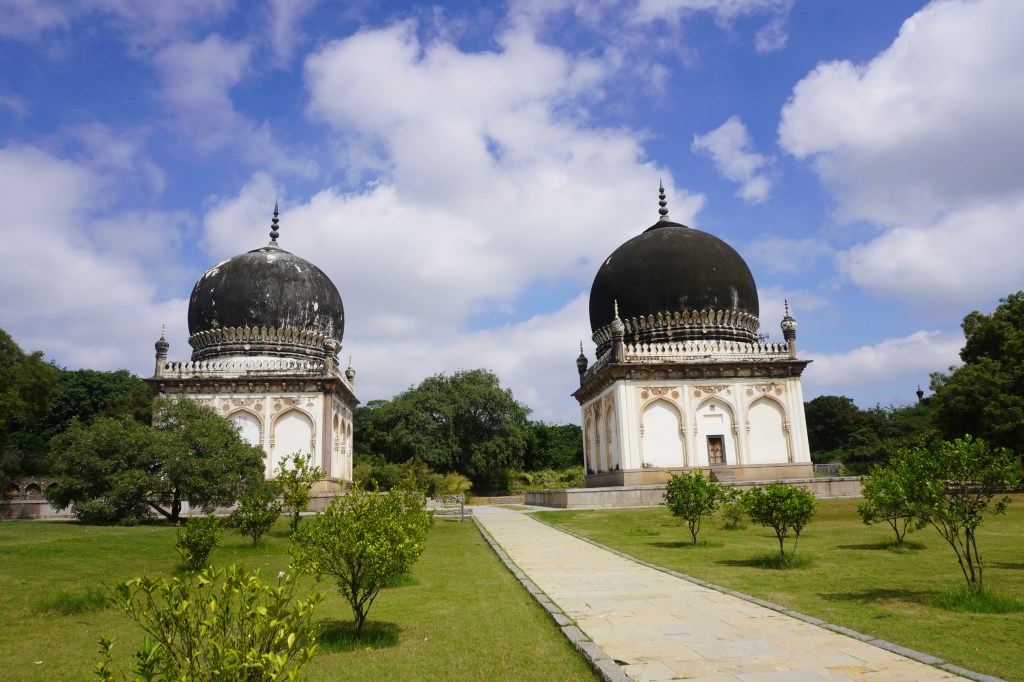
Premamati and Taramati were two women who enjoyed an elevated rank and status in the court of Abdullah Qutub Shah, the seventh ruler of the kingdom. Their precise status is still a matter of debate- were they courtesans or wives? dancers or members of court? Were they presented with jagirs? The very fact that they were given resting places in the royal mausoleum indicates that these two ladies were of considerable importance to the ruler.
Of the two, Premamati seems to have been the more favoured- her tomb is slightly larger (the one to the right). There is an inscription on the doorway that says she is a “Dove from Heaven”. There is even a mosque bearing her name in the Golconda Fort. Her gravestone has lines from the scriptures that read “”From eternity Premamati was a rose of Paradise” High praise indeed!
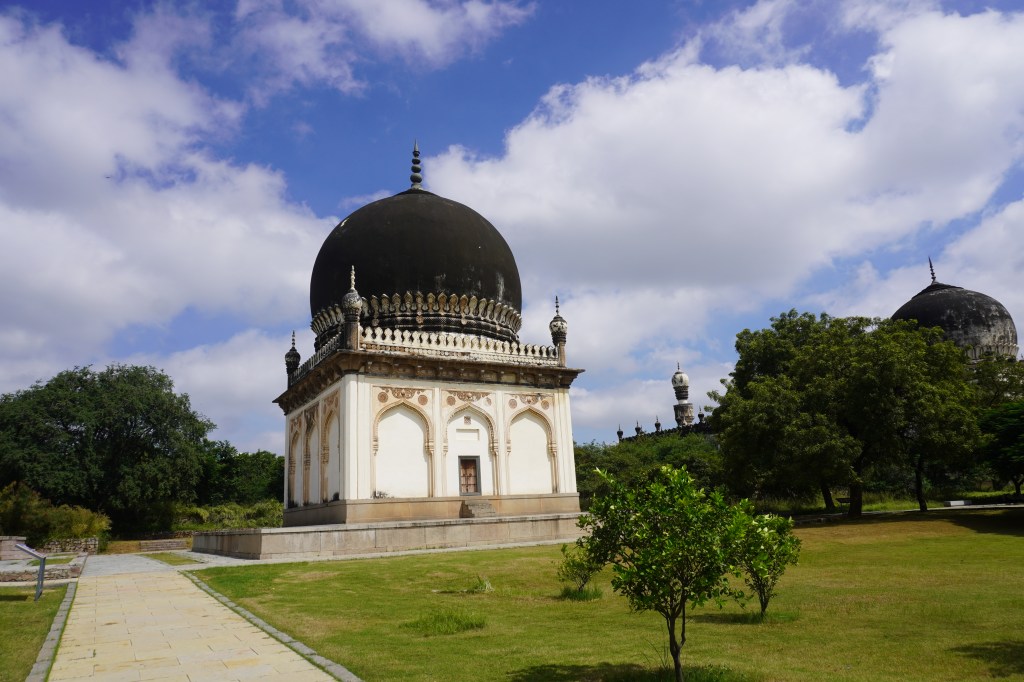
These two tombs symbolize the culture of the Golconda kingdom- a blend of Persian and regional influences; both of which were cultivated and patronized by the Qutub Shahi rulers.
 butterfliesonmymindblog