
The tomb of Tana Shah
The 106 acre necropolis which houses the tombs of the Qutub Shahi dynasty is; as I’ve mentioned earlier, a gem hidden in plain sight. The Qutub Shahi dynasty ruled the kingdom of Golconda from 1518 AD to 1687 AD. Their kingdom extended from the banks of the river Godavari in the north upto present day Tamil Nadu in the south and reached to the Bay of Bengal in the east.
But first, some context. Here are two maps that show the Bahamani Kingdom which thrived for three centuries before it fell, thus allowing for five independent kingdoms to come up- one of which was the Golconda kingdom ruled by the Qutub Shahi dynasty.
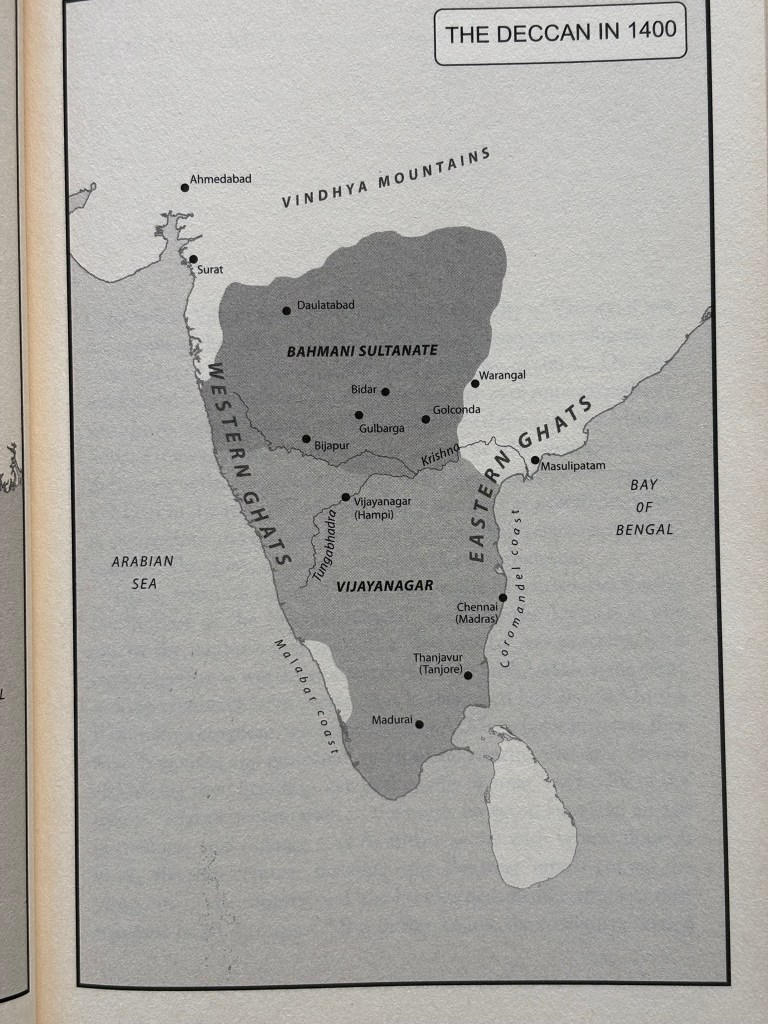
So, the Bahamani Kingdom came up after the fall of the Delhi Sultanate and lasted for three centuries before the mighty Mughal Empire established itself over the better part of the sub continent. When the Delhi Sultanate disintegrated, several independent kingdoms came up, but the Bahamani Kingdom was the largest and the most powerful.
When the Bahamani Kingdom declined and ended, five separate Sultanates came up in the Deccan. They were
- The Imad Shahi dynasty of Berar
- The Nizam Shahi dynasty of Ahmednagar
- The Adil Shahi dynasty of Bijapur
- The Qutb Shahi dynasty of Golconda
- The Barid Shahi dynasty of Bidar
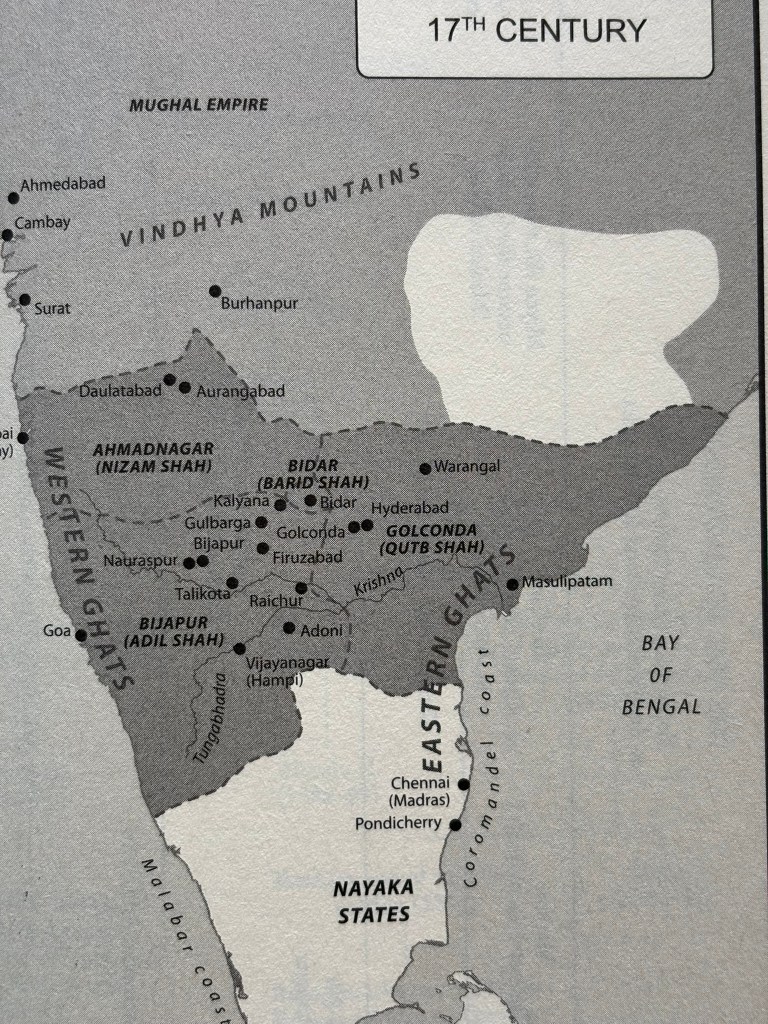
Look a little further north and one can see the Mughal Empire looming large and pushing at the boundaries of these five kingdoms. One by one they did indeed fall to the relentless might of the Mughals as they pushed further and further south. The Qutub Shahis held out the longest and their kingdom was the last to go. And the last ruler of this dynasty was Abul Hasan Qutb Shah. His reign was marred by constant conflicts with Aurangzeb but eventually he succumbed and the kingdom became a part of the Mughal Empire. Ironically, his tomb is not among those that mark the skyline of Hyderabad. But more about that later.
Abul Hassan was a distant relative of the sixth Qutub Shah, who somewhat unexpectedly ended up as the husband of the Sultan’s youngest daughter. When the Sultan died, the ministers at court preferred that he ascend the throne. (The Sultan had two daughters and no son. The other daughter was married to a son of Aurangzeb so it is hardly surprising that the court decided that Abul Hassan take over the reins of the kingdom. It will also come as no surprise that this decision would not go down well with Aurangzeb) And this is how Abu Hassan became the last ruler of the Qutub Shahi dynasty.
Abul Hassan was actually an aspiring Sufi. He was blessed with some musical talents- having a good voice and singing well. His teacher, a Sufi saint gave him the nickname Tana Shah which means ‘child saint’. He later also came to be known as Tani Shah meaning ‘benevolent ruler’. Interestingly, the name today means the opposite. A tana shah is a despot and a ruthless dictator and Abul Hassan was neither of those.
He wasn’t the best of administrators either and he decided to hand over the actual ruling of his kingdom to two of his ministers Madanna and Akkanna, who quickly rose to positions of great power and influence. But there was a lot of unrest in and around the kingdom. The Europeans had arrived, ostensibly for trade, the Marathas were quickly establishing themselves as formidable neighbours and Aurangzeb was now parked in the south and looking for any reason to declare war on Golconda. Abul Hassan managed to enter into an alliance with the Marathas and have some kind of agreement with Sikandar Adil Shah of Bijapur. None of this pleased Aurangzeb and he finally launched the full force of his armies towards Golconda. That sprawling site with splendid tombs and graves of the departed Qutub Shahi rulers became a camp for his soldiers. But Golconda held out against the invaders for eight long tortuous months. Finally it was treachery and not force that won the day. Abul Hassan had to surrender and was taken away as prisoner to Daulatabad. He died there, still in captivity, twelve years later. Ironically his grave is located in Khuldabad, not far from that of his nemesis Aurangzeb!
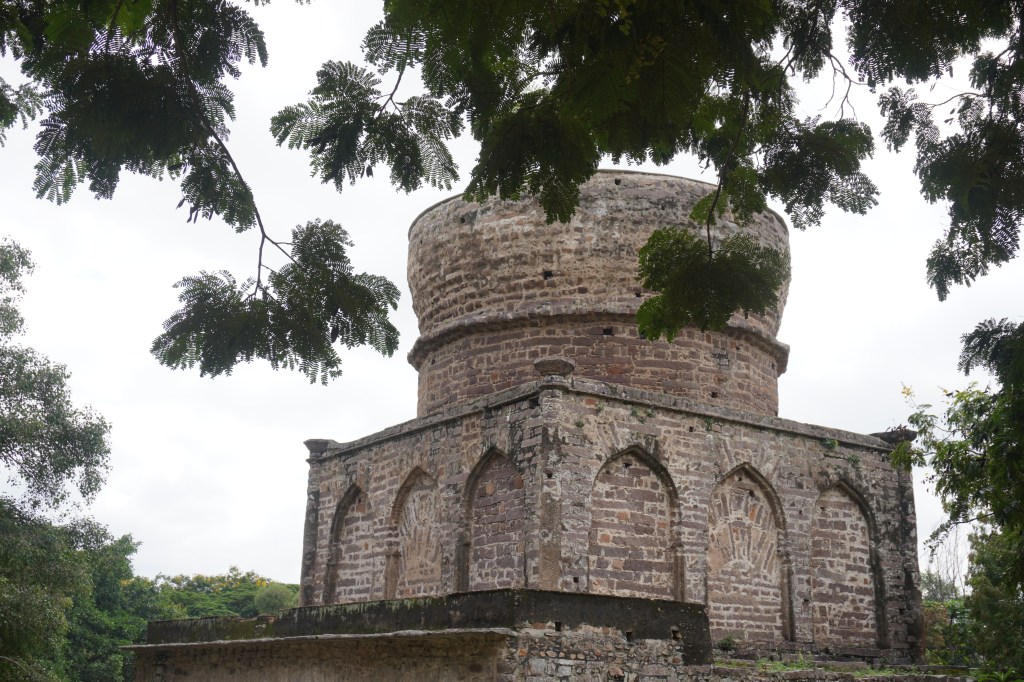
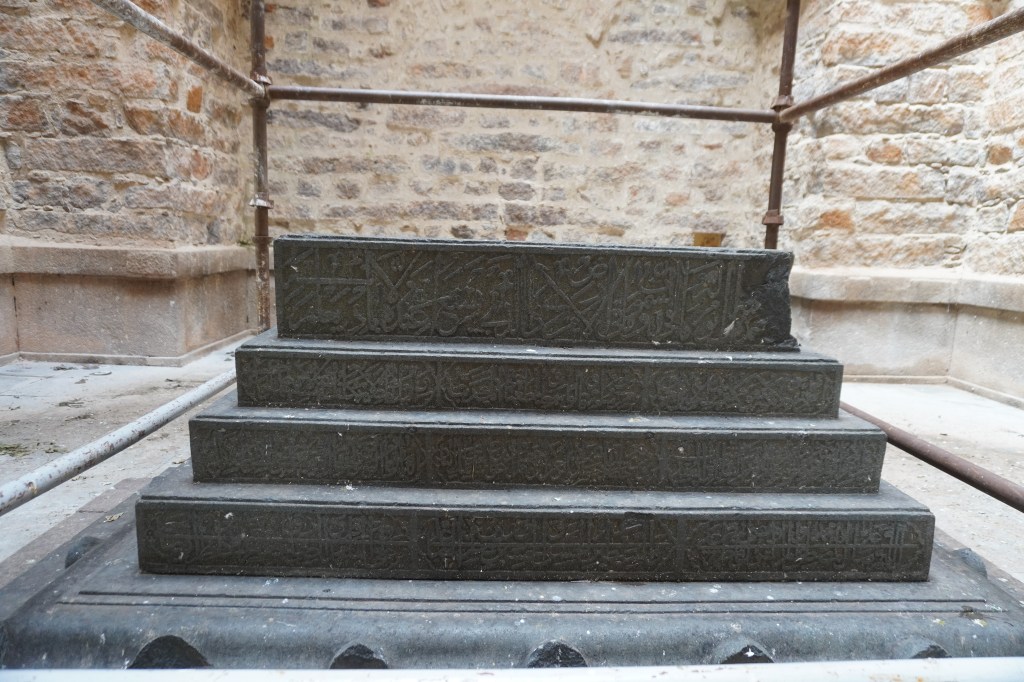
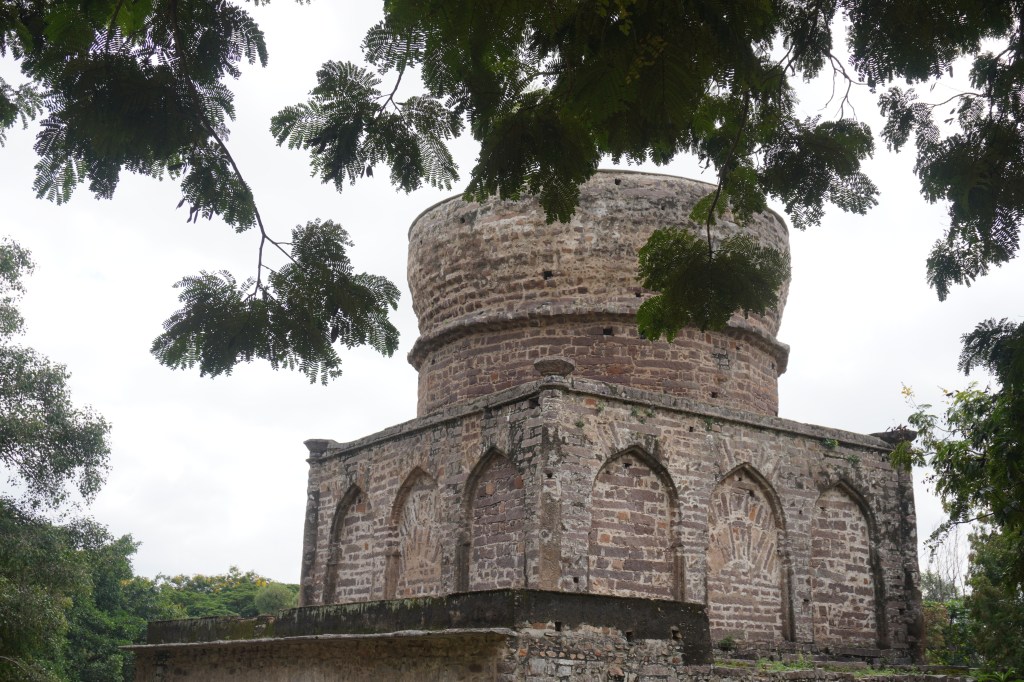
He is the only one of the Qutub Shahi dynasty who is not buried with the rest of his ancestors. But, as was done during those times, Abul Hassan also did begin the construction of his tomb at the site where his ancestors were buried. Unfortunately, he was unable to complete it. That monument remains incomplete, a mute witness to the seige and downfall of Golconda. Abul Hassan got a resting place far from where he had intended, but the tomb itself is not unoccupied. It now shelters the grave of Mir Ahmed, grandson of Sultan Abdullah.
 butterfliesonmymindblog