Mewar, in Rajasthan is not just about magnificent forts and grand palaces built by the Rajput rulers over the course of more than a 1000 years. It is also about the warrior clans that loyally served their kings and were given estates to govern. Deogarh is one such (former) estate, now town; which was owned by the Chundawat family.

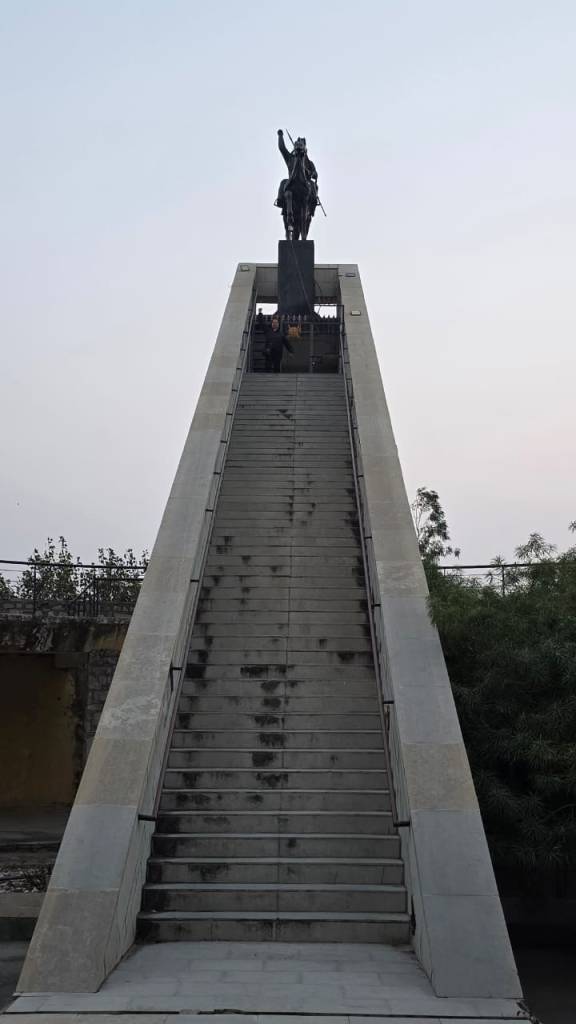
The Chundawats descended from the Sisodia Rajput dynasty in approx 1382 and became particularly influential during the reign of Maharana Pratap. (This is a memorial built for Maharana Pratap a few kilometres away from Deogarh.)
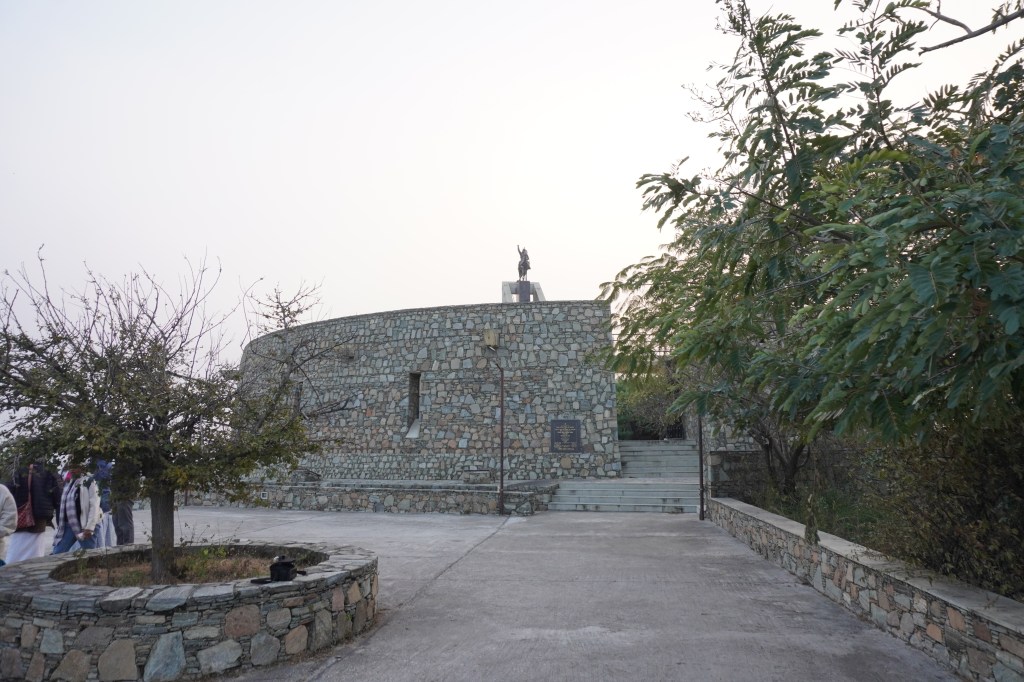
The Chundawats provided their rulers with military support and helped repel military invasions from the sultans of Malwa and Gujarat. They later played an important role in opposing the armies of the Mughals, especially that of Akbar, during the inconclusive battle of Haldighati.

They continued to support Maharana Pratap in his guerilla campaigns against the Mughals, which were carried out among the Aravalli hills. (See first pic!)
The Chundawats had earned the title of “Bhishma of Mewar’ following the renunciation of the throne by Prince Chunda in favour of his half-brother. This act of sacrifice was done to avert a conflict with another clan.

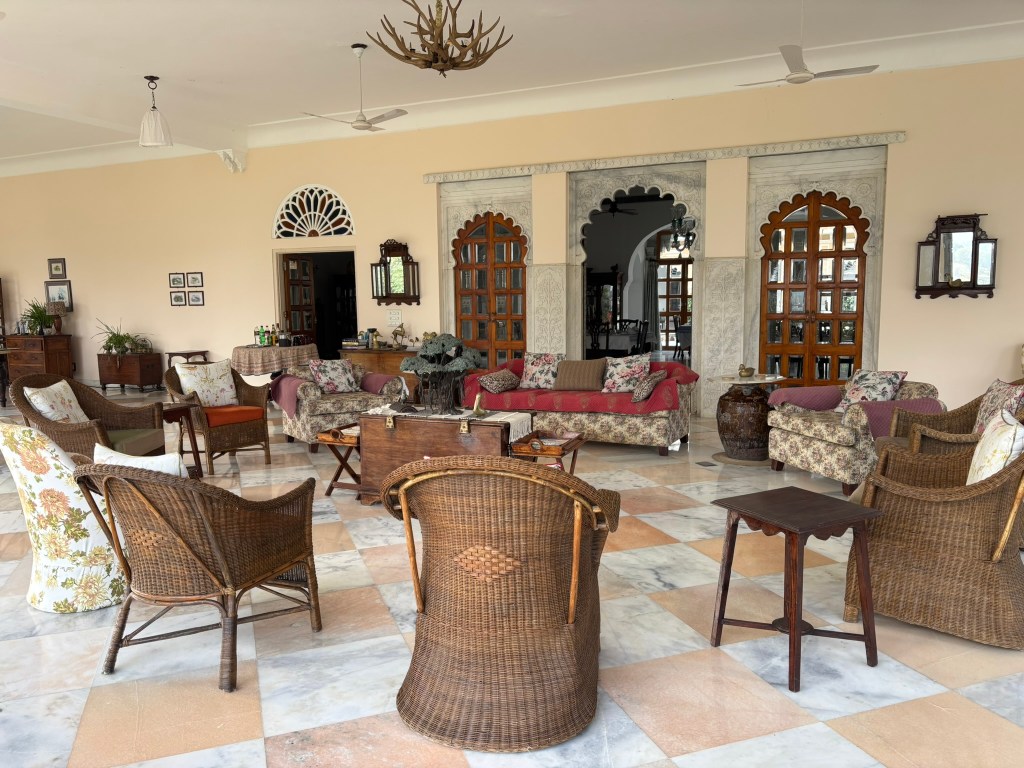
We were fortunate enough to spend one night at Dev Shree, a boutique resort owned by descendants of the Chundawat dynasty. And what a beautiful place it was!

We soaked up the ambience, the green, spacious grounds and the super-comfortable rooms.
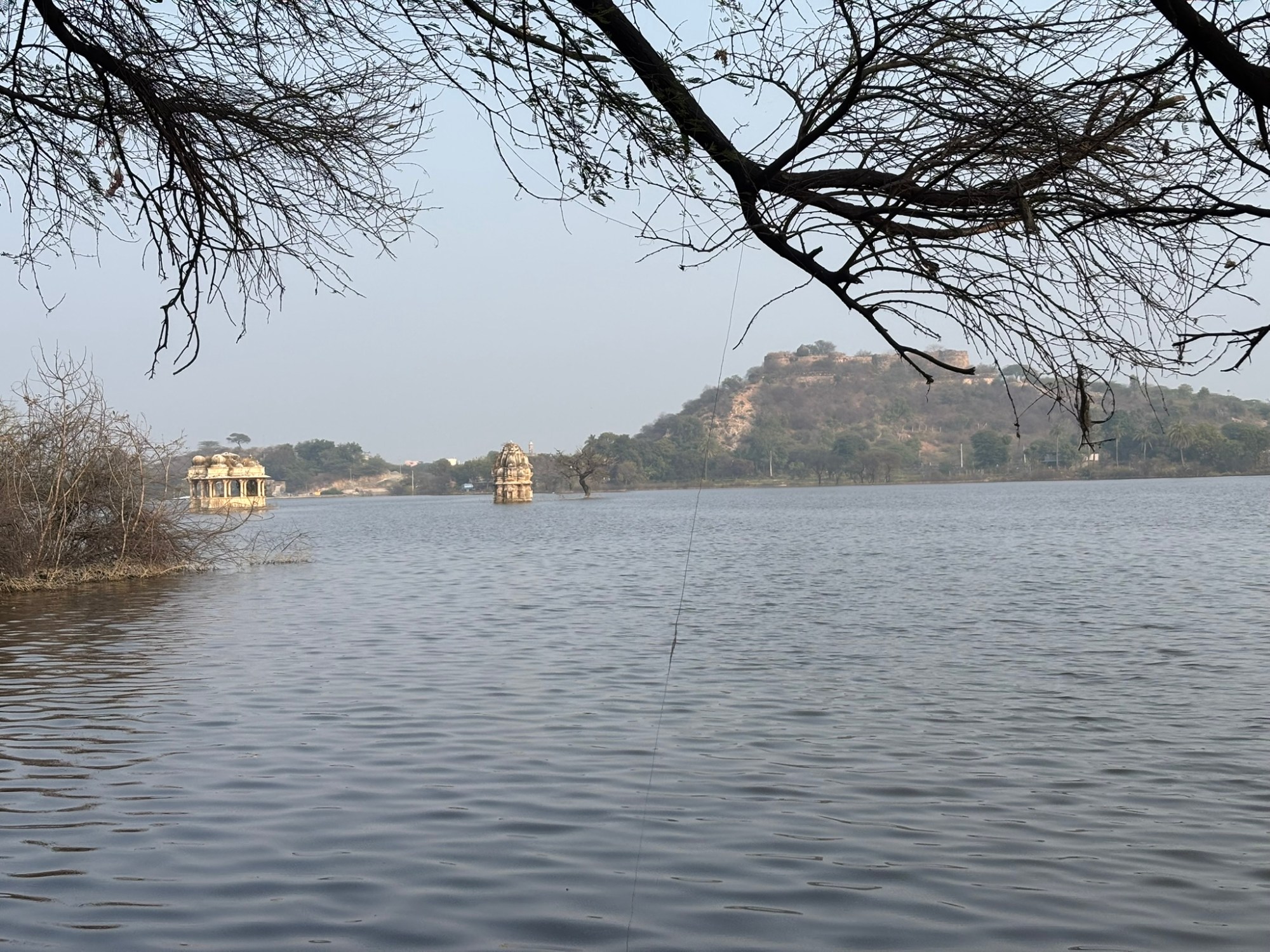
The resort overlooked a lake whose quiet waters beckoned invitingly. But the winter chill prevented us from dipping even our fingers in!
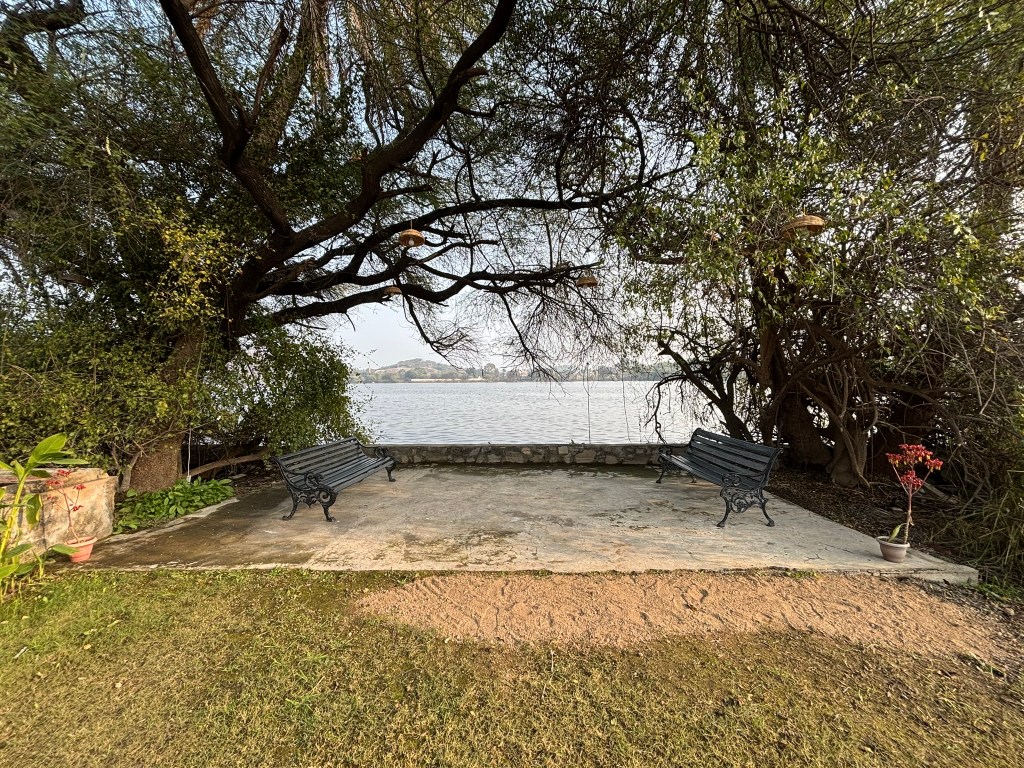
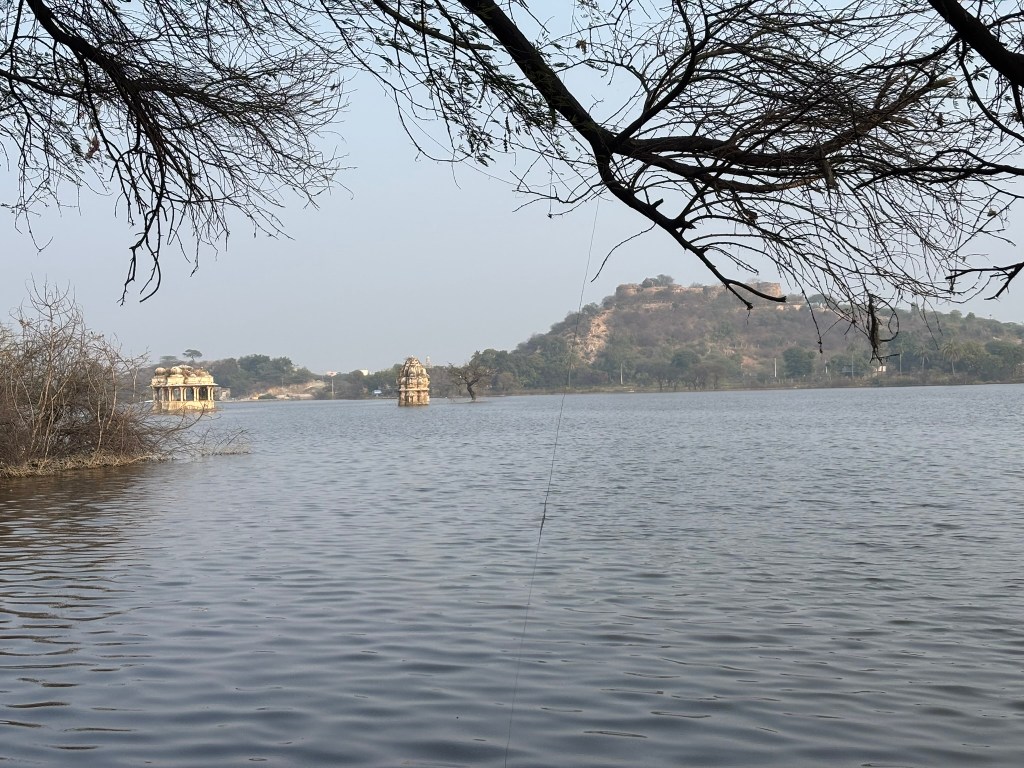
On the other side of the lake are memorials or cenotaphs built to honour the valour of other members of the clan.
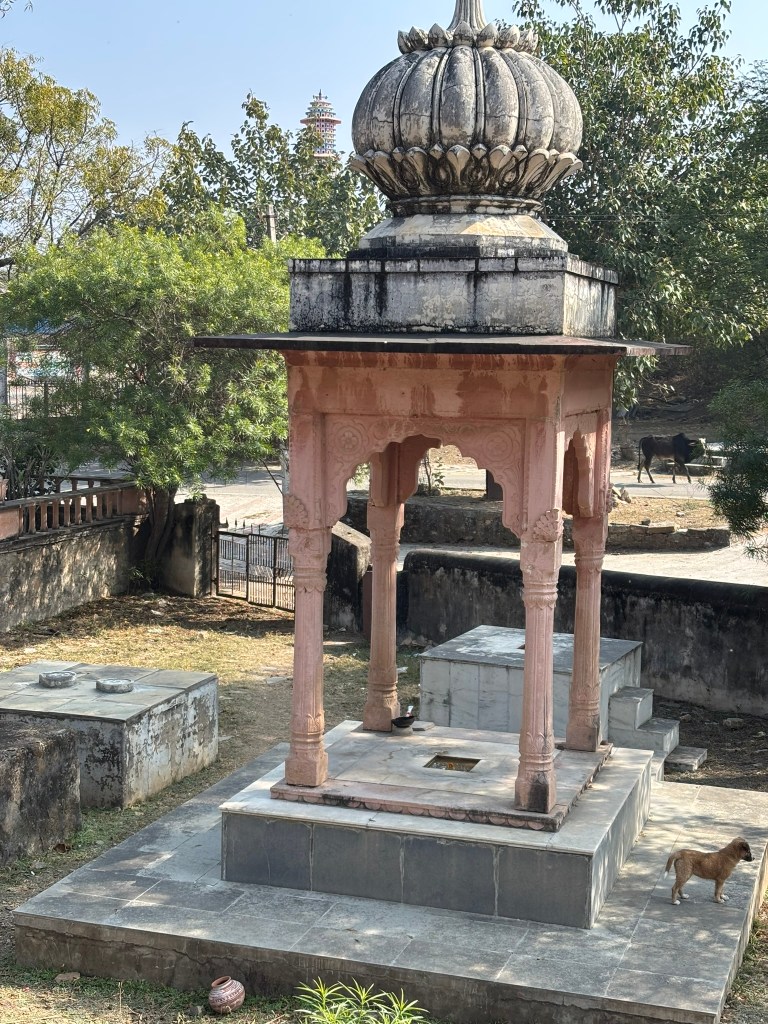
This is one of the cenotaphs. The doggie is a bonus!
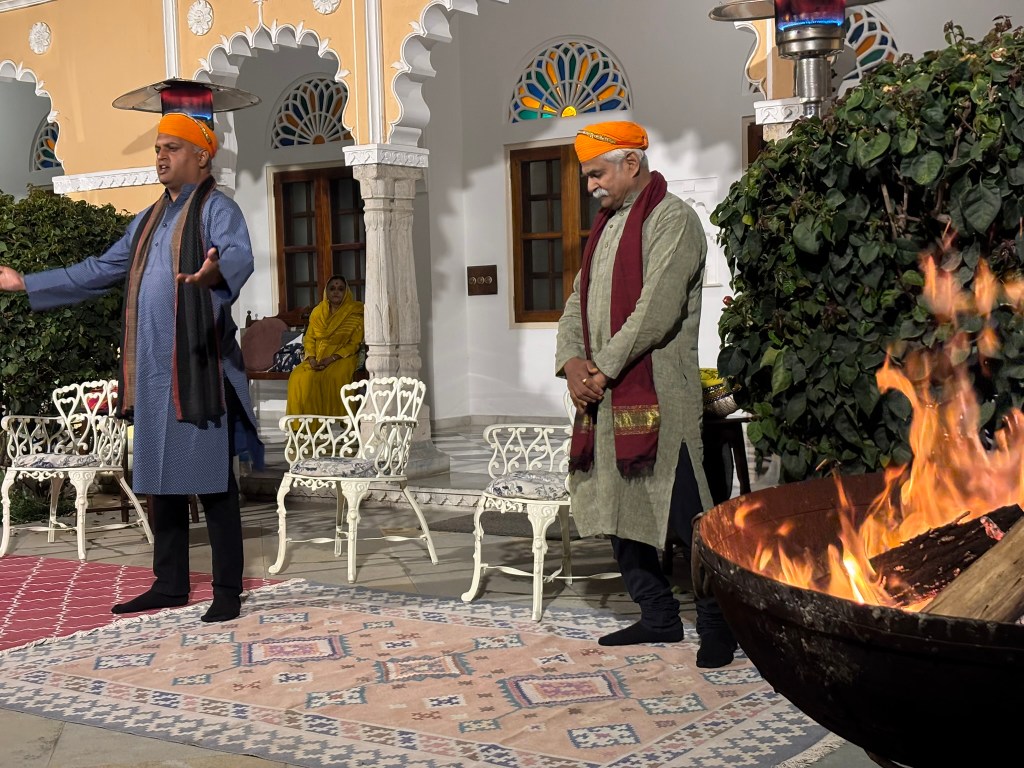
That night we were treated to a dramatic performance of some episodes from the annals of Rajput history.
The next day we were taken for a walk through the lanes of Deogarh. It made me realise how citified we have become and how interesting these narrow lanes lined by houses on either side seemed to us.
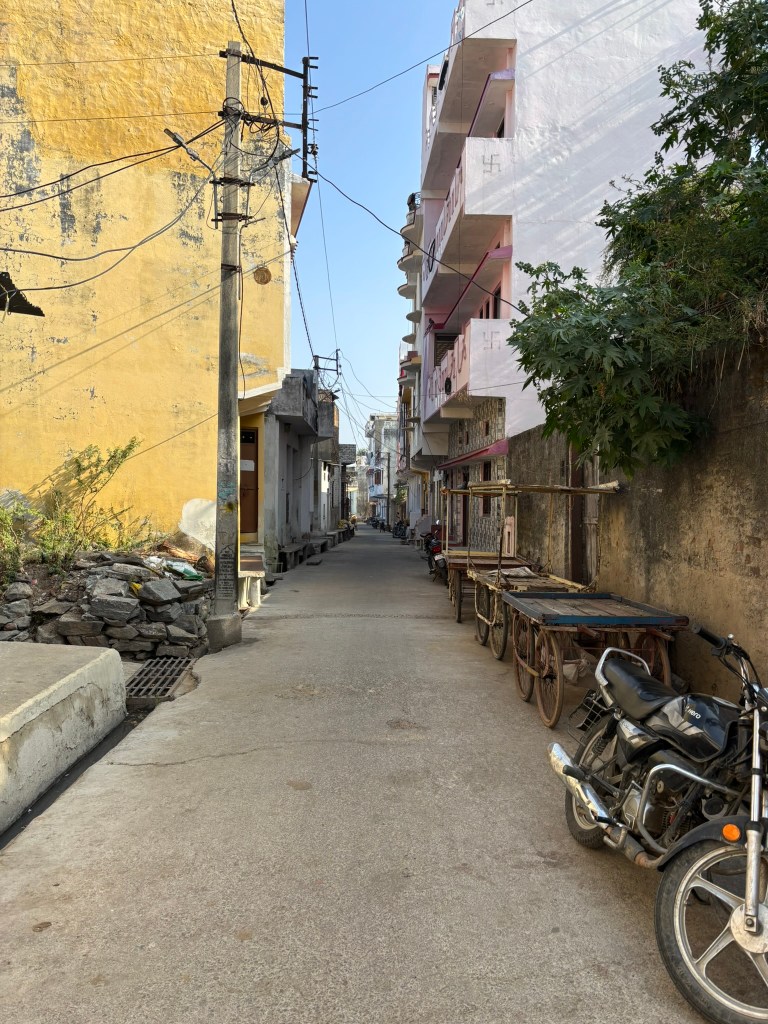
There was a time we used to mock foreigners who would take pictures of colourful Indian towns and villages and feel they were stereotyping us. Little did we think that one day we too would become like foreigners in our own land.
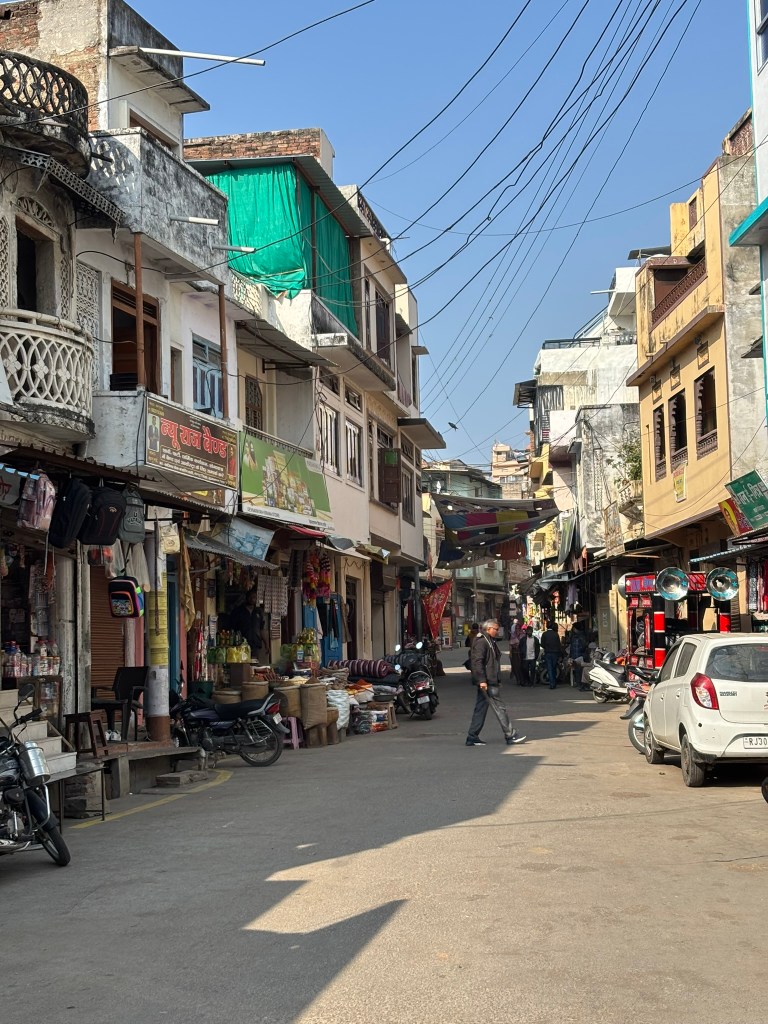
There were quirky, quaint and colourful sights all around us. Big cities have very little character or individuality- they all have tall buildings, crowded roads, and people in a hurry to go places.
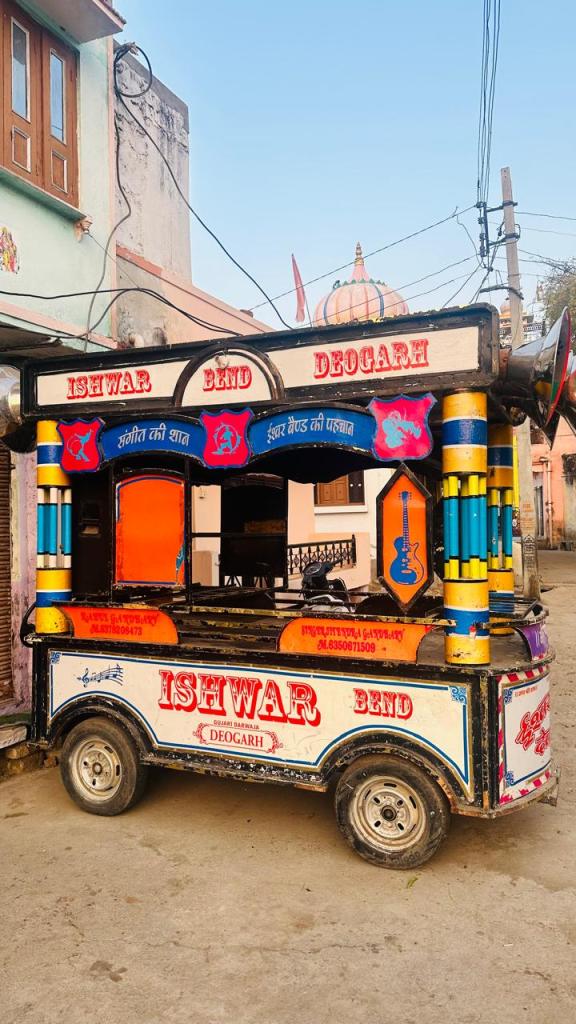
Unlike this person who was huddled up against the winter cold on a slow-moving bike!
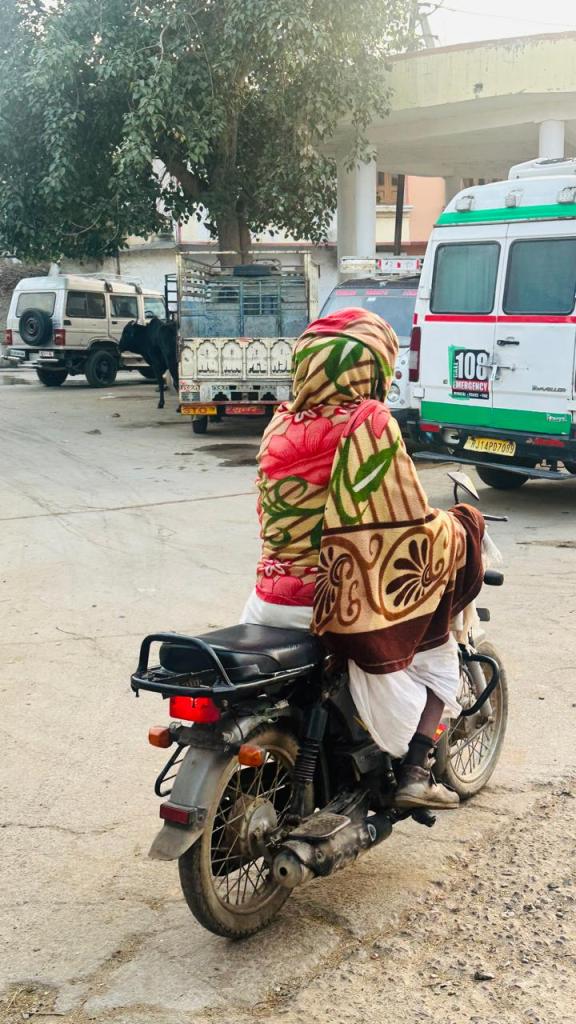
And this lady who must have wondered who these outsiders were and why they found her home so interesting.
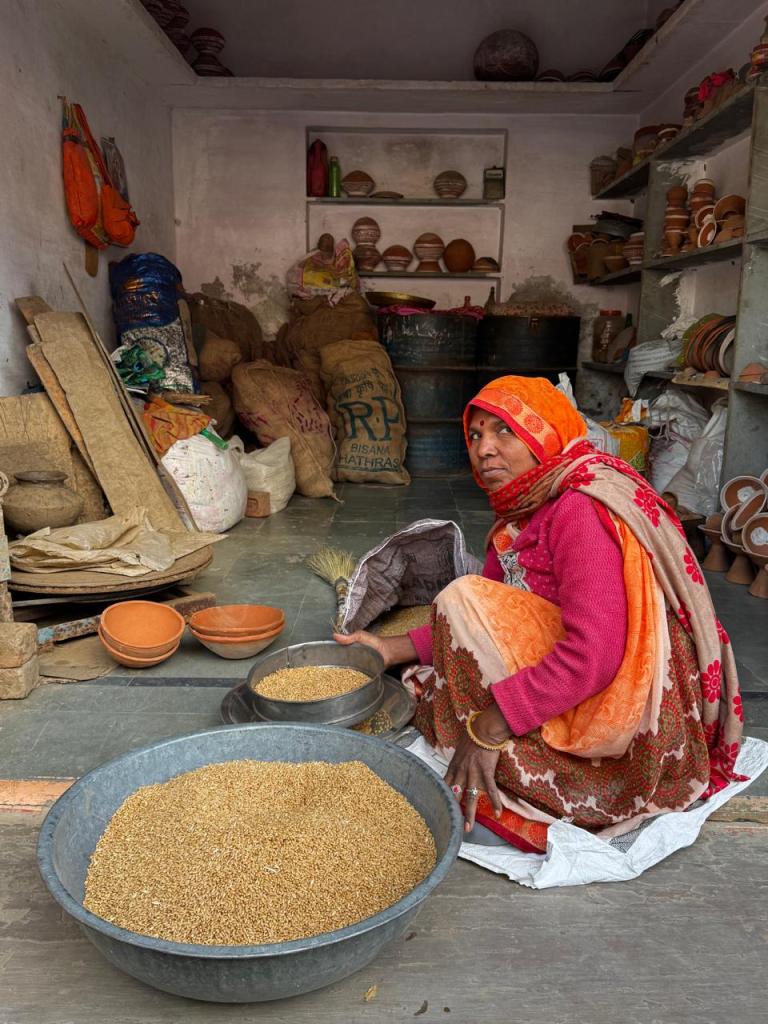
Three guesses as to what this is. And no, we couldn’t get it either.
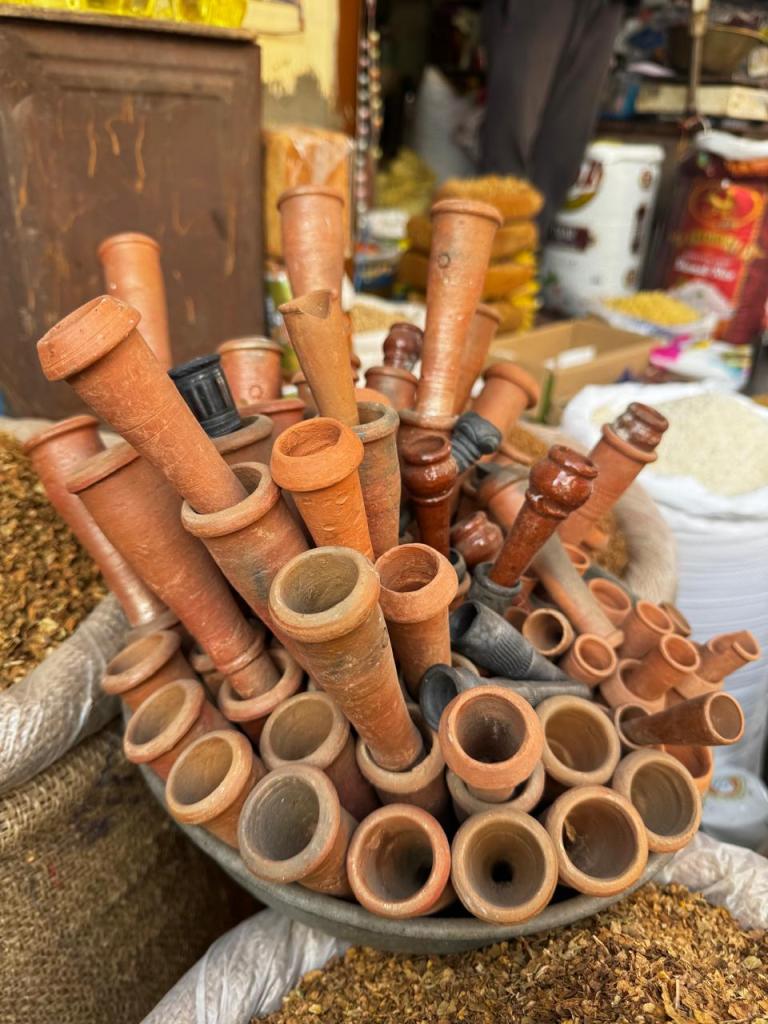
These are chillums. A chillum is a smoking pipe made of clay. And used to smoke marijuana!
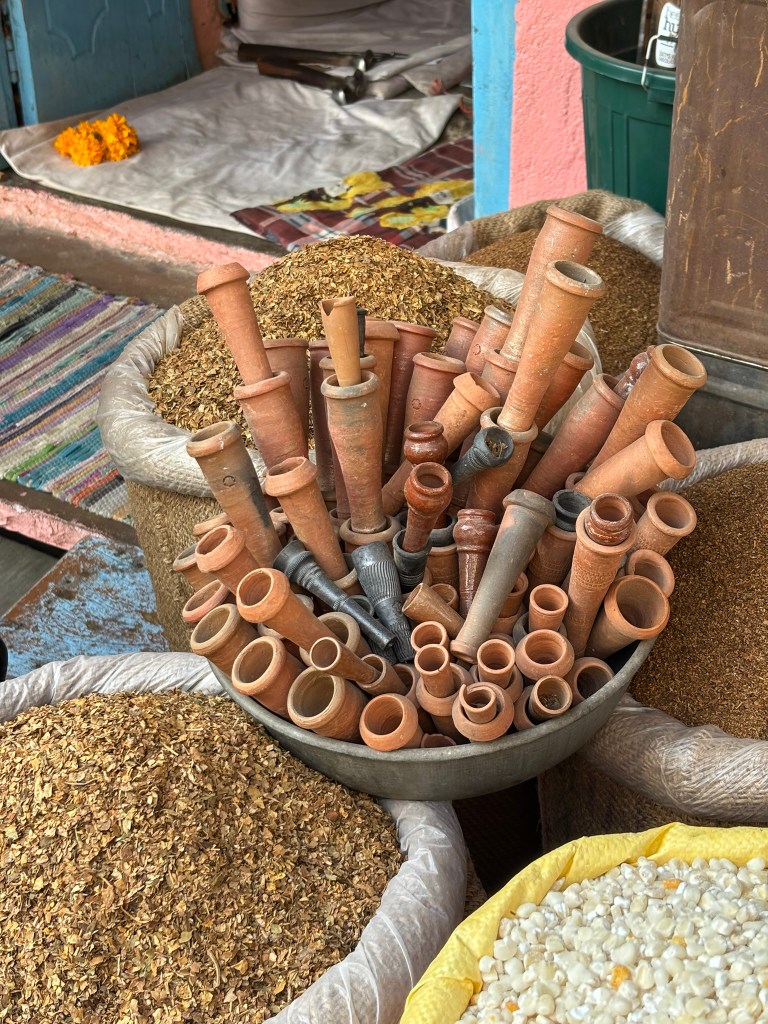
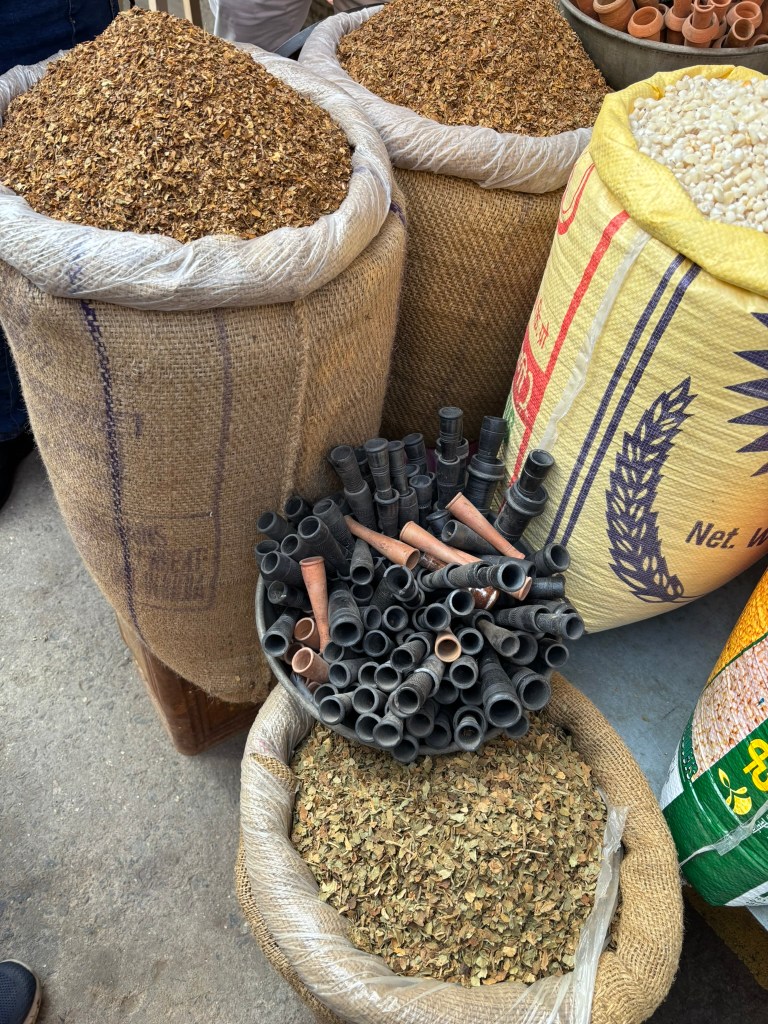
Chillums originated in India (ahem!) and they go back centuries. They were also used to smoke tobacco.
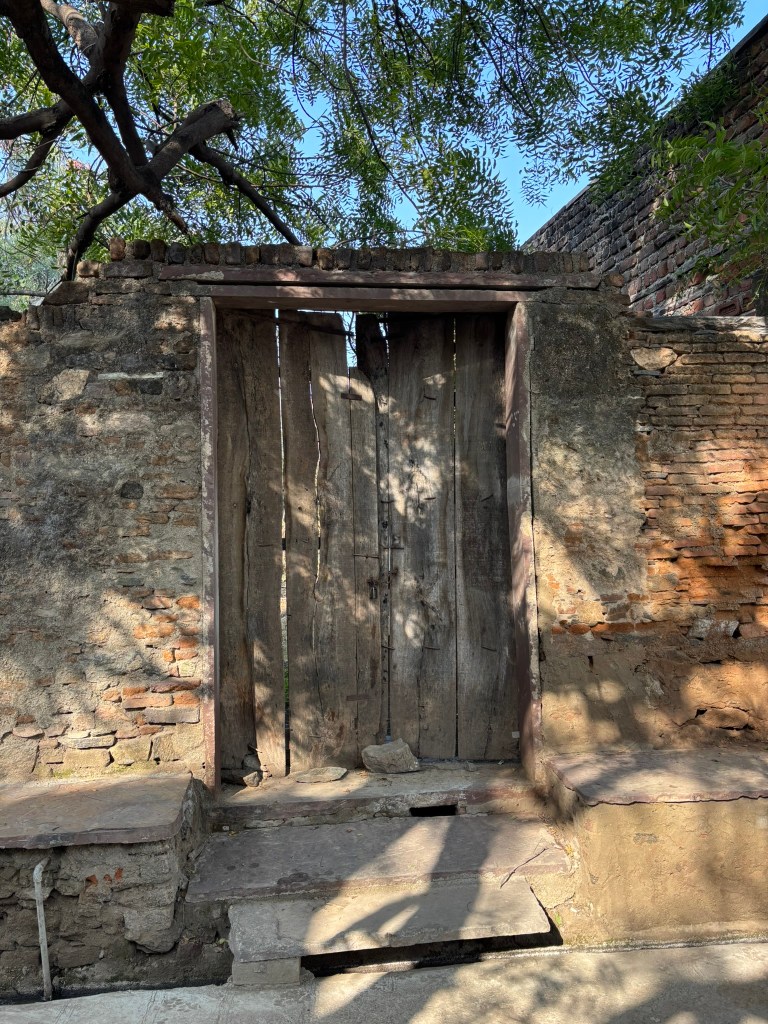
I found these old wooden doors just as interesting. Being inquisitive and nosey, I always wonder what kind of lives the people living behind them have.
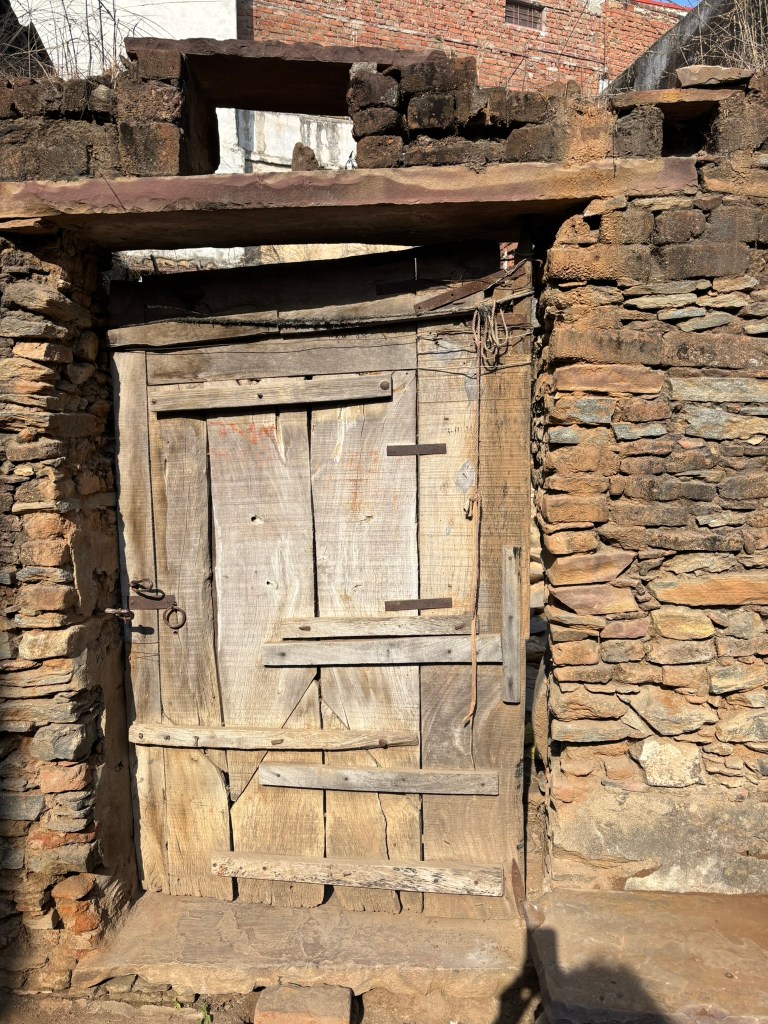
And there is that temptation to go ‘knock-knock’ and get a peek inside!
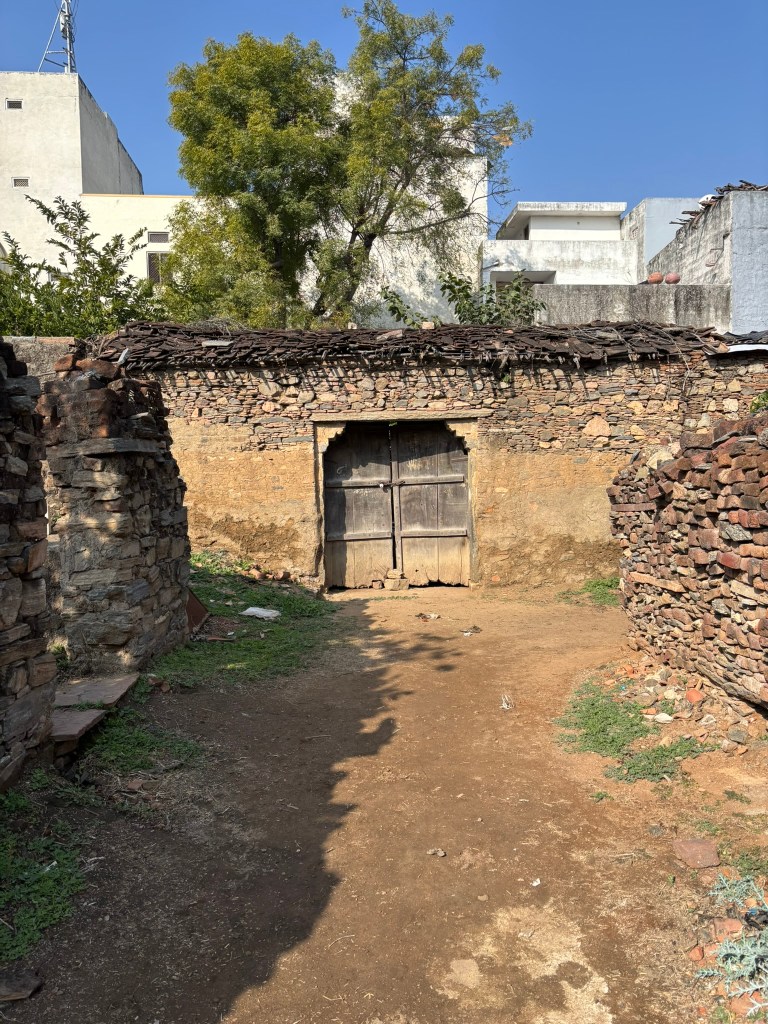
A sun dappled door!
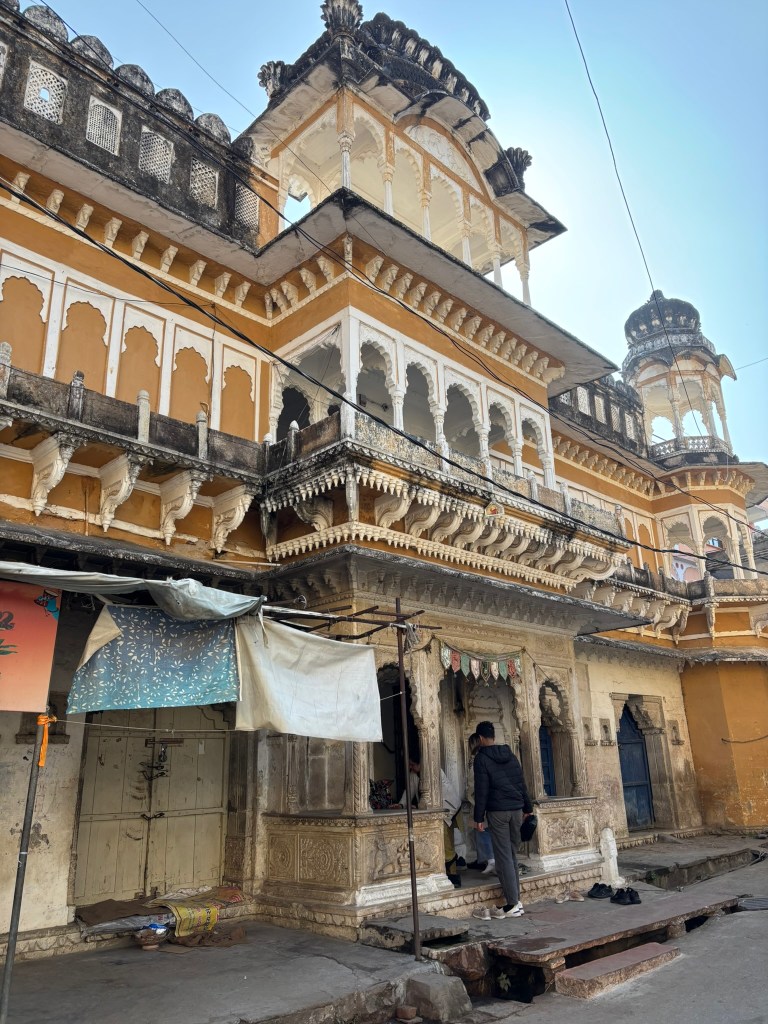
Our walk through the market of Deogarh ended at this ancient temple. Any walk through any market would be incomplete with some shopping. Mine was a packet of Rajasthani red chilli powder, which the friendly young shop owner obligingly sealed and packed for me in quantities of covers!
 butterfliesonmymindblog