
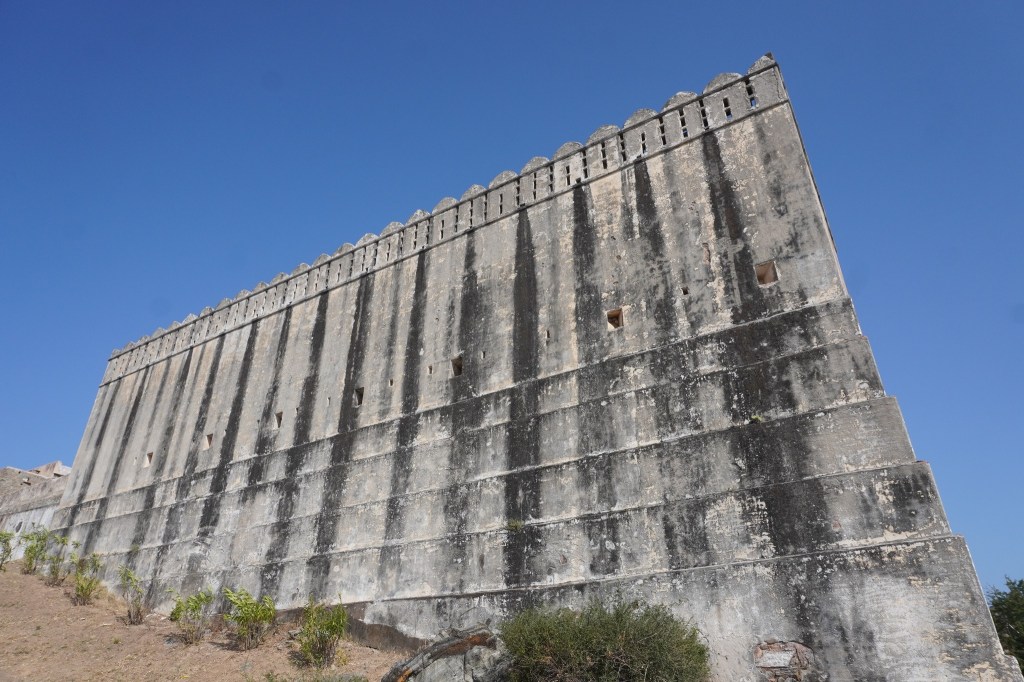
The imposing Kumbhalgarh fort in the kingdom of Mewar. It towers above the peaks of the Aravallis at a height of 1100 metres above sea level, and has the formidable reputation of being unconquerable.
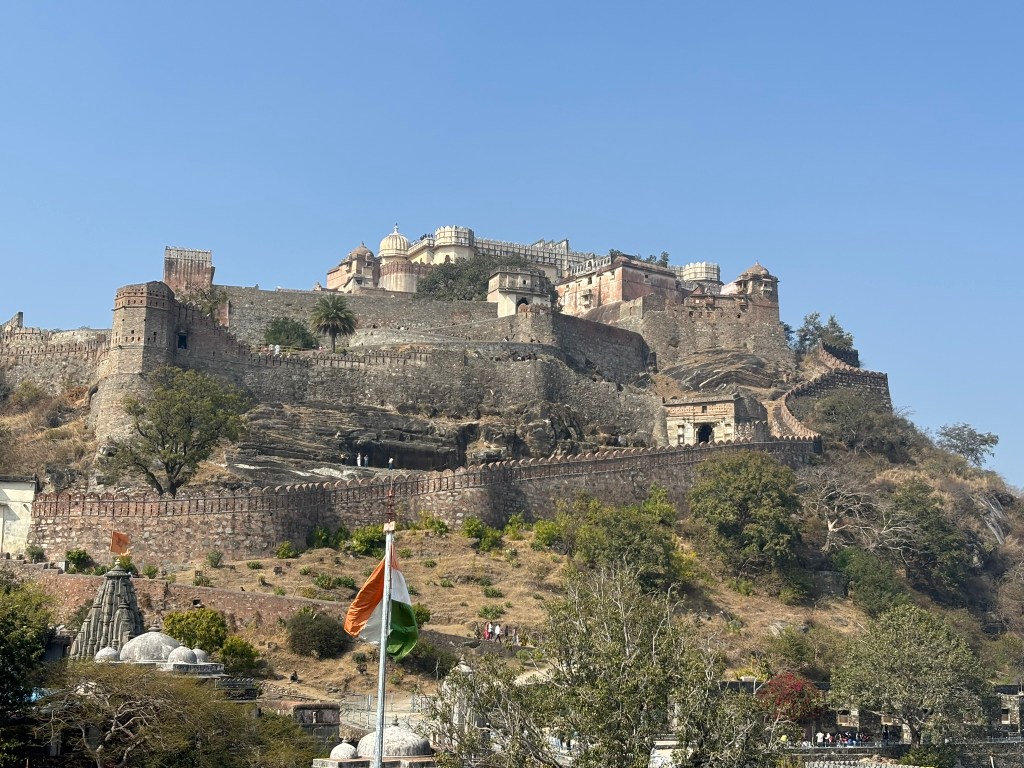
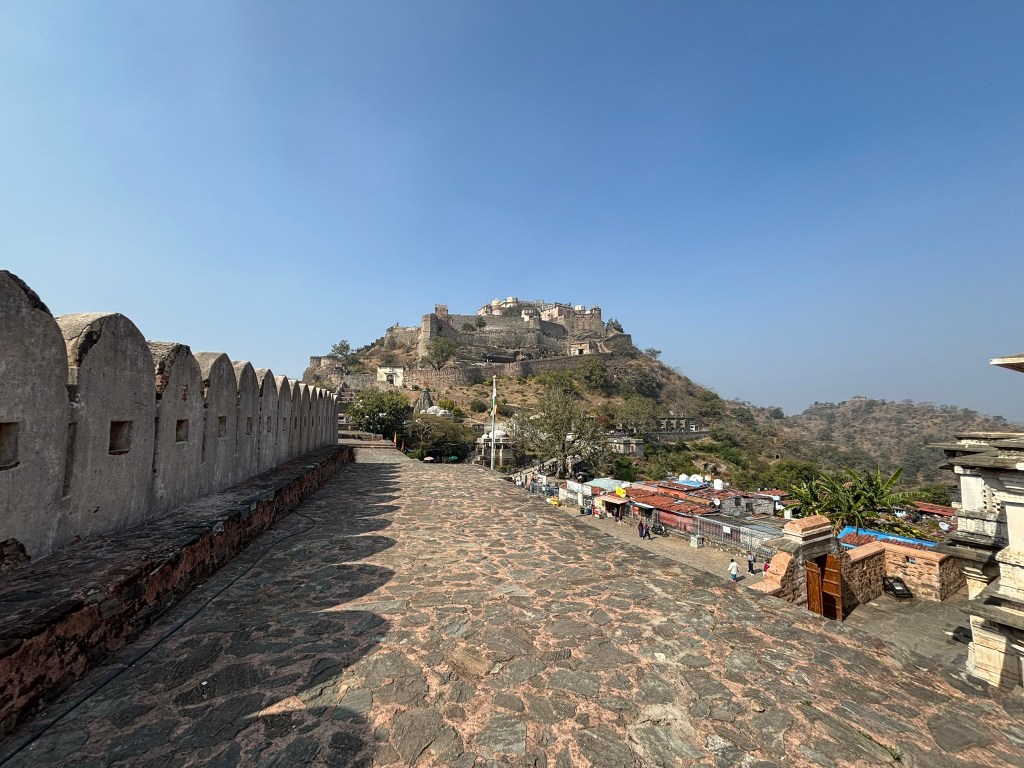
The inaccessibility of the fort made it invincible. It is protected by a massive wall that stretches for 36 kms and is wide enough for 8 horses to be ridden abreast.
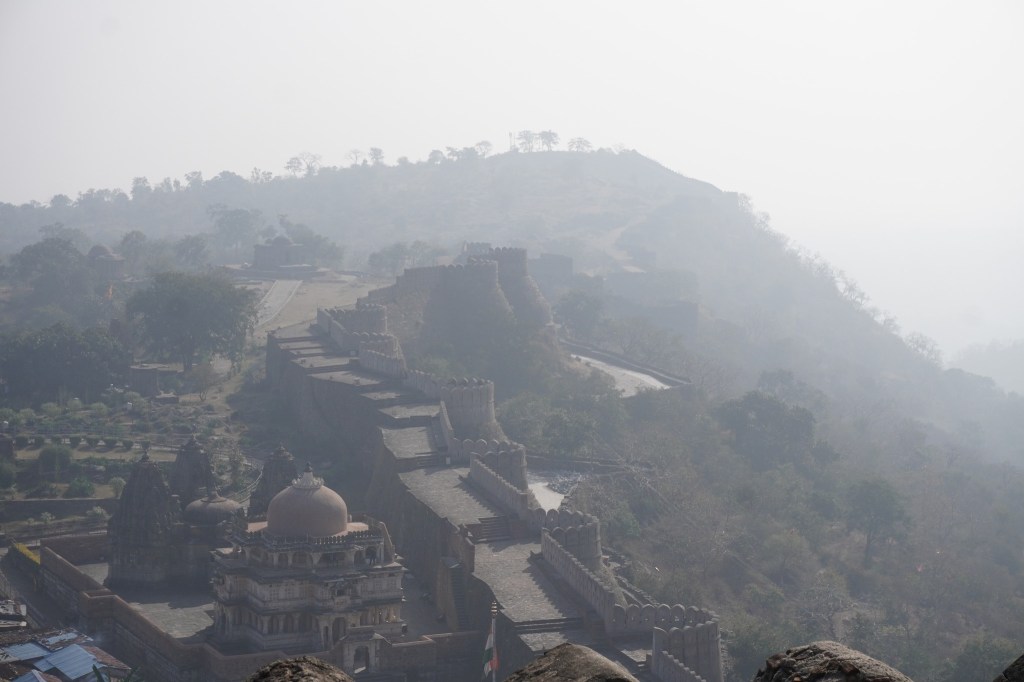
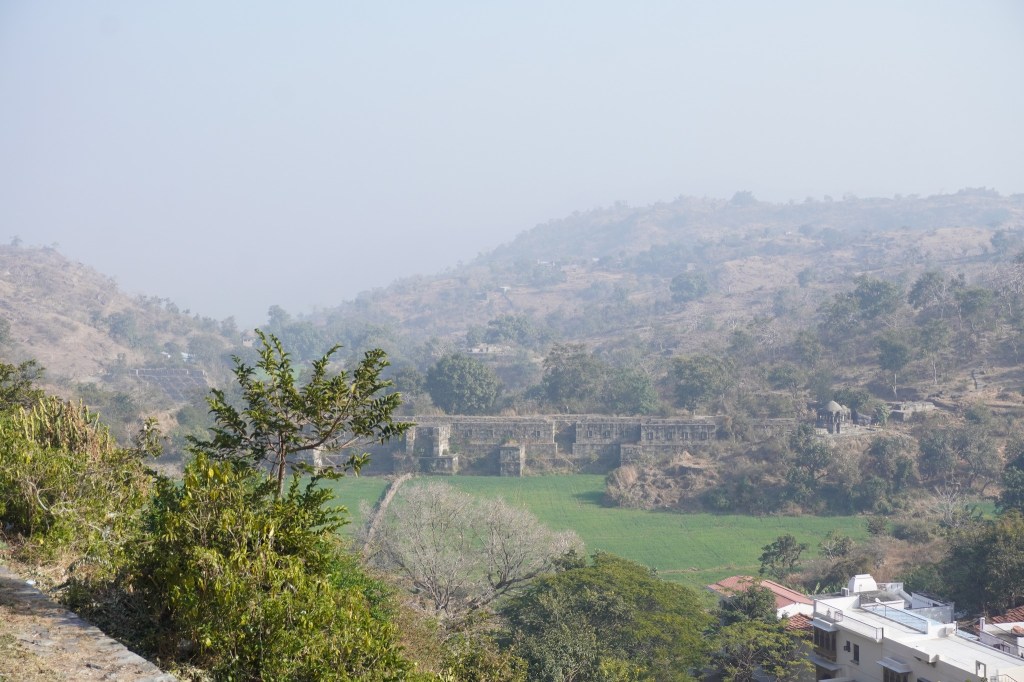
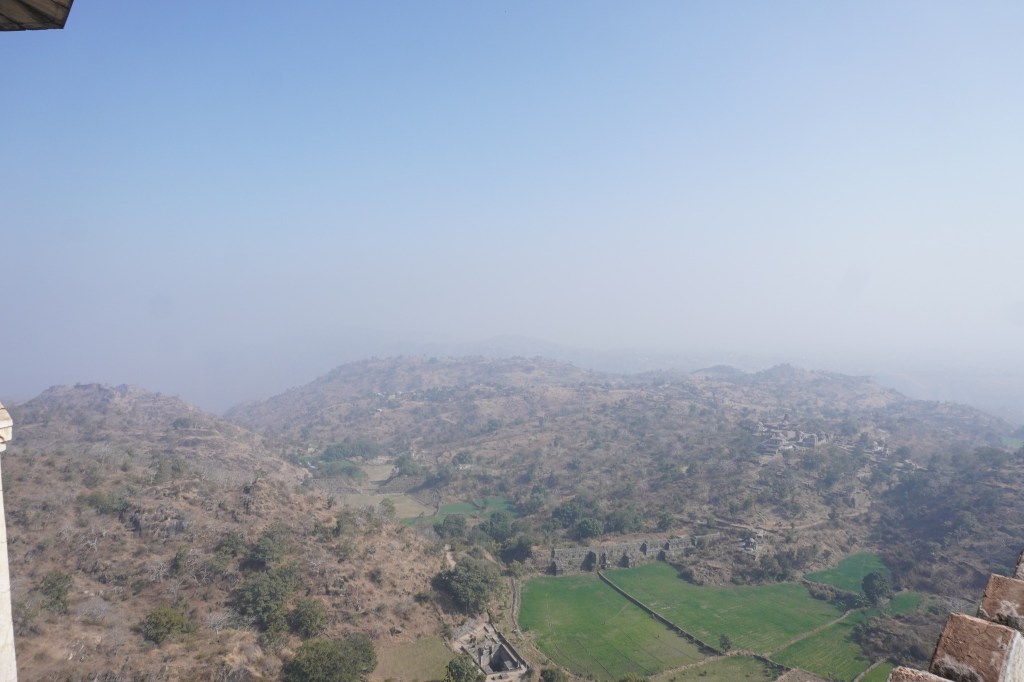
As one ascends higher, one is treated to a superb view of the surrounding peaks- all 13 of them.
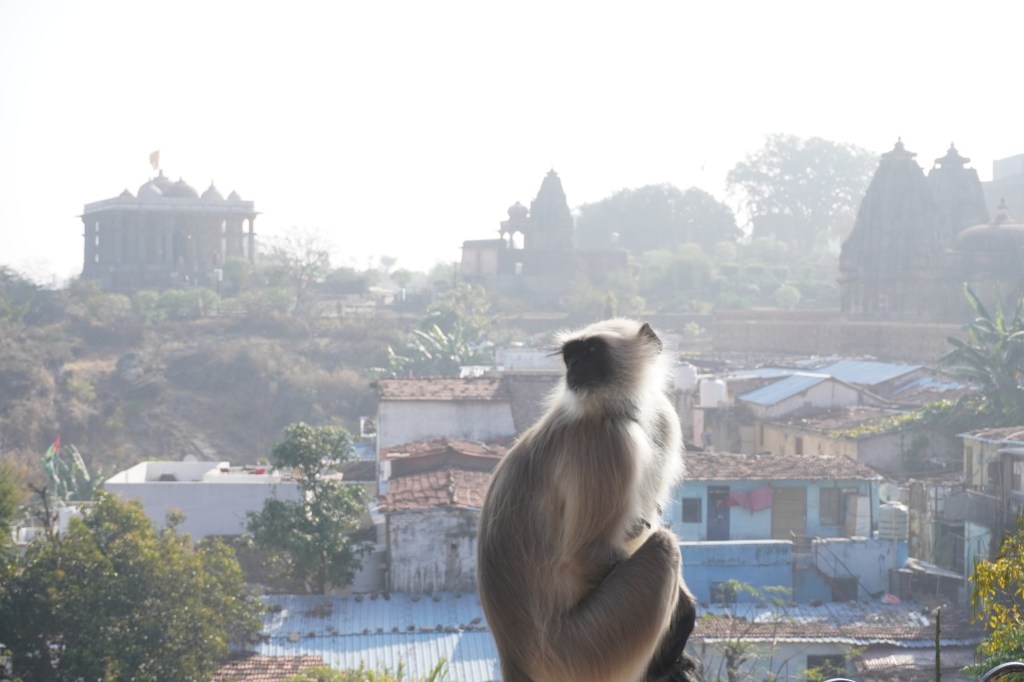
Although this monkey doesn’t seem to care!
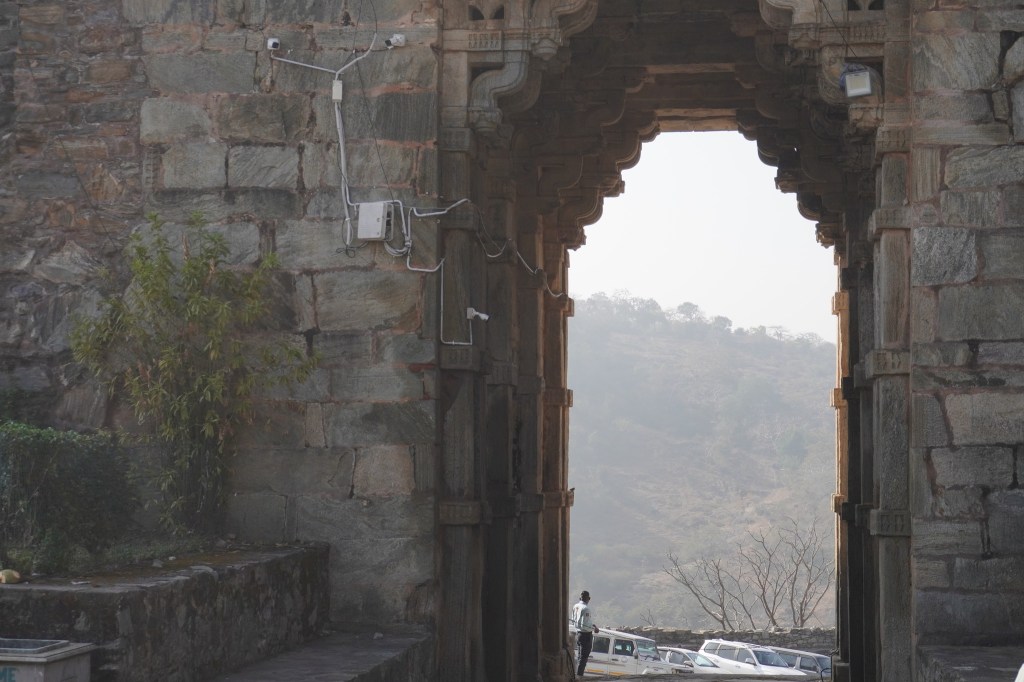
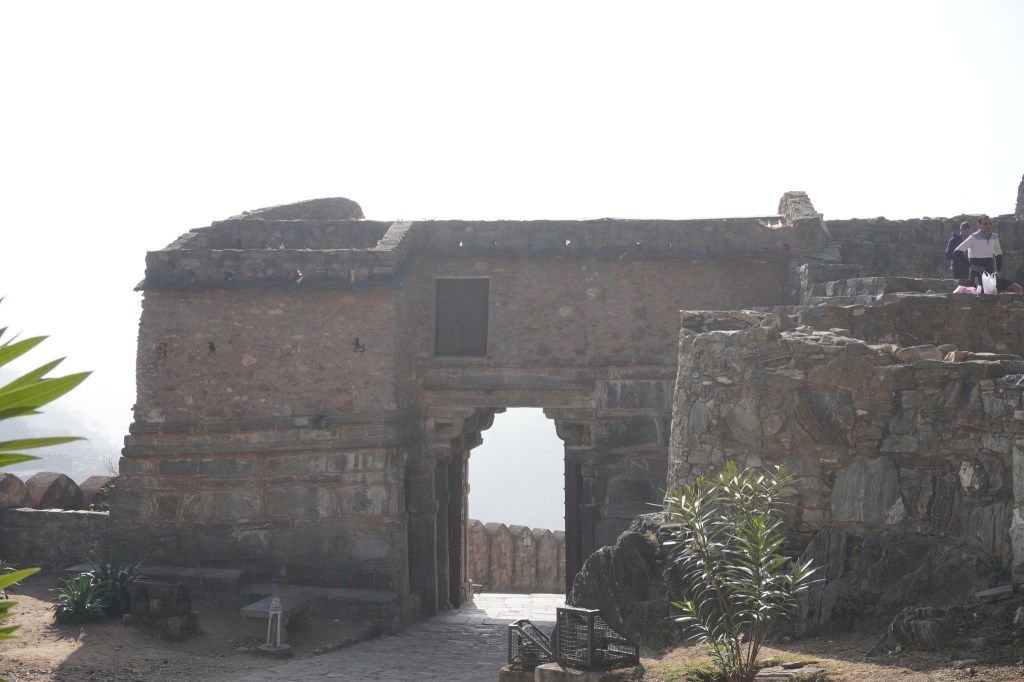
The fort has 7 entrances, all strategically located, as a defense against invading armies.
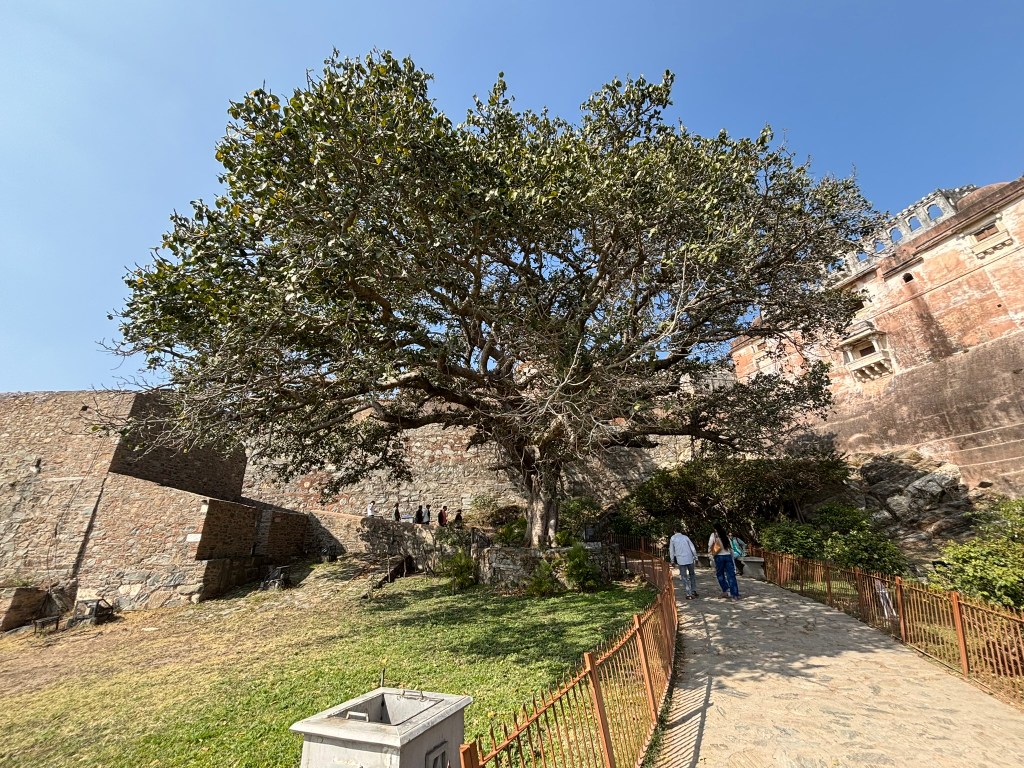
And a 200 year old banyan tree to greet visitors nowadays!
The present structure was build by Rana Kumbha in the 15th century and took 15 years to complete.
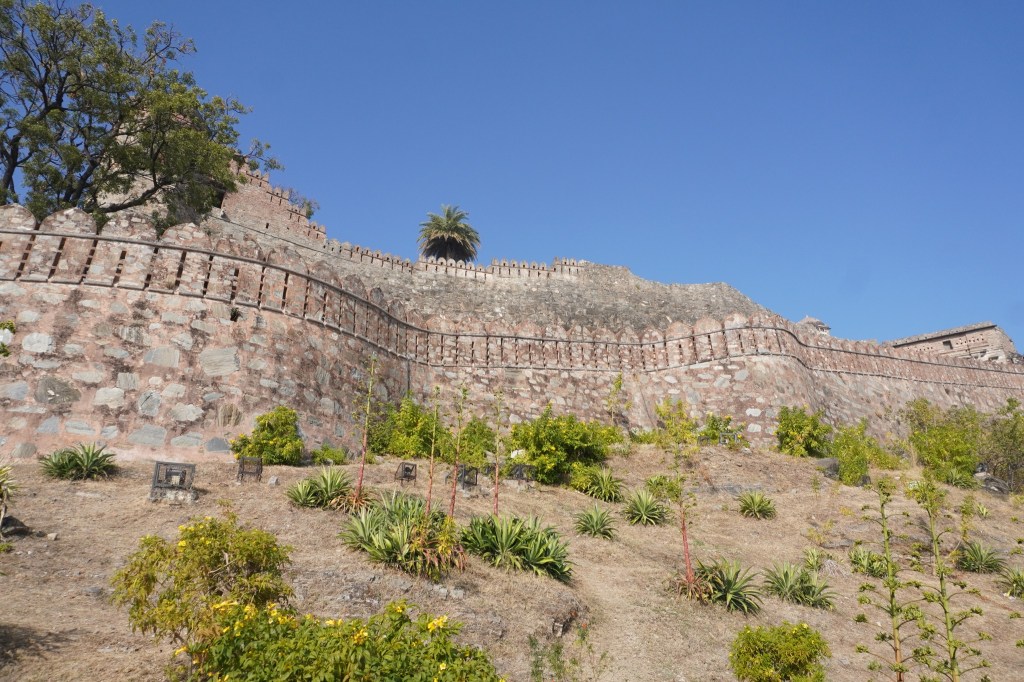
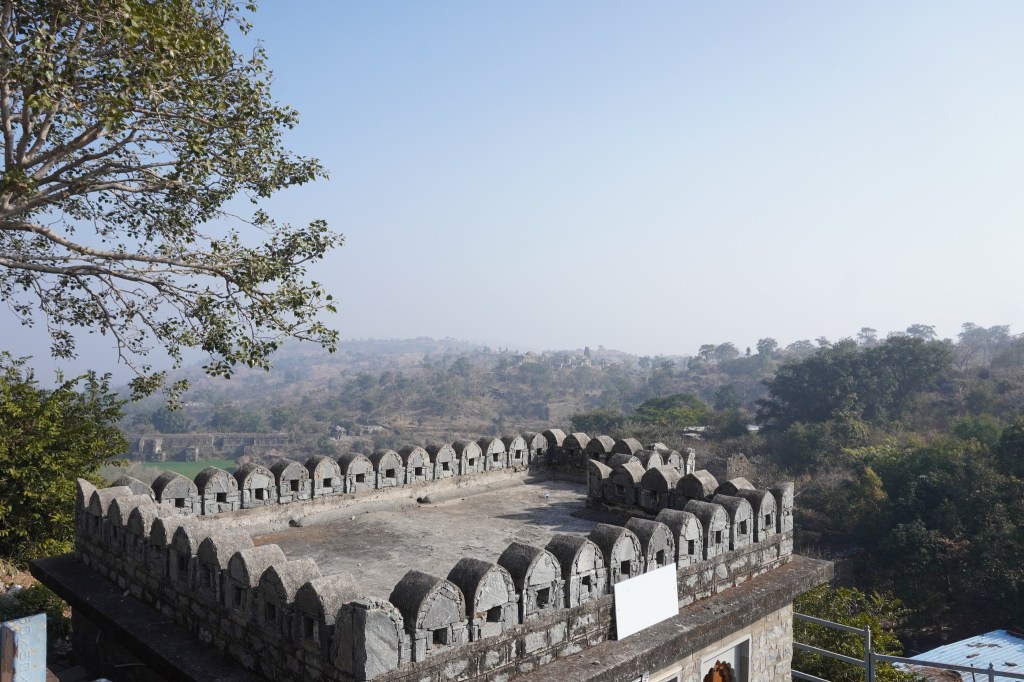
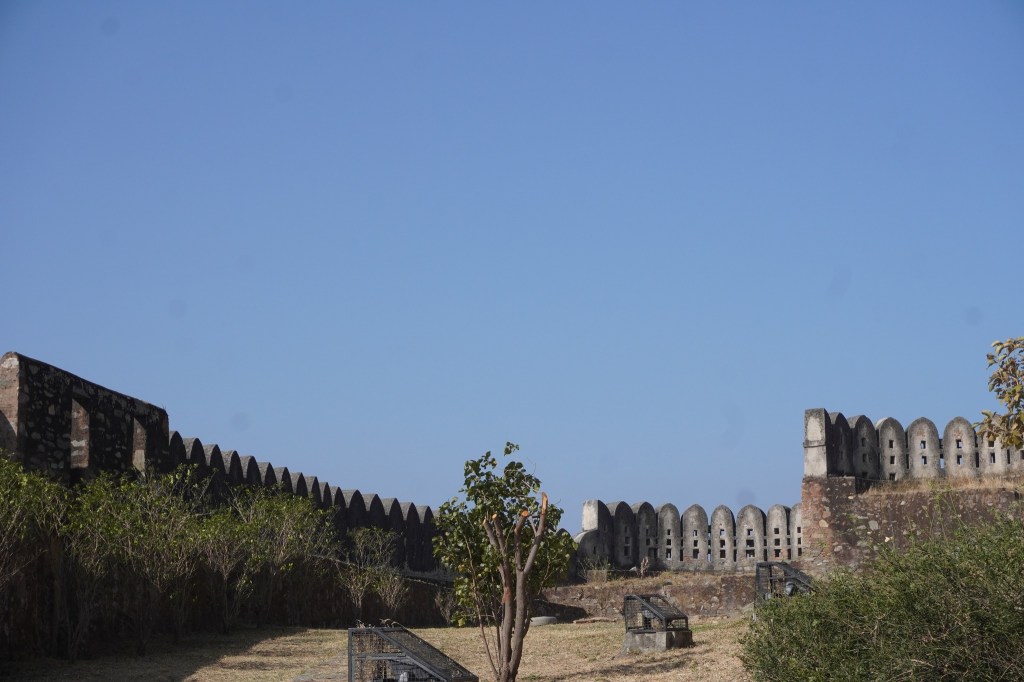
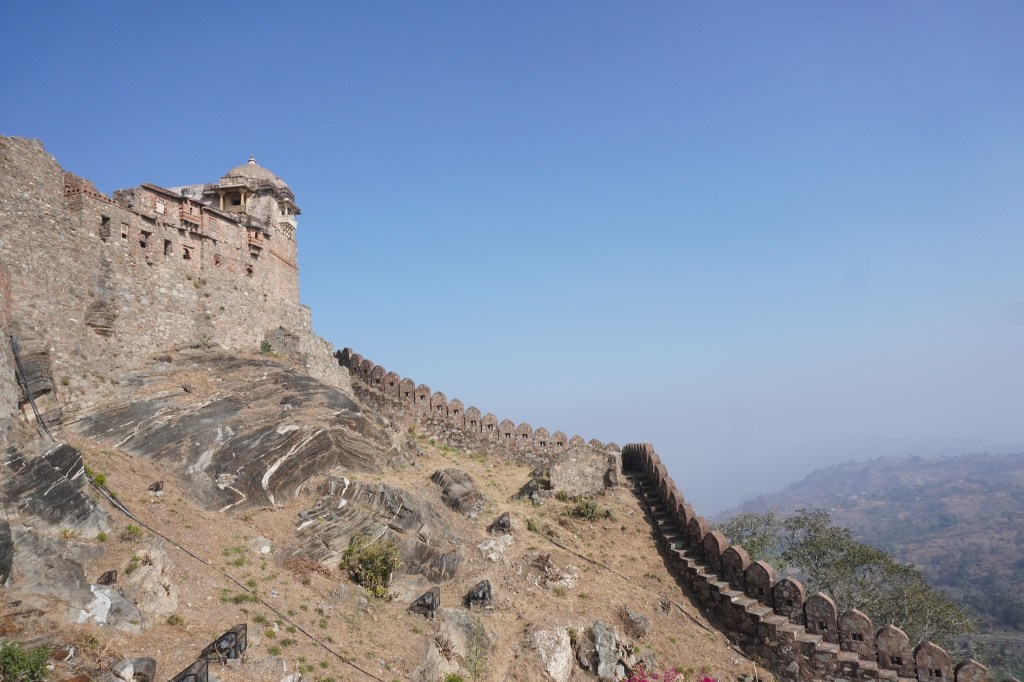
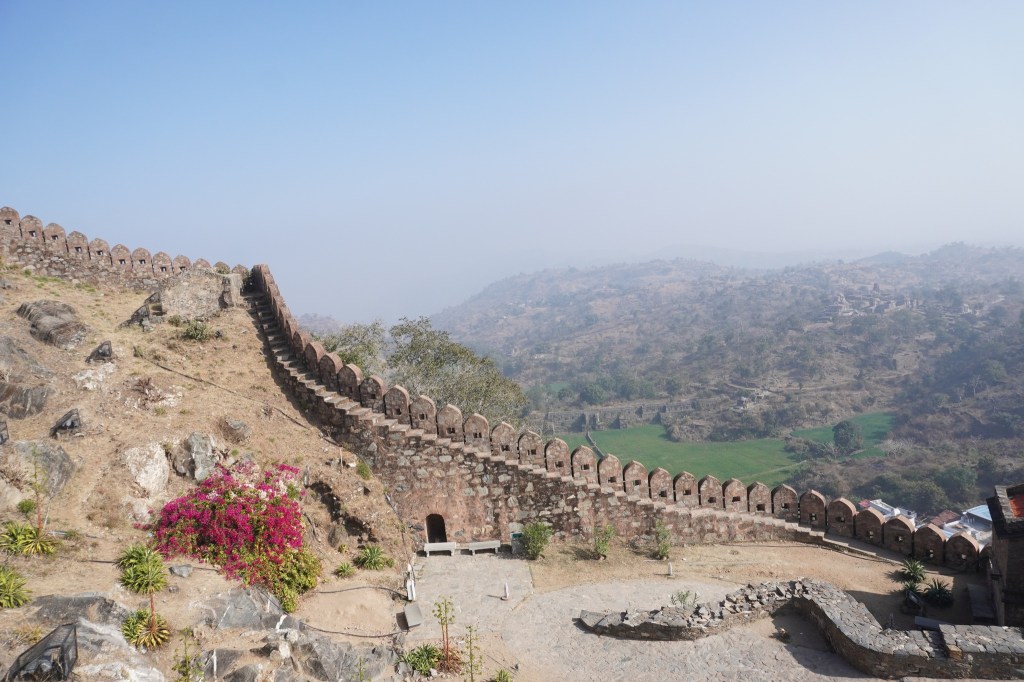
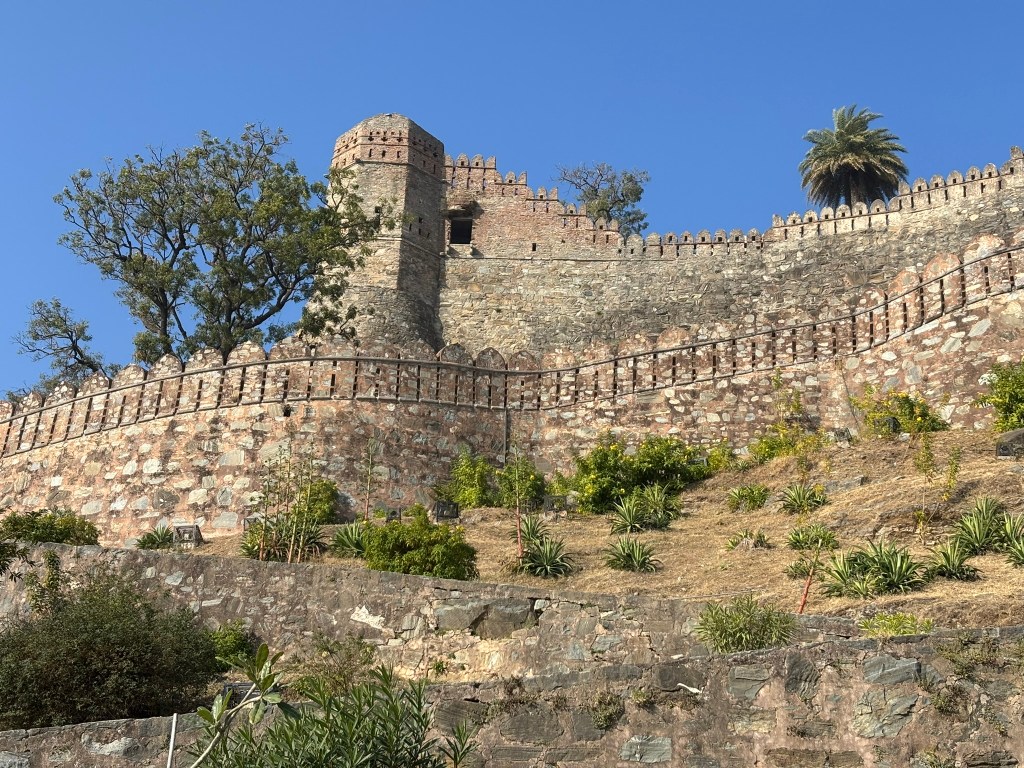
These massive ramparts go all around the perimeter of the fort.
One of the many interesting structures within the fort.
Another one of the 7 gates.
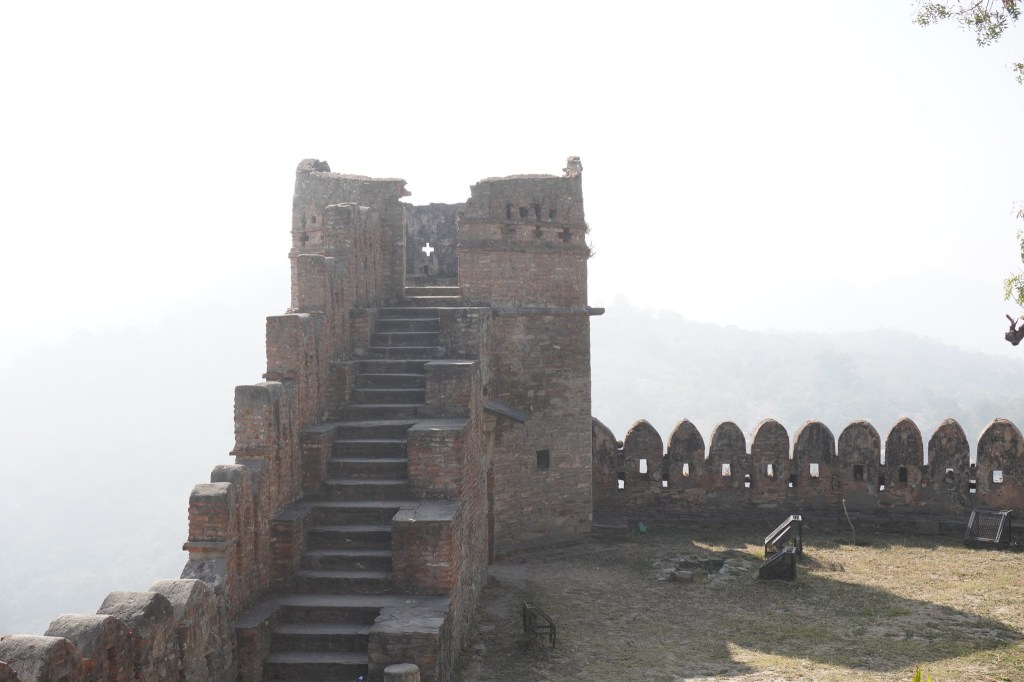
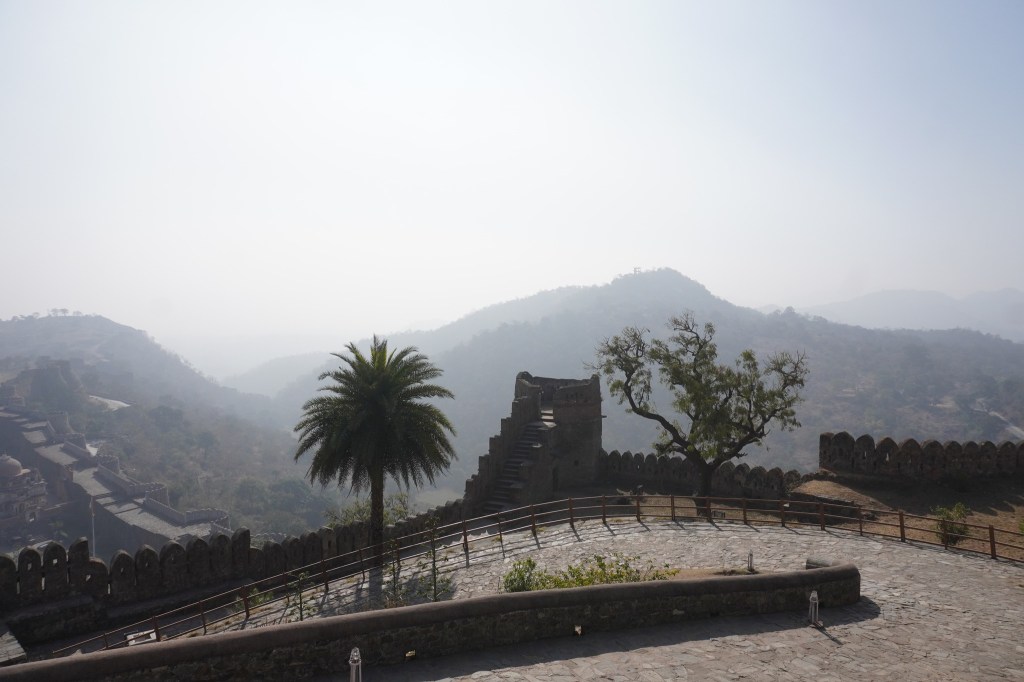
And a watch tower from where to keep a look out for invaders.
Although Chittor was the capital of the Mewar Kingdom, it was Kumbhalgarh that served as a refuge for the royals during invasions, thanks to its location and topography.
It was only once that the defence of the force was breached by the combined armies of Akbar and Amer.
The Rana Kumbha struggled to build the construct the walls of the fort many times. There several fascinating legends attached to the construction of this fort.
Rana Kumbha consulted a sage who explained that the task was being disrupted because of a curse. The curse could be warded off only by a voluntary sacrifice.
When a volunteer for this task couldn’t be found (surprise!), the sage offered to be the sacrifice and was subsequently beheaded. The king’s palace was built where the body of the sage fell.
Kumbhalgarh is also the birthplace of the son of King Udai Singh II- the legendary warrior king Maharana Pratap.
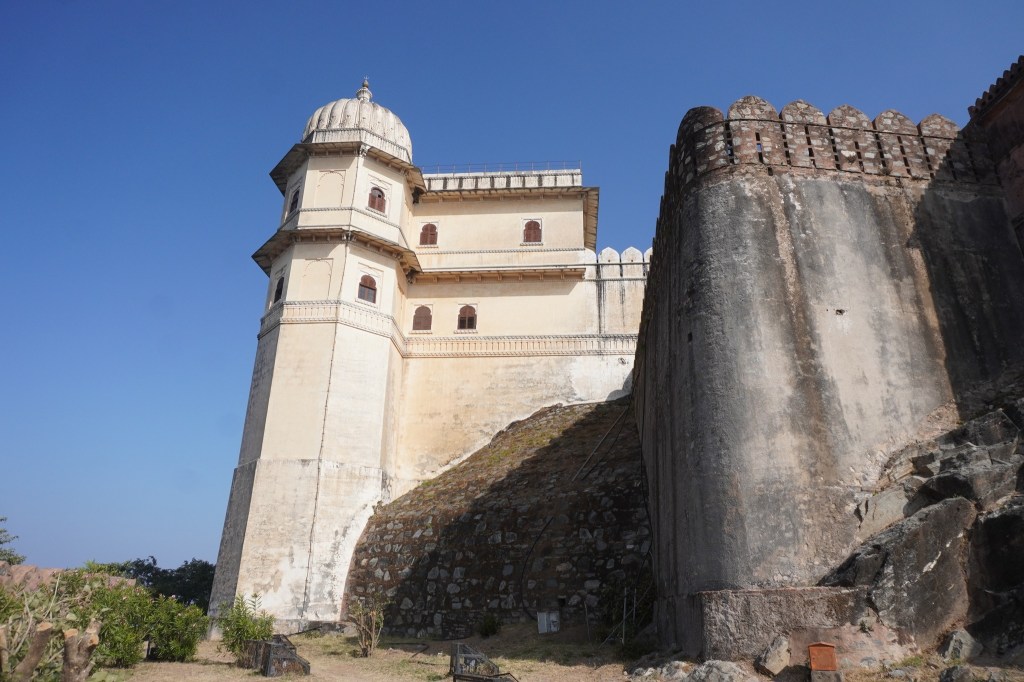
Maharana Pratap spent the better part of his life resisting the forces of the Mughal Emperor Akbar in his attempt to take over the kingdom of Mewar.
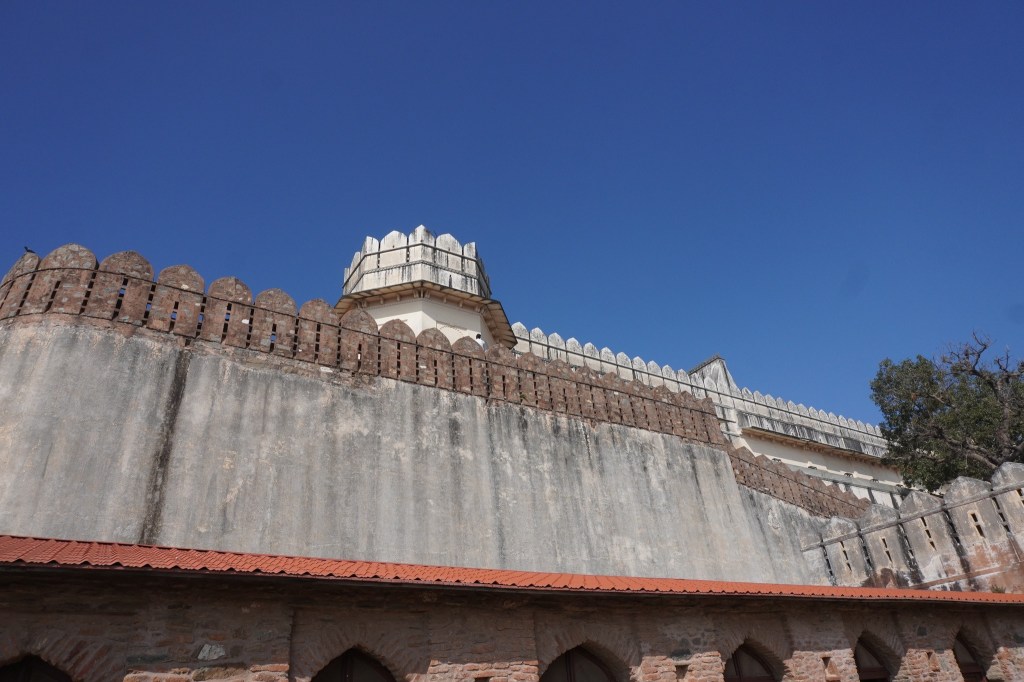
As one ascends higher the views get better and one can truly appreciate what a strategic location this must have been in the 15th century.
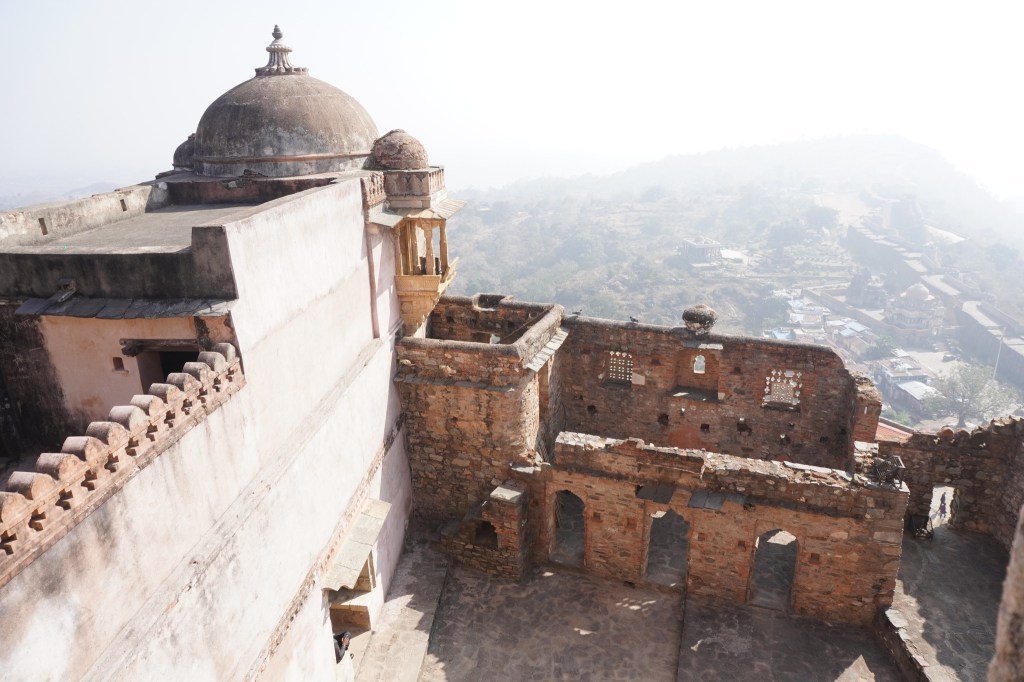
And how it was able to withstand so many attacks and sieges.
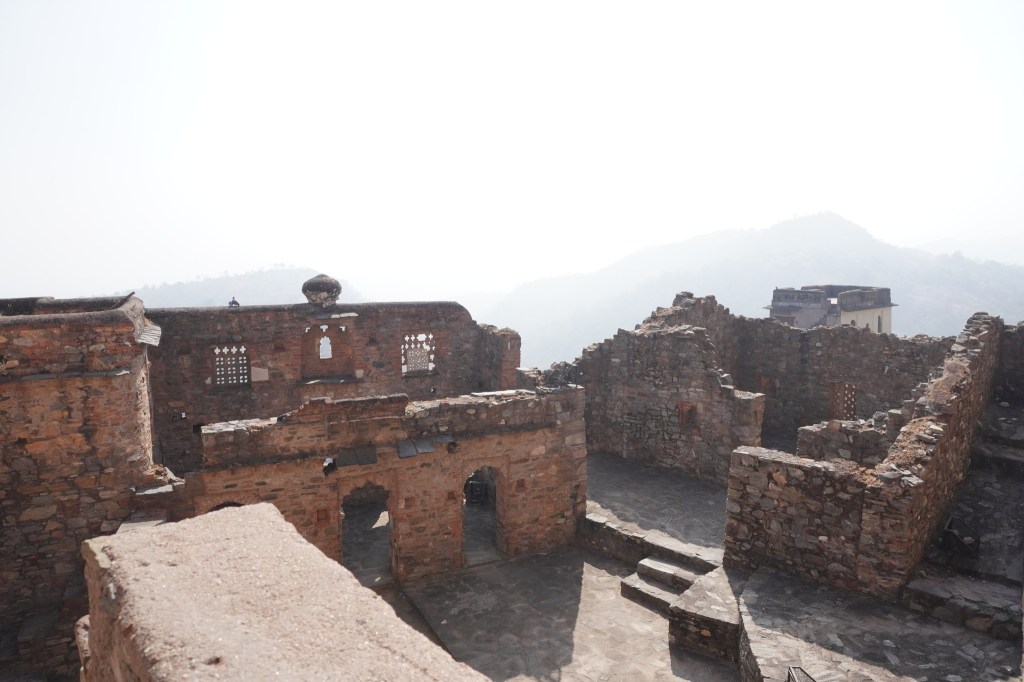
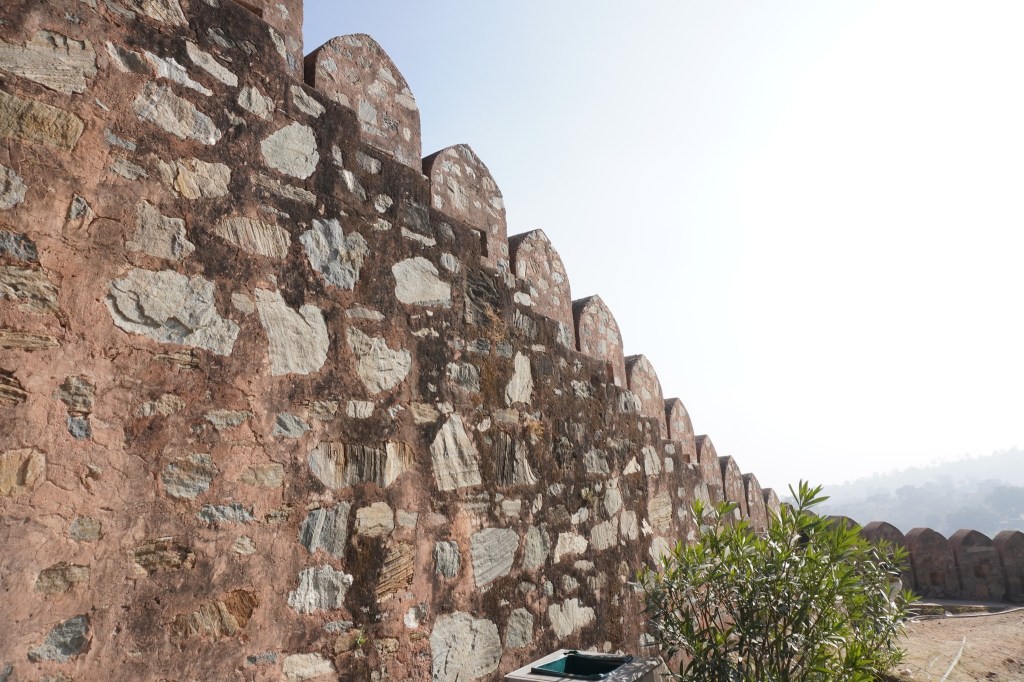
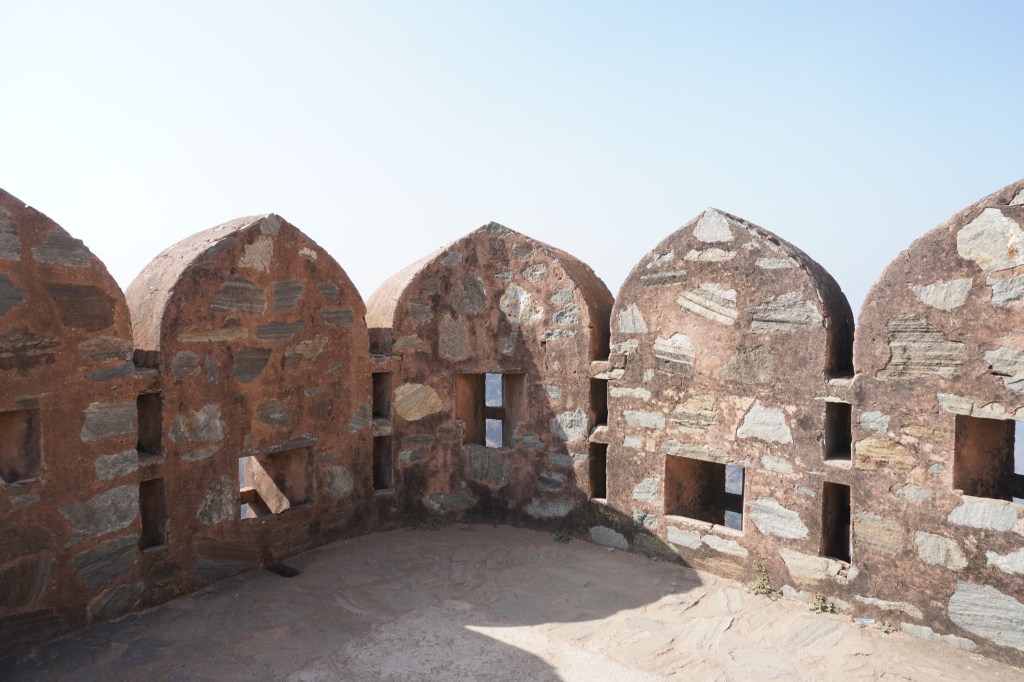
I found the structure and design of the ramparts fascinating- each with its own slot from where one could observe and take aim at approaching forces.
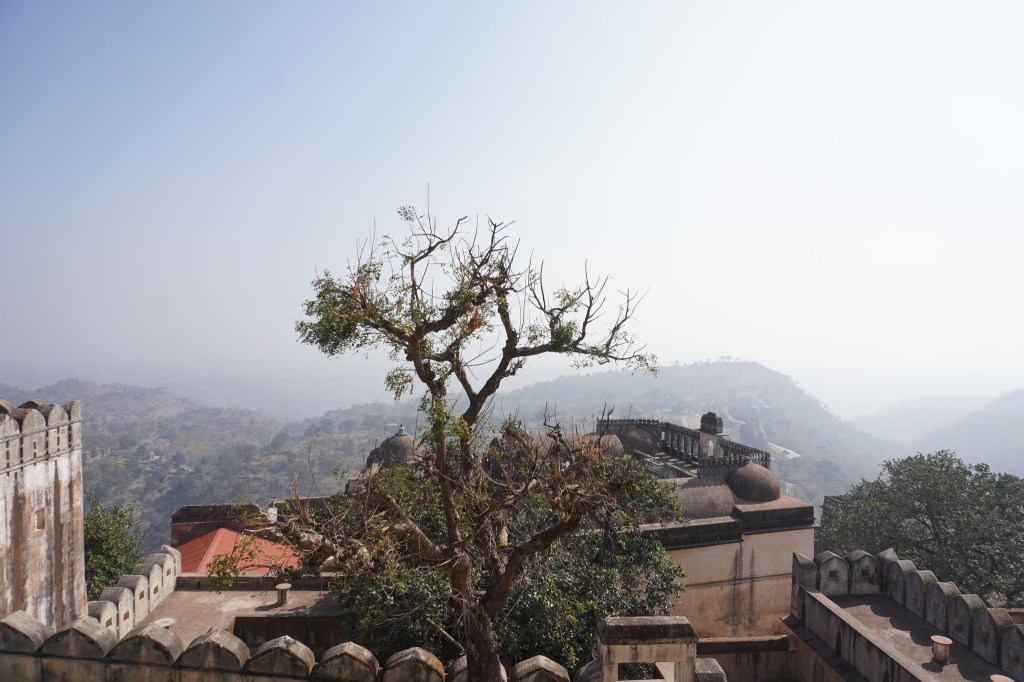
A well-located tree for a bird’s eye view!
More ramparts.
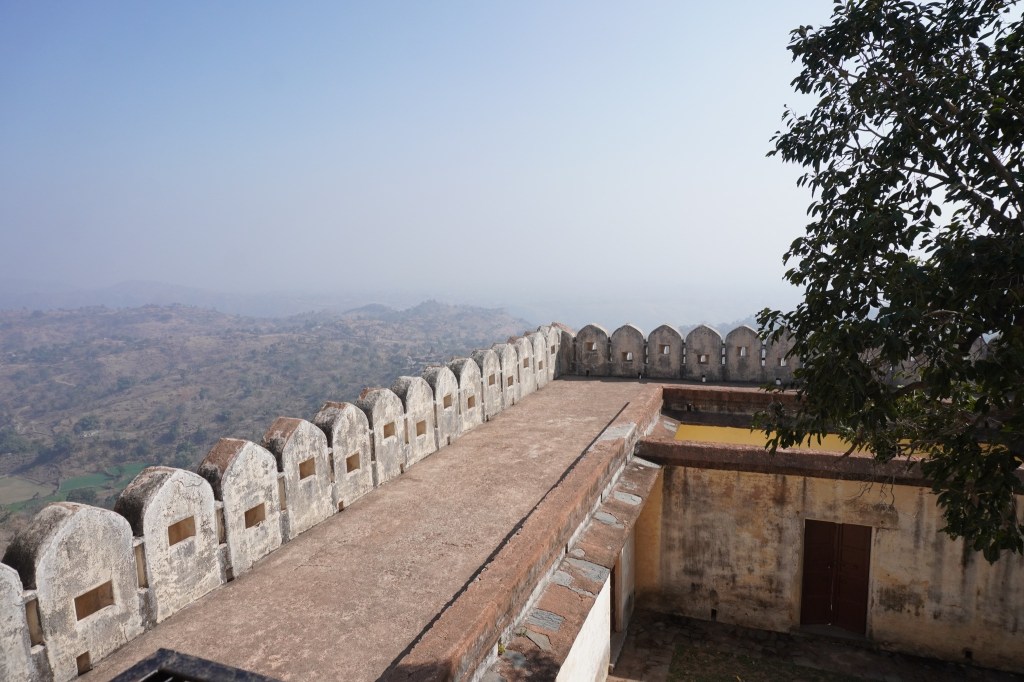
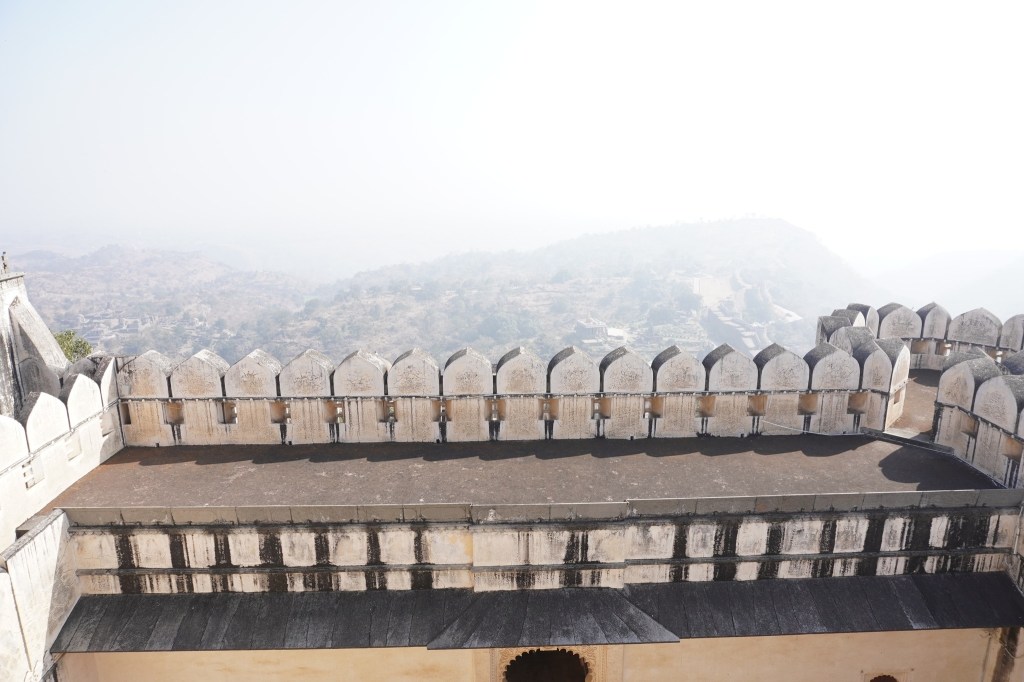
The view from the bird’s eye!
Another view of the walls of the fort and yes, we walked along those paths till we reached the very top!
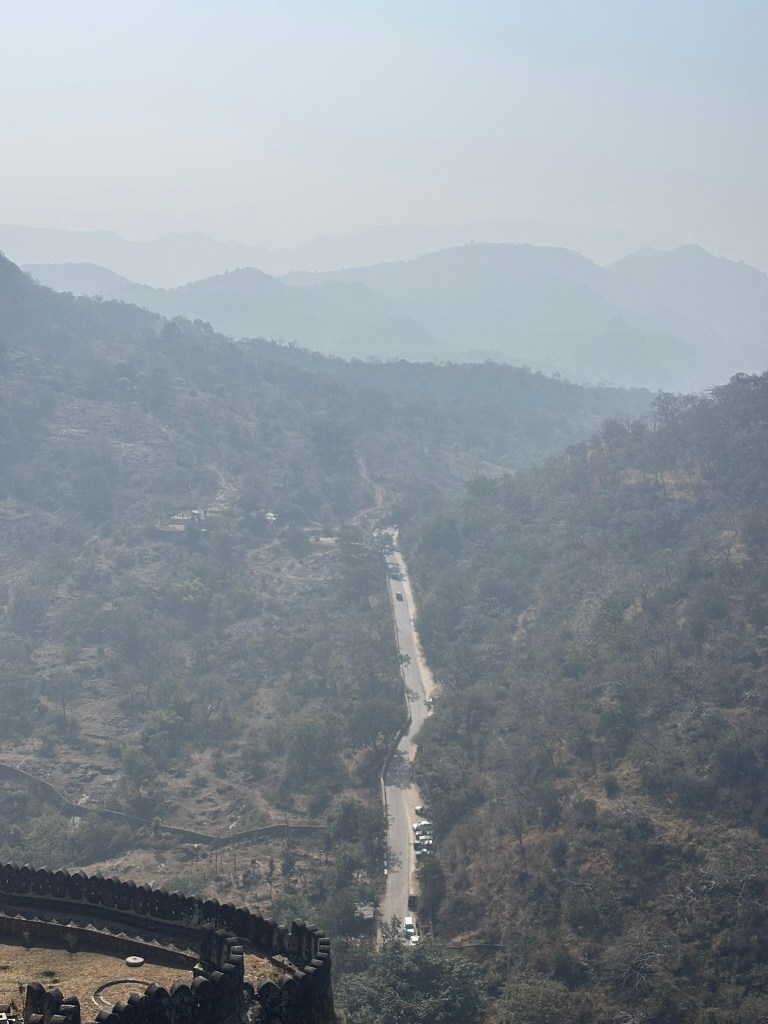
From where we could see the road leading to the fort as it snaked through the hills.
And then we descended to walk a few metres of that 36 km wall that could accomodate 8 horses riding abreast. And gazed in awe at that mighty fortress all over again.
 butterfliesonmymindblog