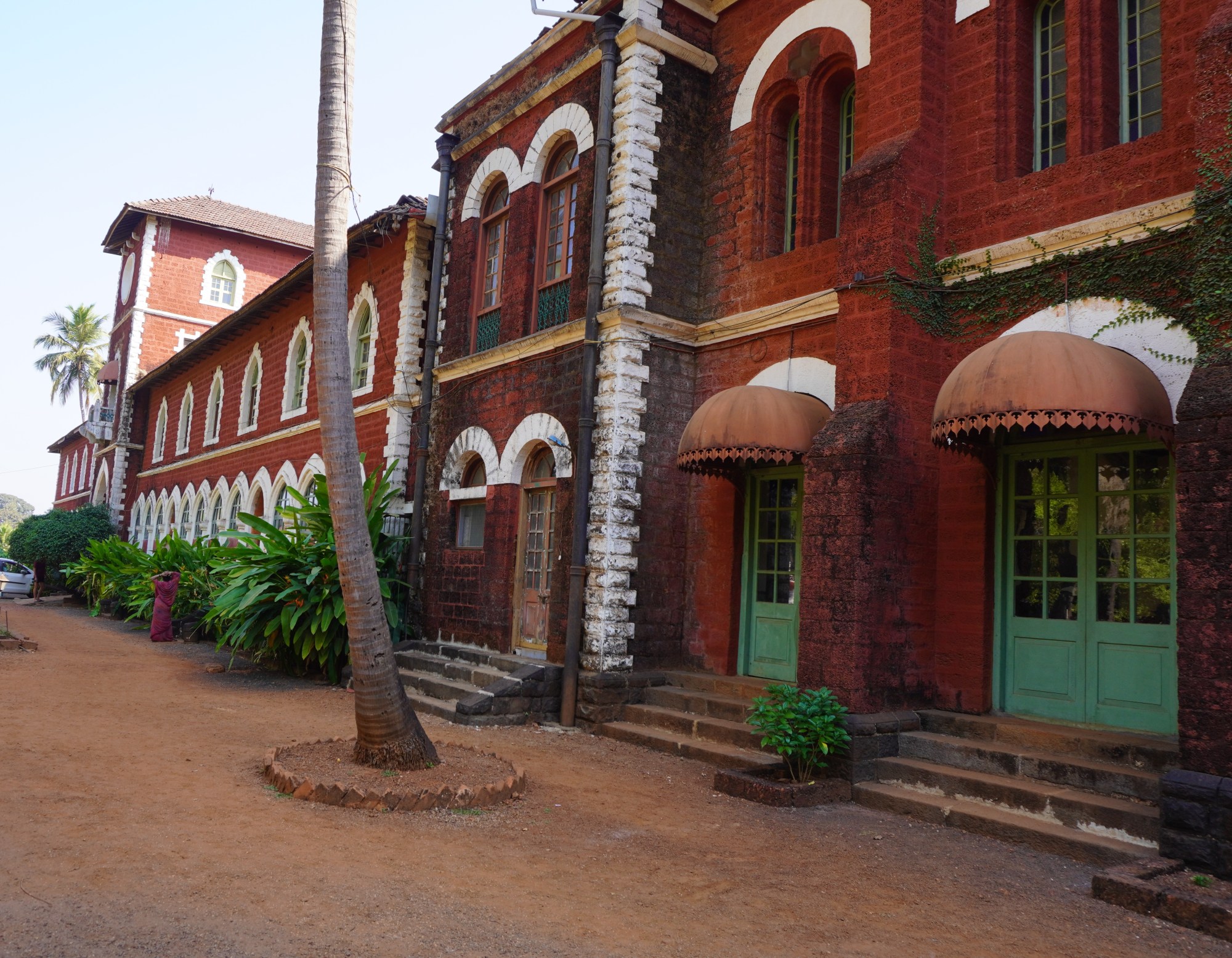
On a recent visit to Sindhudurg district in Konkan, we visited the Sawantwadi Palace which belonged to the royal family of the Sawant Bhonsles. The palace was built by Khem Sawant III during his reign that lasted from 1775 to 1803. One section of the palace has been converted into a museum. It was while walking through the museum that this display caught my attention.
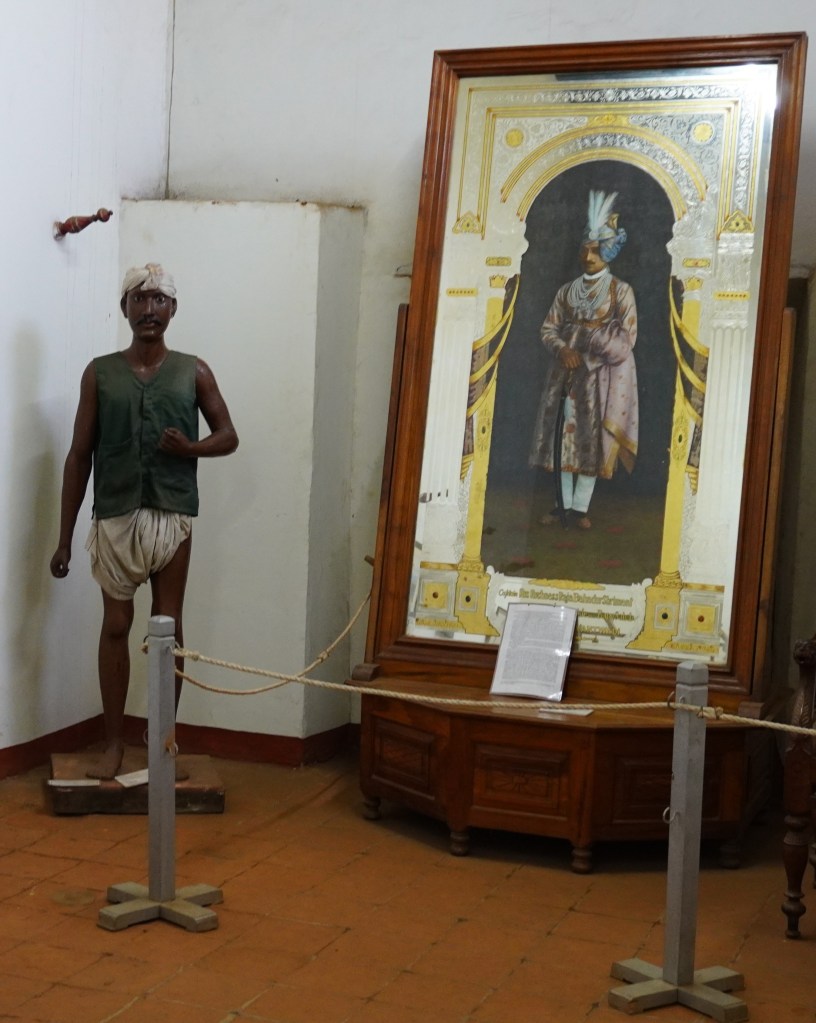
This museum too -like several other royal museums- had the usual collection of artifacts that had been passed down from one generation to the next. There were paintings, photographs and accounts detailing the lives of the royal family members. And then there was this- a picture/portrait of one of the rulers and standing next to it- the statue of what I assumed was a villager or a farmer. So, there was the king- Bapusaheb Maharaj- in royal attire, bejeweled and turbaned and beside him was one of his subjects. The contrast was stark.
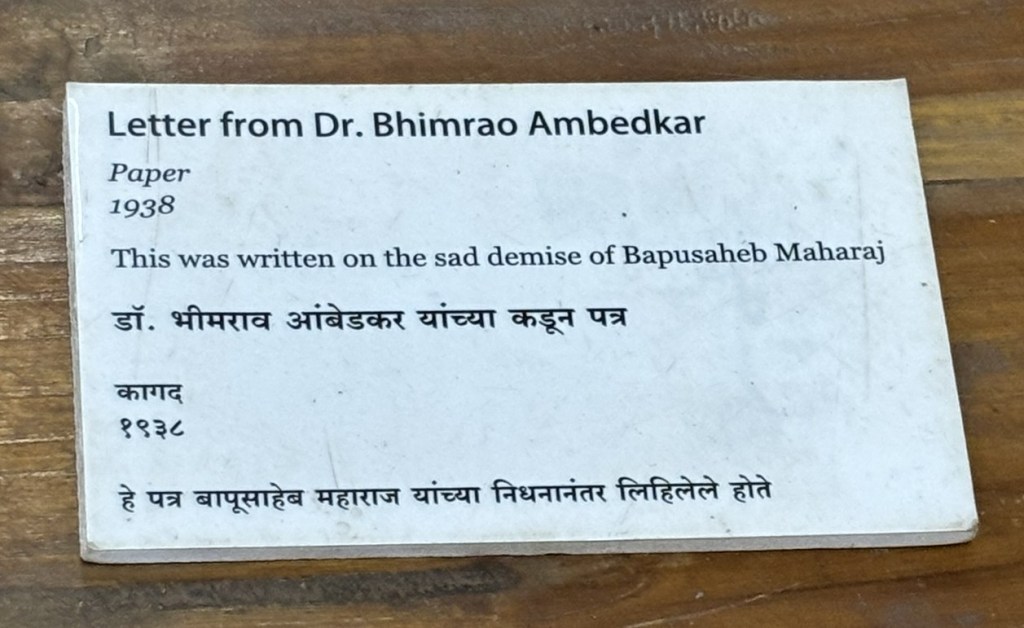
As I looked closer- something else caught my attention. A printout of a letter written by Dr. Ambedkar on the demise of the king. It must have been a translation because some words and phrases didn’t quite flow. But the first few lines did express shock and sorrow over the passing over Bapusaheb Maharaj.
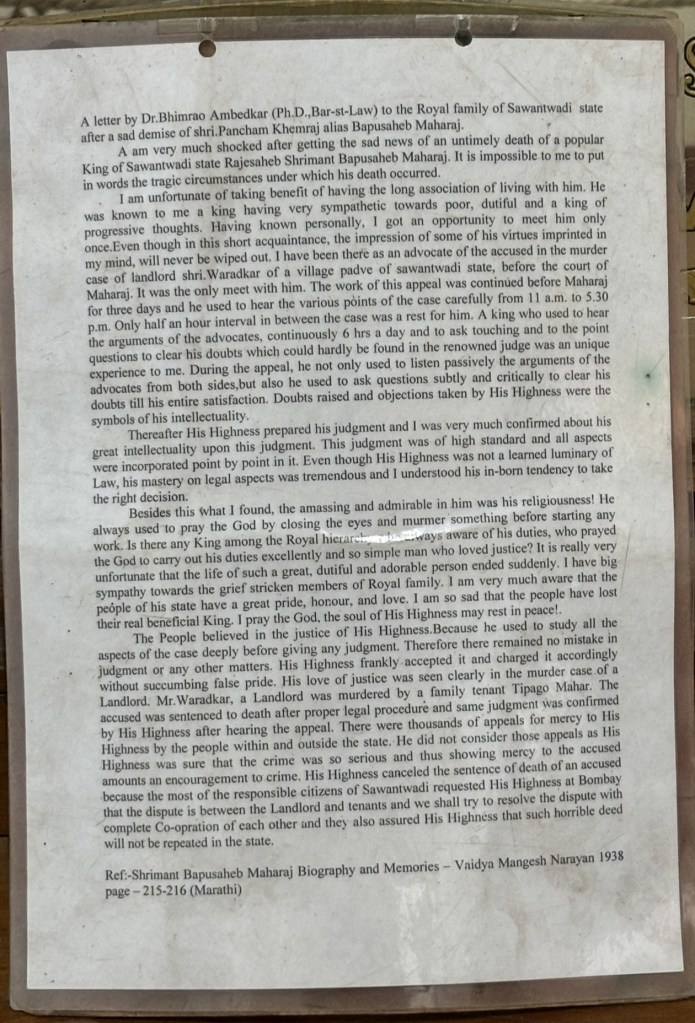
Anyway, I did what any sensible senior citizen does when the print is too small to read and the paper is placed at an angle which is challenging to both posture and vision- I took a picture which I could later zoom in on and read. Apparently, Bapusaheb Maharaj or Khem Sawant II was a king of ‘progressive thought’ ‘dutiful’ and ‘sympathetic towards poor’. Dr Ambedkar admired his ‘love for justice’ and his ‘mastery on legal aspects’ in spite of not having a degree in law. Interestingly, during my search for more information online, one of the links that popped up was for a Shri Pancham Khemraj (aka Bapusaheb Maharaj) Law College. And now I know why.
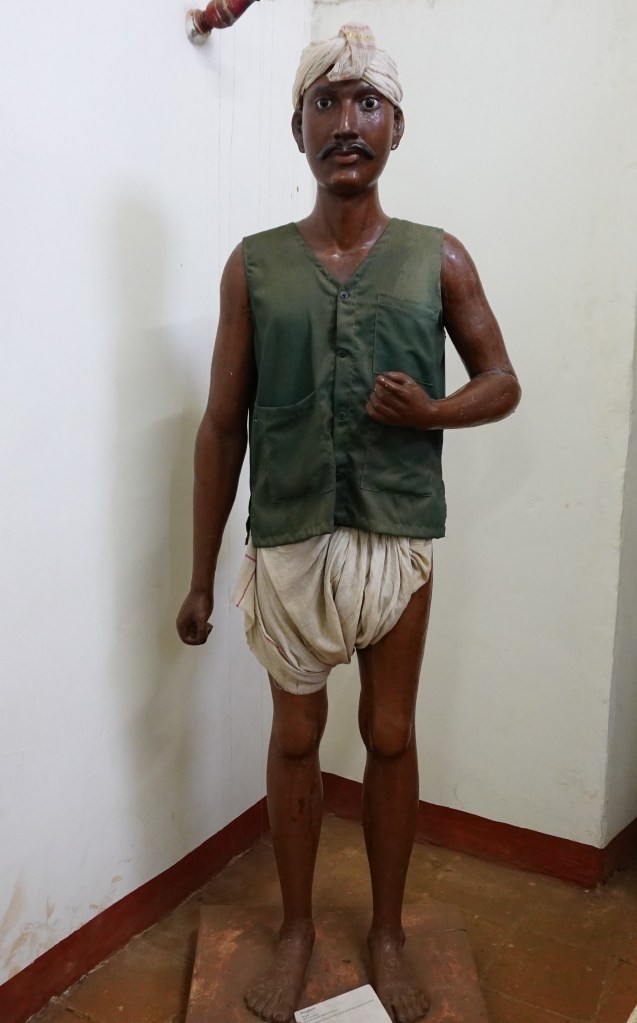
Unfortunately there was no information about the statue of the commoner- so one can only wonder who the maker was, who it represented and whose idea it was to place them both side by side. All that is left to one’s imagination.
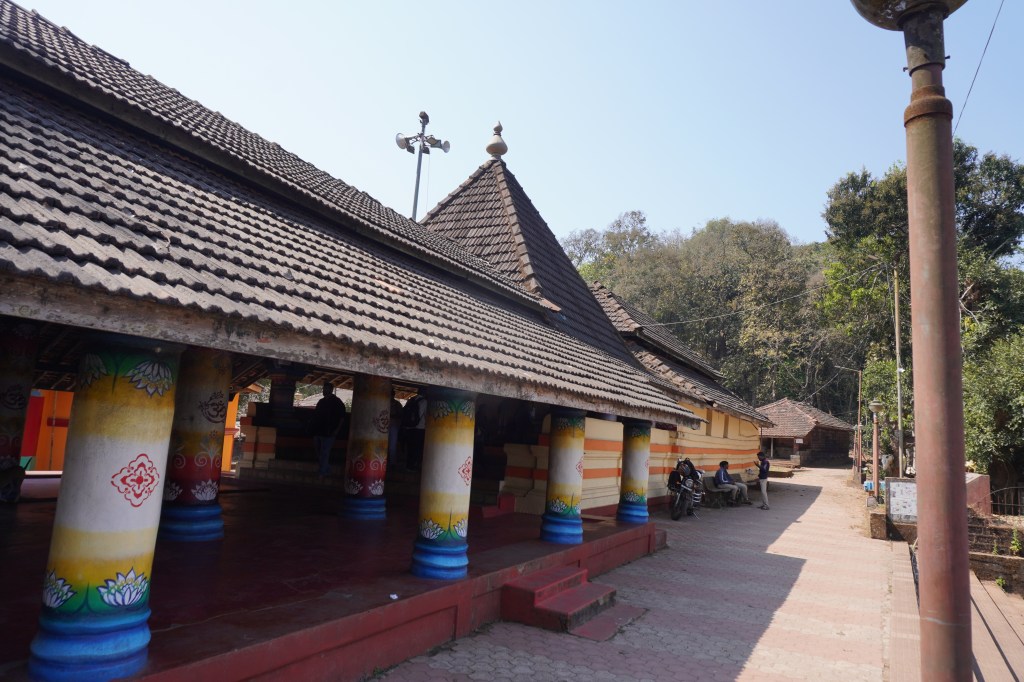
That being said, it is also interesting how imagination helps one connect the dots; albeit unintentionally. The previous day, we had visited the Bhagwati Temple, situated on the banks of Dhamapur Lake- a beautiful ancient lake that nestles serenely among the lush green hills of Konkan. The temple architecture is of both architectural and cultural significance. The temple consists of a sabha mandap (main hall), upa-sabha mandap and the garbha griha or sanctum. The sabha mandap was where justice was dispensed in the olden days and it was pointed out to us that the temple spire was raised above this hall, unlike other temples where the spire is above the sanctum of the deity. This was to highlight the value that was given to justice, not worship.
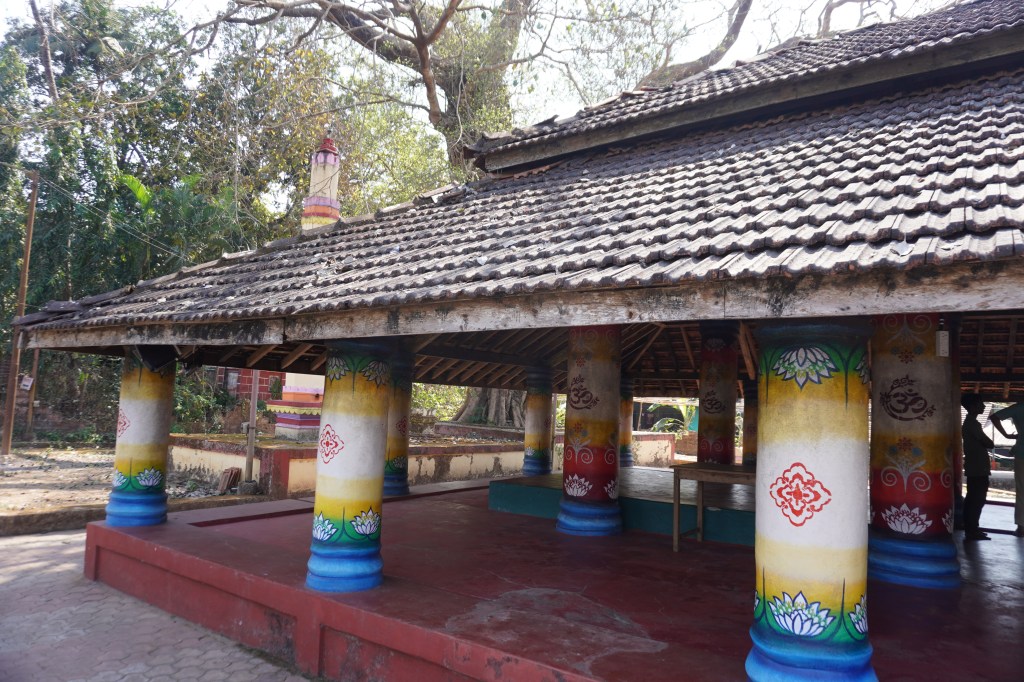
The hall has a high roof which is supported by twelve large pillars with bright floral motifs.
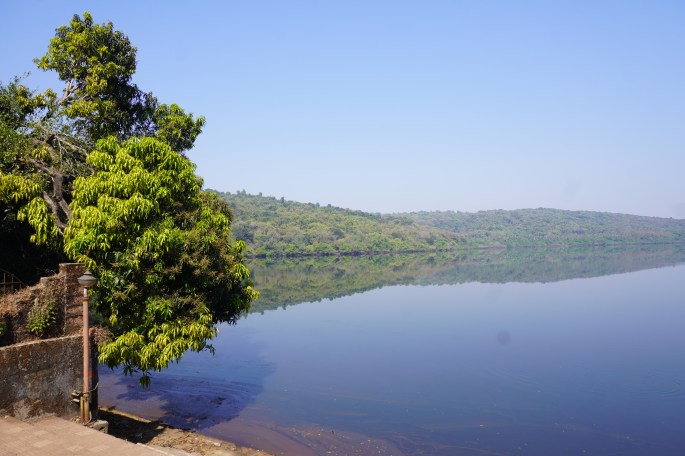
Dhamapur lake itself was constructed in 1530- along with the temple. The lake is now a UNESCO World Heritage site, hence protected from the ravages of development. Its clear waters reflect the thickly wooded hills that sustain it and the surrounding villages and fields. But more about this marvel of irrigation in another post.
And to think that this post began with a statue!
 butterfliesonmymindblog