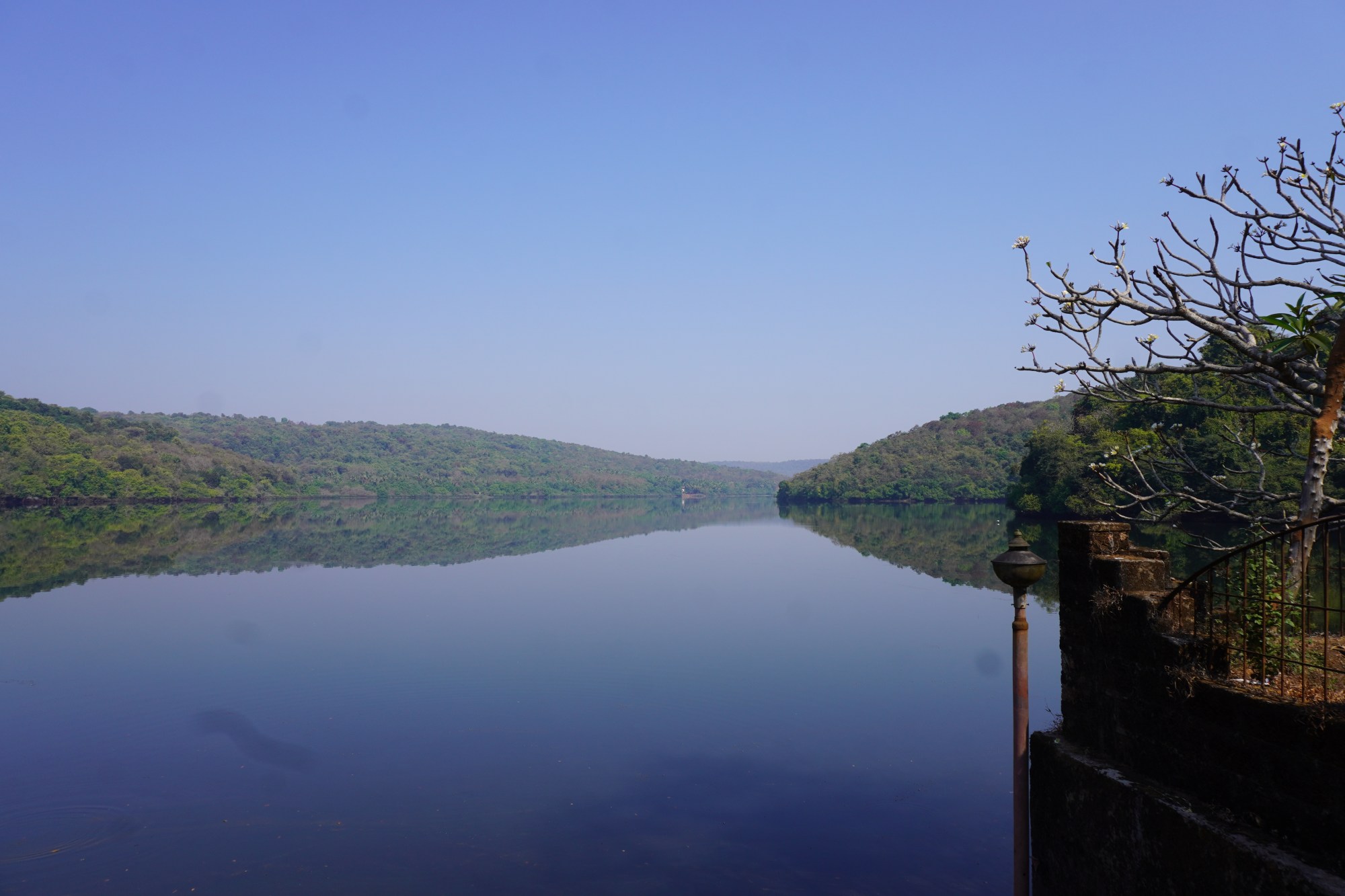
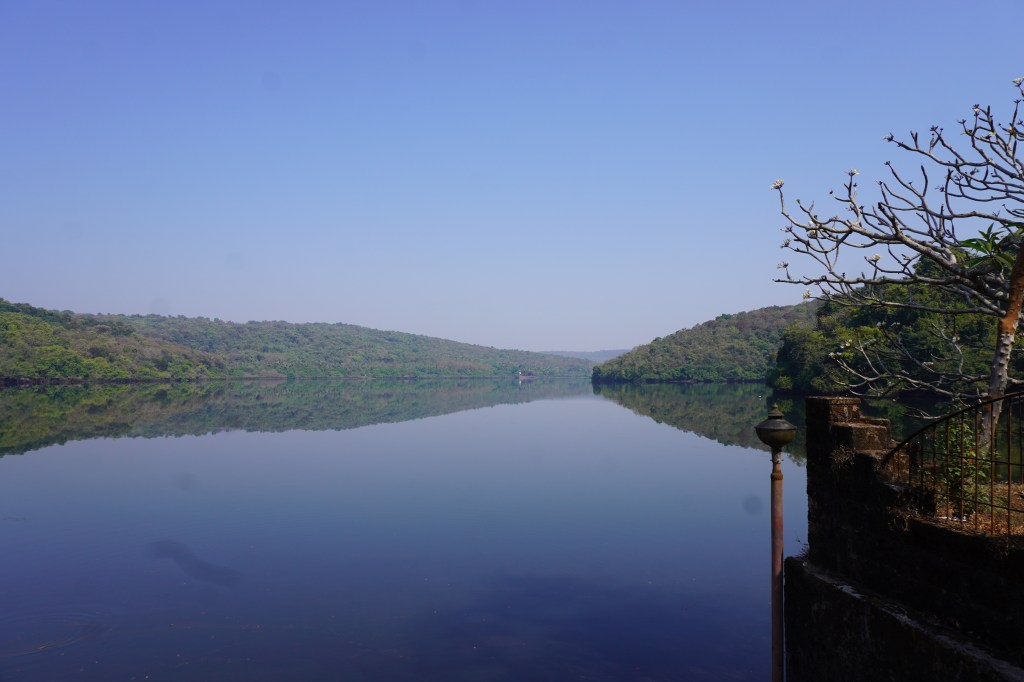
Built in the year 1530 by the local villagers, Dhamapur Lake is one of the biggest of its kind. Visitors to the lake gaze upon its calm, azure waters, soothe their senses with the lush green of the hills that surround it on either side, offer a prayer to seek blessings of the deity that protects the temple and leave.
But there is so much more to Dhamapur lake. Apart from the fact that it’s a man-made lake from several centuries ago, it is also testimony to the foresight, innovation and planning of the people who realised that the stream passing between these two hills could be dammed and the water be used for irrigation.
The lake is situated between thickly forested hills of Dhamapur and Kalse villages and is fed by the streams that flow down these slopes, carrying with them the bounty of the monsoon rains.
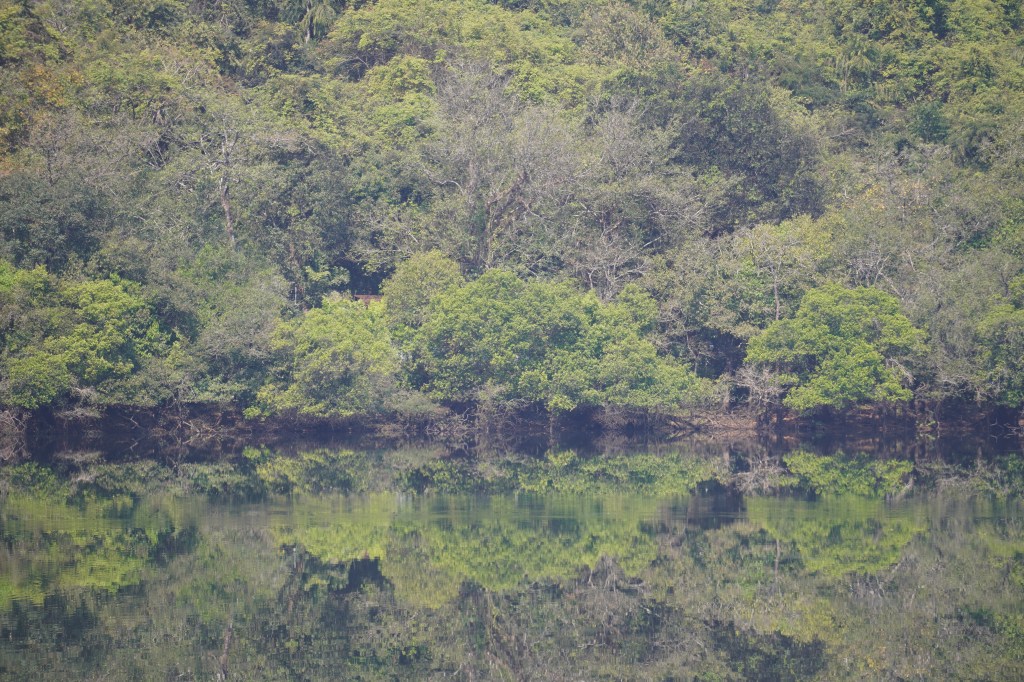
Since the water was to be used for drinking and irrigation, the villagers then proceeded to plant freshwater mangroves all along the lake so that their roots would act as natural filters, hold the soil in place and prevent flooding. What appears to be a green smudge in the above picture is actually a reflection of the mangroves in the water. And yes, the water was that clear!
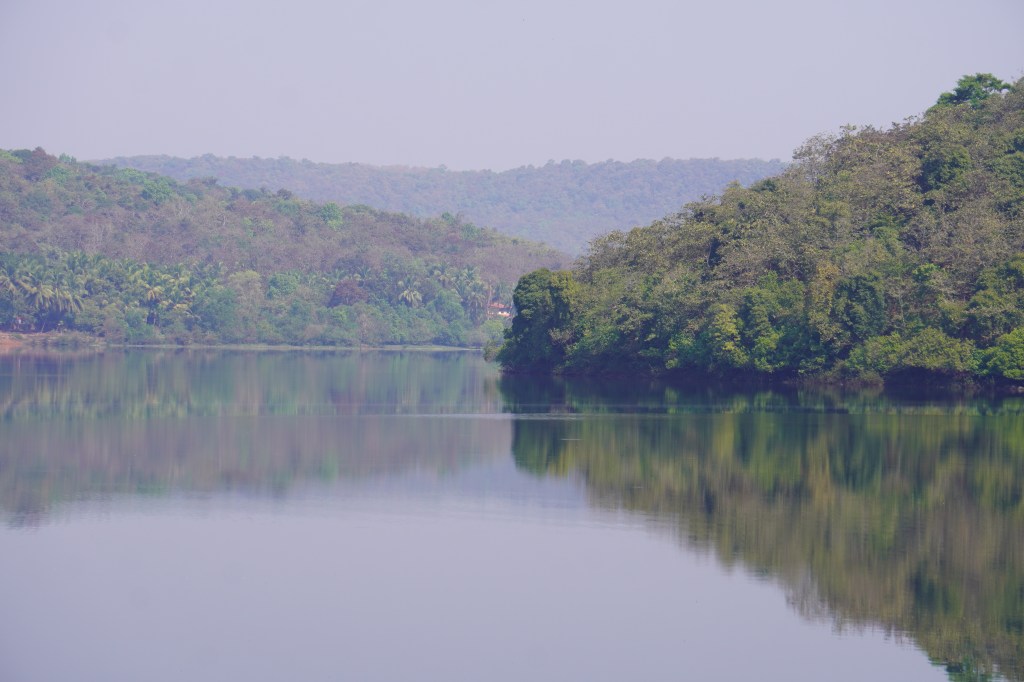
The trees that cover the hills around the lake owe their existence to Kanhoji Angre- the legendary commander of the Maratha Navy. The coastal fort of Sindhudurg is not far from Dhamapur and Kanhoji Angre knew that his navy would need wood for ships and other construction. The teakwood trees growing next to the lake are proof of his foresight, and in-depth knowledge of the Konkan coast.
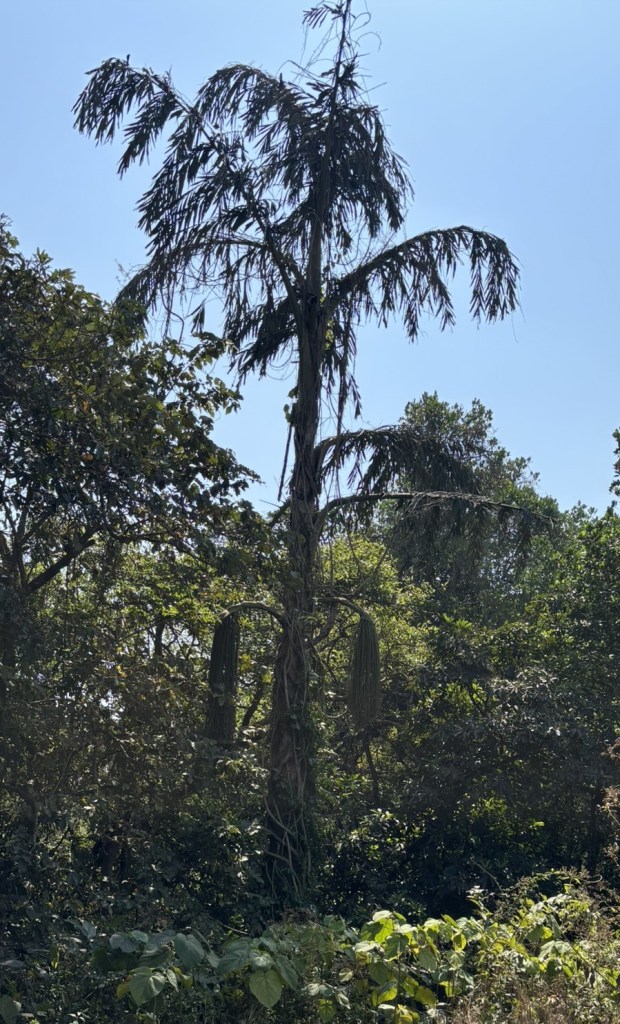
The villagers also needed to construct a ‘bund’ with pipes at different levels that would regulate the flow of water to the villages and fields. For this they used the hollowed out trunk of the ‘Bhedla Mad’- a variety of palm that grew tall and straight with very few branches. The bund wall was built with rice straw and tree branches as fibre and mud to bind it together. The hollowed trunks were the pipes through which the water would flow down to the villages.
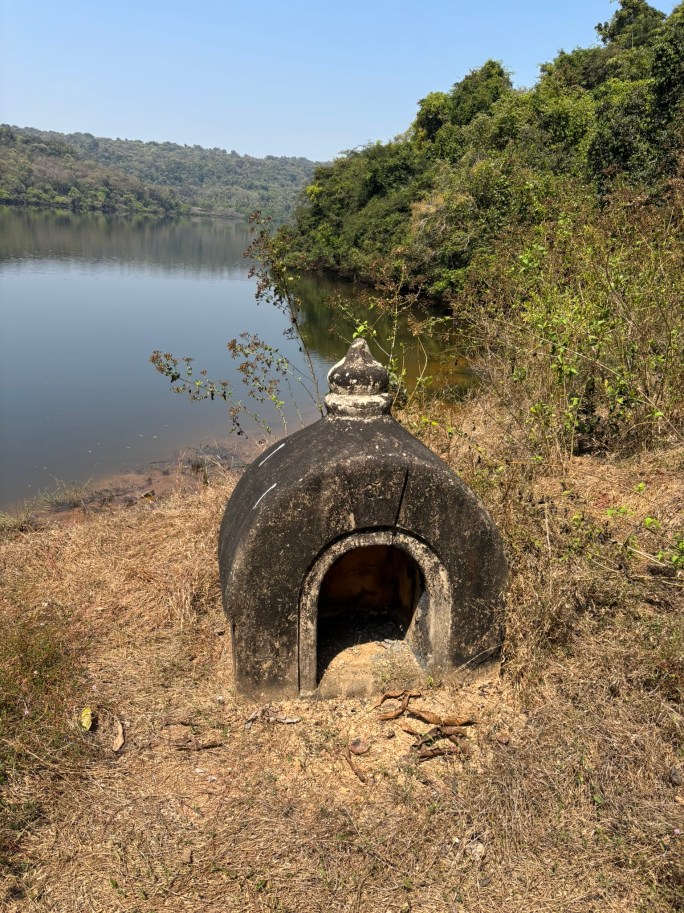
The bund would be built every year and a small temple was also built near the bund as protection from damage or disasters. Every year an offering of curd-rice was presented to the deity and the earthen pot containing the rice was then kept within the walls of the bund. It is said that the following year when the villagers would return to rebuild the bund-wall, the curd-rice from the pot would be distributed as ‘prasad’. Amazingly- the curd-rice would be unspoiled after all those months. How it remained so is a mystery for science to solve!
Leaving behind the man-made wonder that is Dhamapur lake; we proceeded to another place, another beautiful sight. This was Devbaug Sangam or Point Delta- where the river meets the sea.
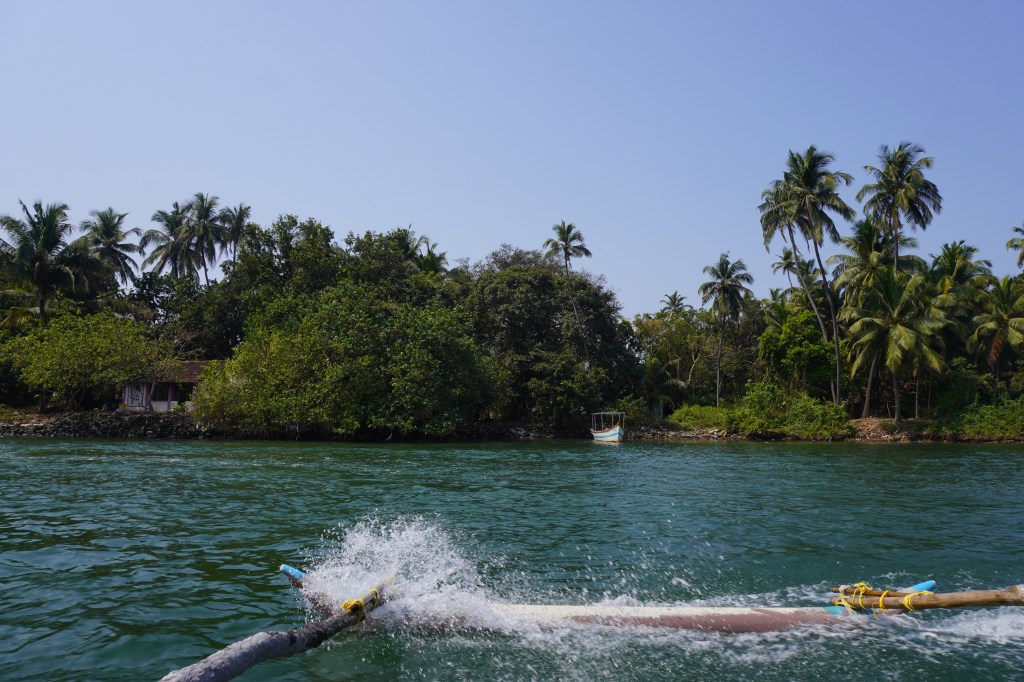
Our boat chugged along the serene waters of the Karli river and headed towards the wide open sea. The river bank was lined with coconut trees, cottages peeping through the foliage and colourful boats taking a break after ferrying other visitors to and fro.
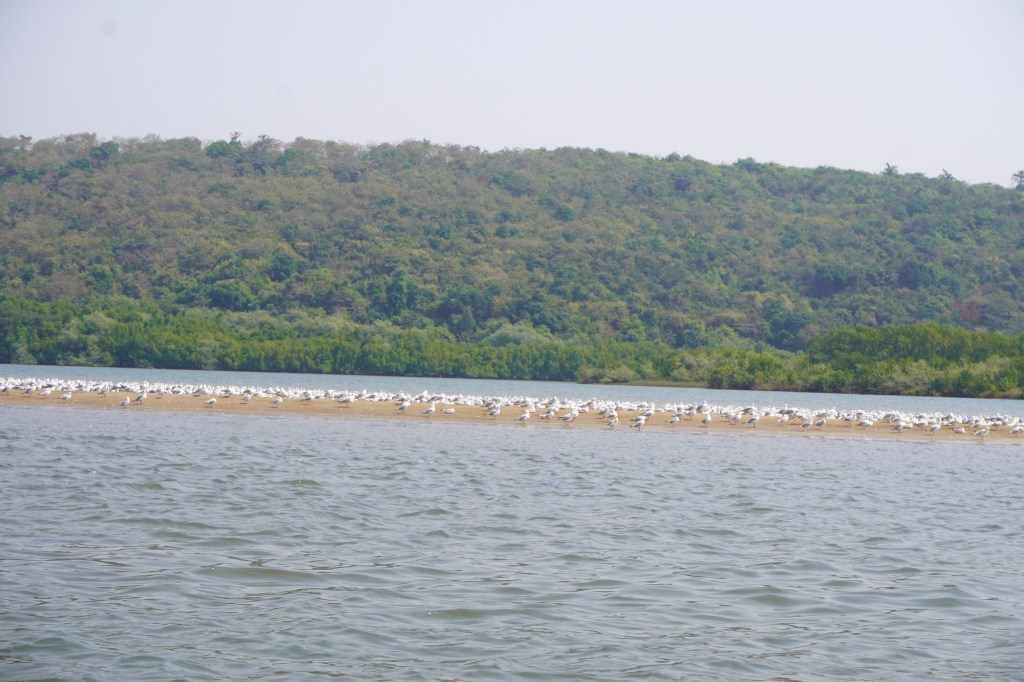
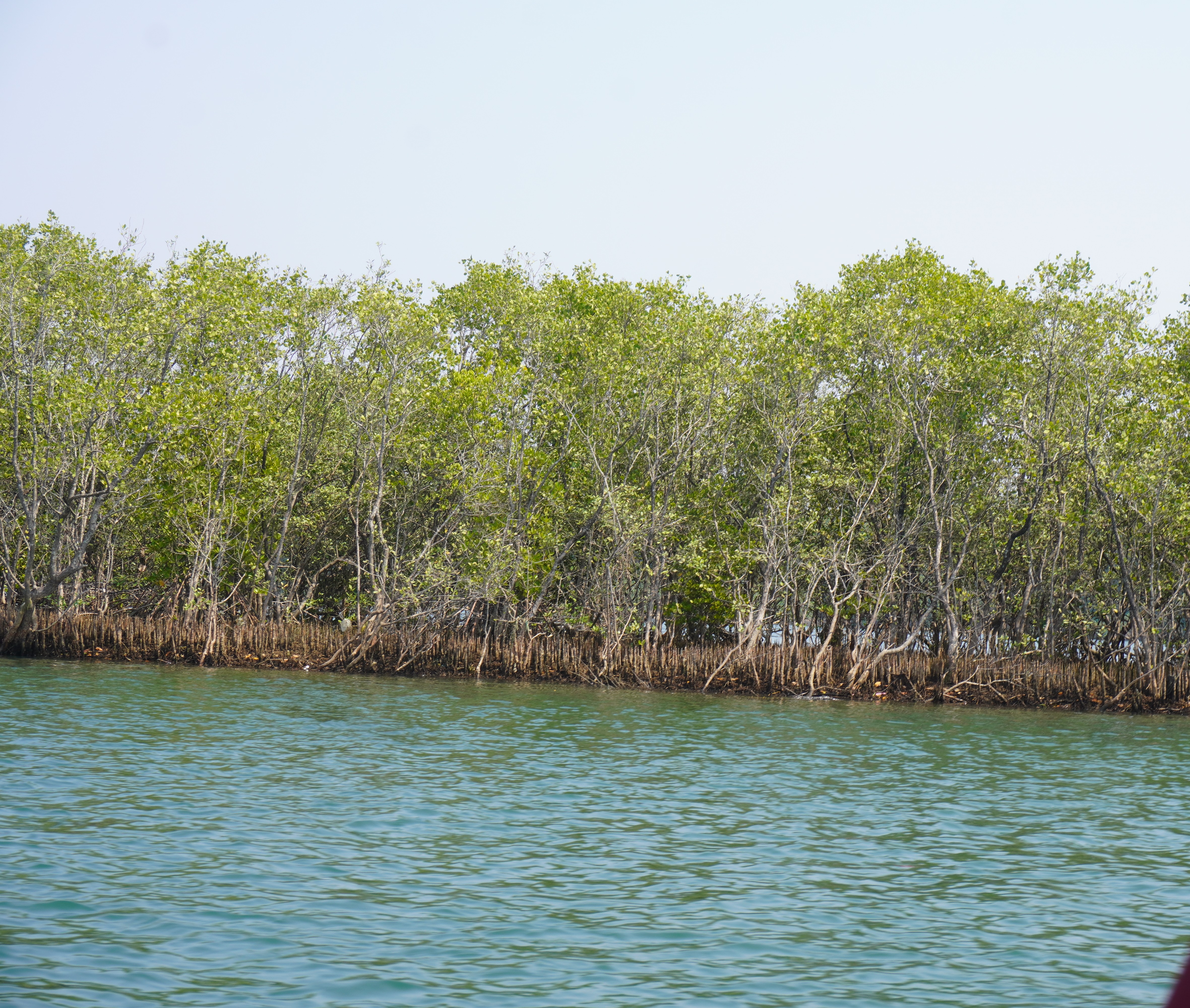
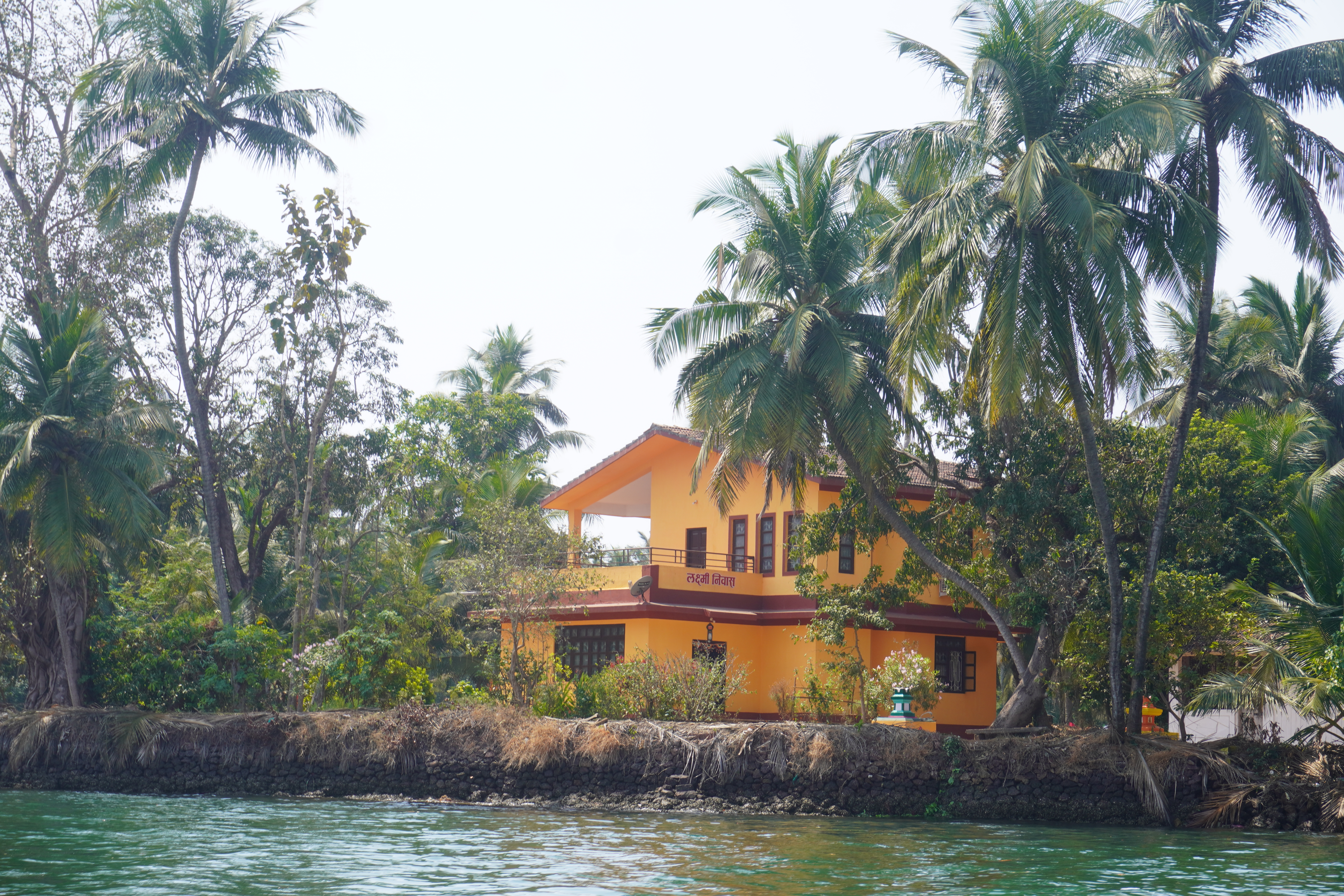
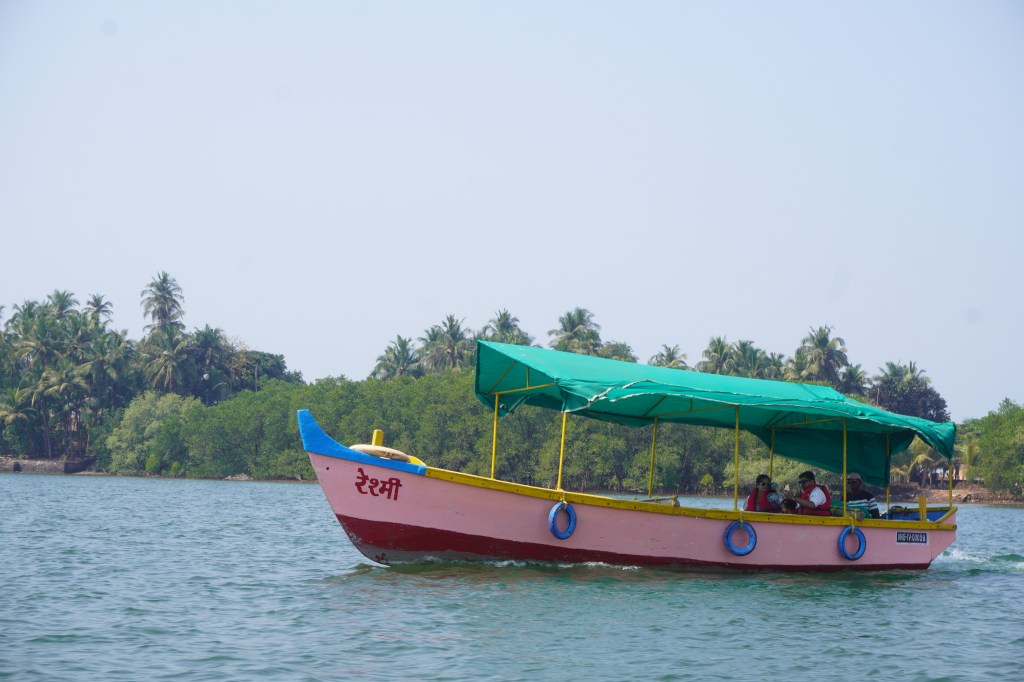
Some of the sights we passed on our way- seagulls chilling on a sandbar, mangroves, a lovely house right on the river bank and one of several other boats.
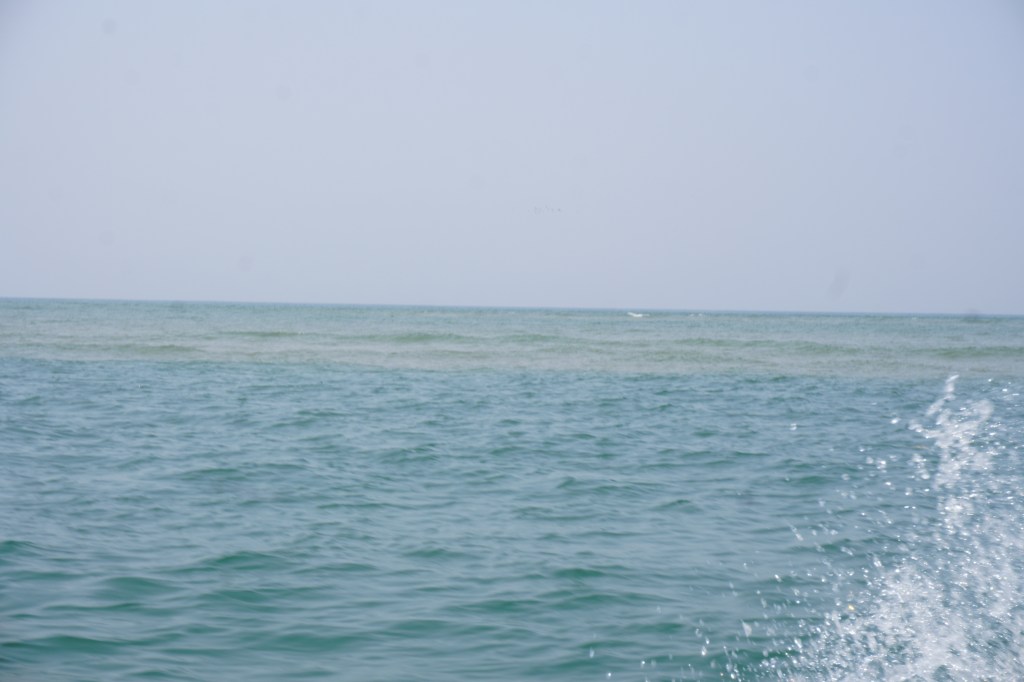
And what a thrill it was when we finally reached the Point Delta, the Sangam- where the Karli river joined and merged into the Arabian Sea. The waters looked different now: the dark blue of the river against the pale green of the ocean as it gave way to a deeper emerald towards the horizon. The waters felt different too- the waves heaving back and forth as our boat made its way further into the sea.
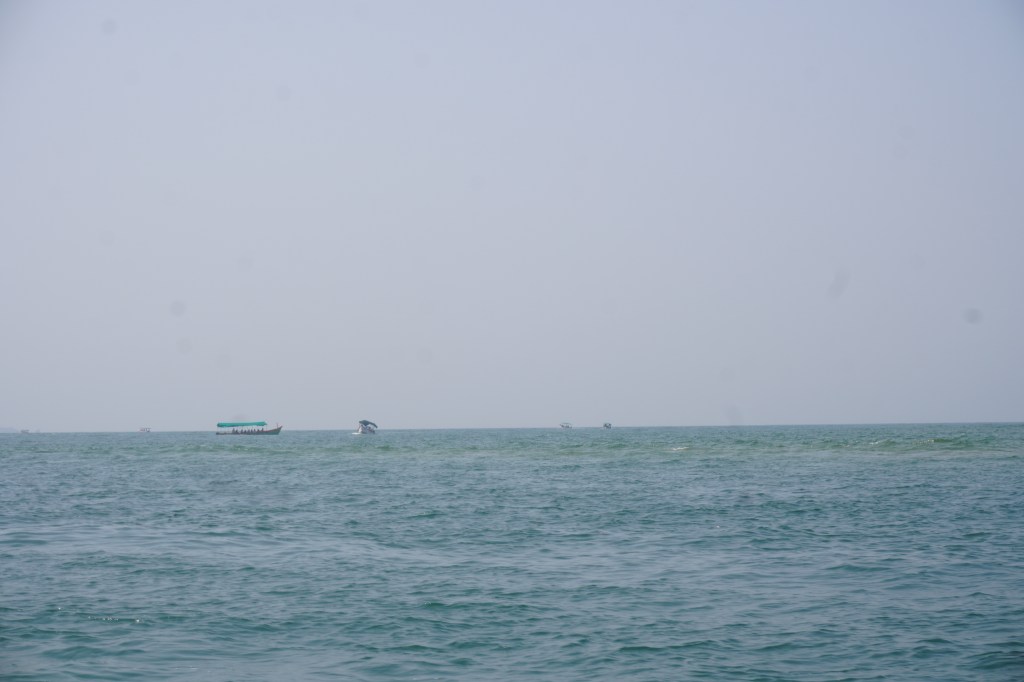
The river had met the sea and its journey had ended. Or had a new journey begun? Sadly, our journey to Konkan ended on this memorable note. We had experienced the varied beauty of Konkan, feasted on its cuisine, marveled at its art and architecture and glimpsed its history. As we drove to the airport, we crossed the bridge with the Karli river flowing peaceably below- and we bid a fitting goodbye to this lovely place
 butterfliesonmymindblog