
They are remembered as one of the longest ruling dynasties of South India
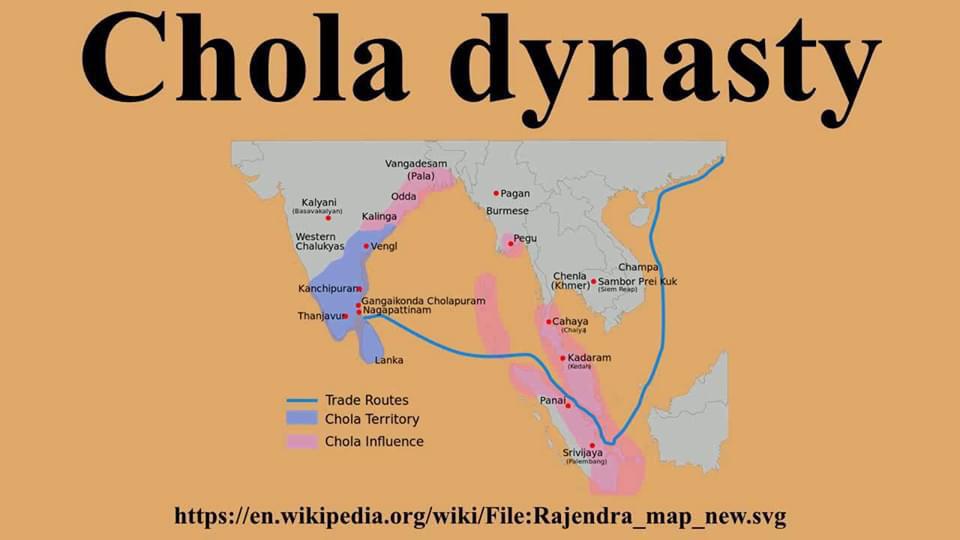
Their vast empire extended at one time from the banks of the Ganga, down to the shores of the Indian Ocean. Their influence stretched over the seas from the Maldives to Ceylon (Sri Lanka) and from Myanmar to Sumatra.
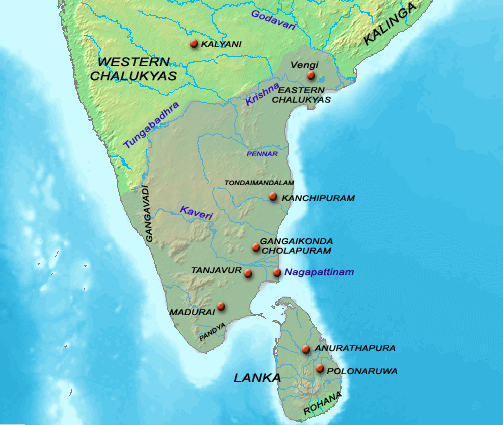
Their kingdom exerted control over all important ports in South India, the gold mines of Kolar, the diamond mines of the Deccan Plateau and the production of gems in Ceylon.
They patronised the arts, literature and architecture (in between fighting wars, launching maritime expeditions and warding off challengers, rivals and opponents).
During the 400 years of their reign, they constructed around 5000 temples across their realm.
They are the Cholas- whose reign began in the 9th century and lasted till the 13th century.
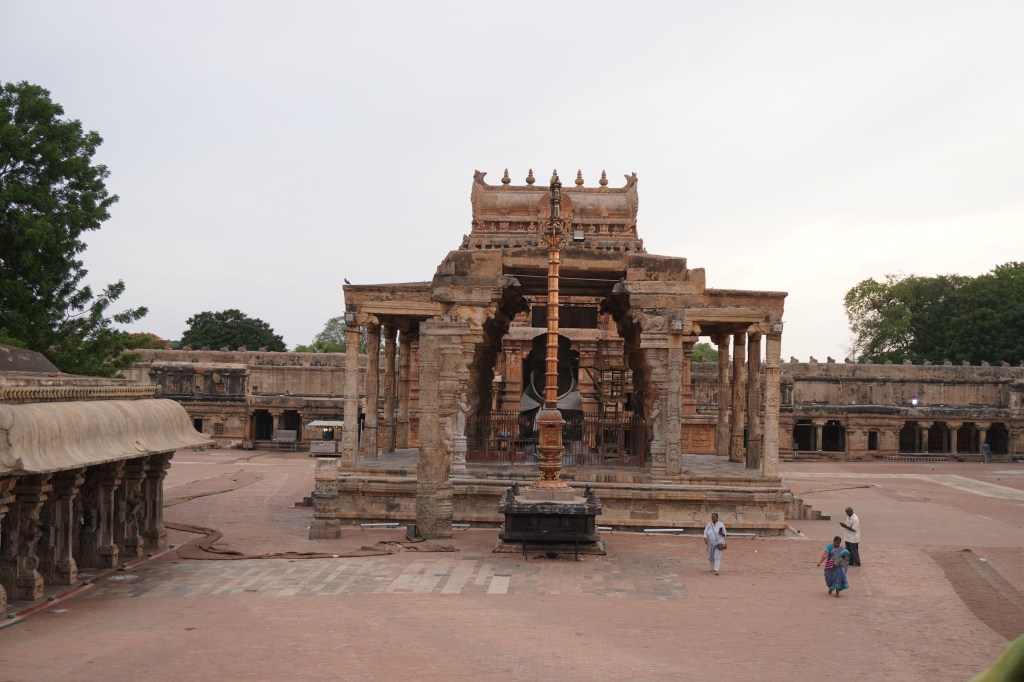
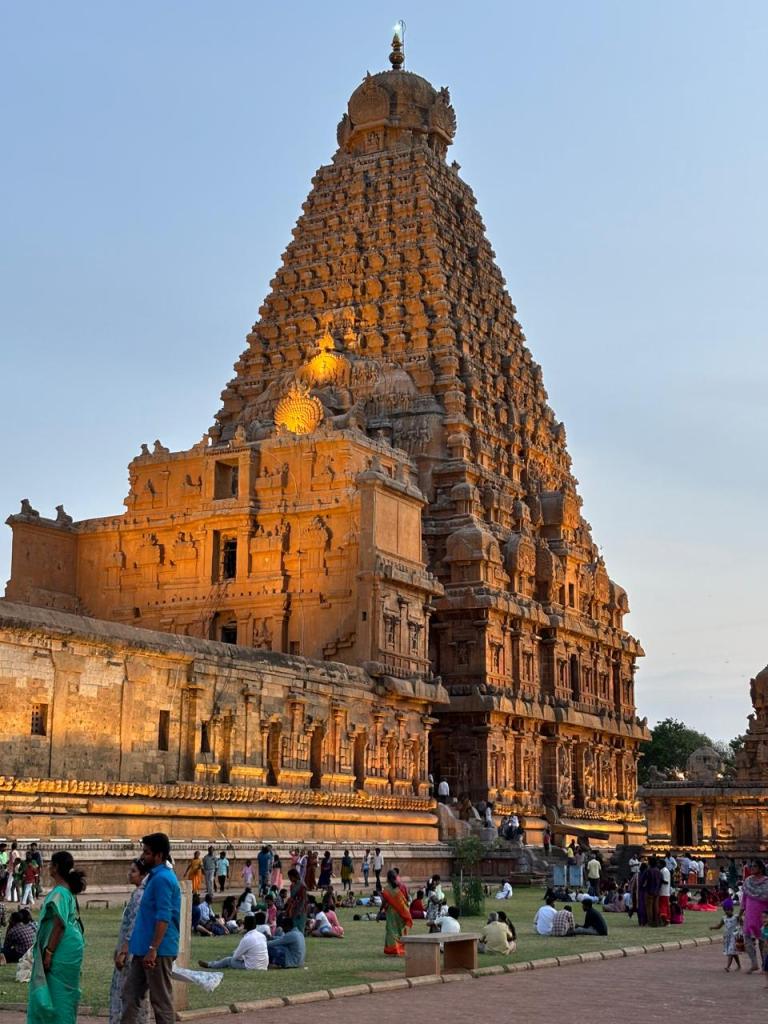
The Cholas are credited with building some of the finest temples in South India. Of these, the best known are the Three Great Living Chola Temples: : the Brihadisvara Temple at Thanjavur, the Brihadisvara Temple at Gangaikondacholapuram and the Airavatesvara Temple at Darasuram. And of these three, the grandest, the most magnificent is the Brihadeshwara Temple at Thanjavur- the capital city of the Chola kings for many years.
Brihad- great, Ishwara- God, the Brihadisvara temple is an imposing monument whose construction began in the year 1003 CE. The Chola king Raja Raja I wanted an edifice that would stand testimony to his power and influence. A lavish amount was spent in its construction and the temple which was consecrated to the king’s patron deity- Shiva, was erected in just 6 years.
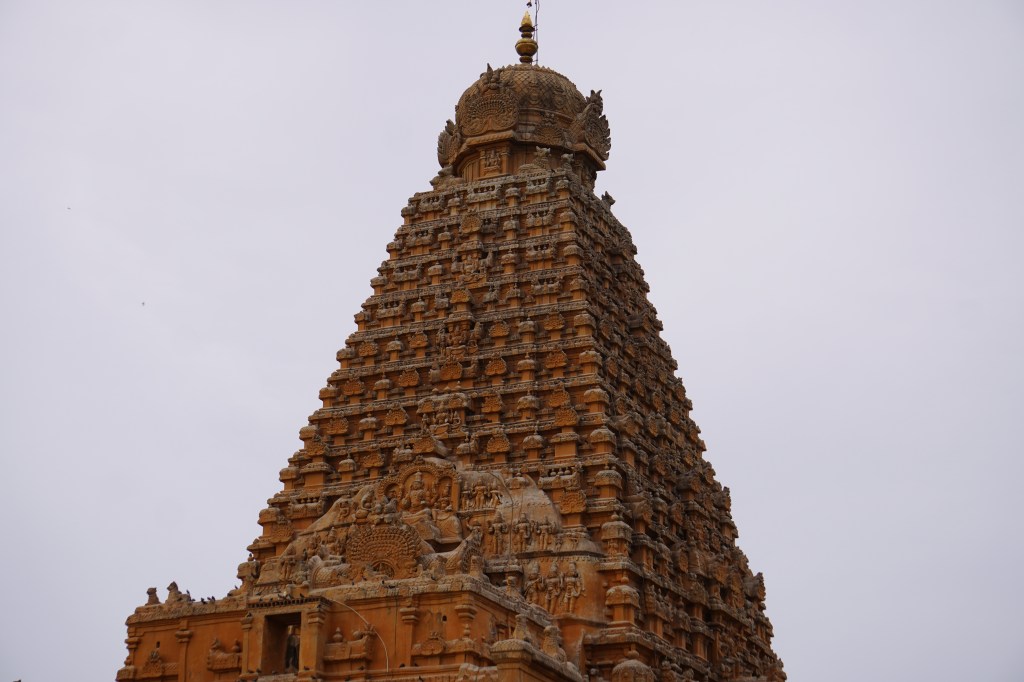
The temple area occupies of about 240.79 metres east to west, and 121.92 metres north to south. The main temple complex stands atop a rectangular platform and has a ‘vimana’ or tower that reaches to the sky with a height of 66 metres. This is topped by a massive ‘sikhara’ (the topmost pointed part of a temple) that weighs over 80 tons. The imagination boggles at how the ‘sikhara’ was placed at that height; because a 1000 years ago there were no cranes or lifts.
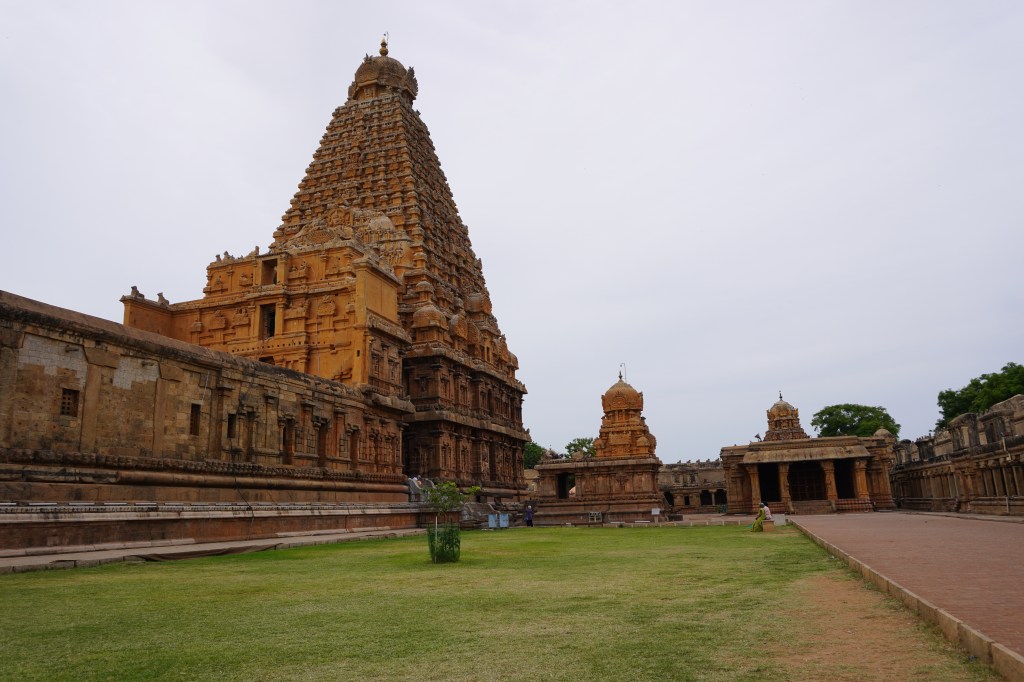
It is said that despite the towering height of the temple, it does not cast a shadow (a claim we were unable to verify during our visit). Apparently the design of the temple tower and the arrangement of stones prevents a shadow from being formed. The story goes that once the temple was completed, the king had doubts about how stable the colossal structure would be. When he questioned the architect, he got the answer ,”Even the shadow will not fall, Raja!” Now that’s confidence in one’s ability!
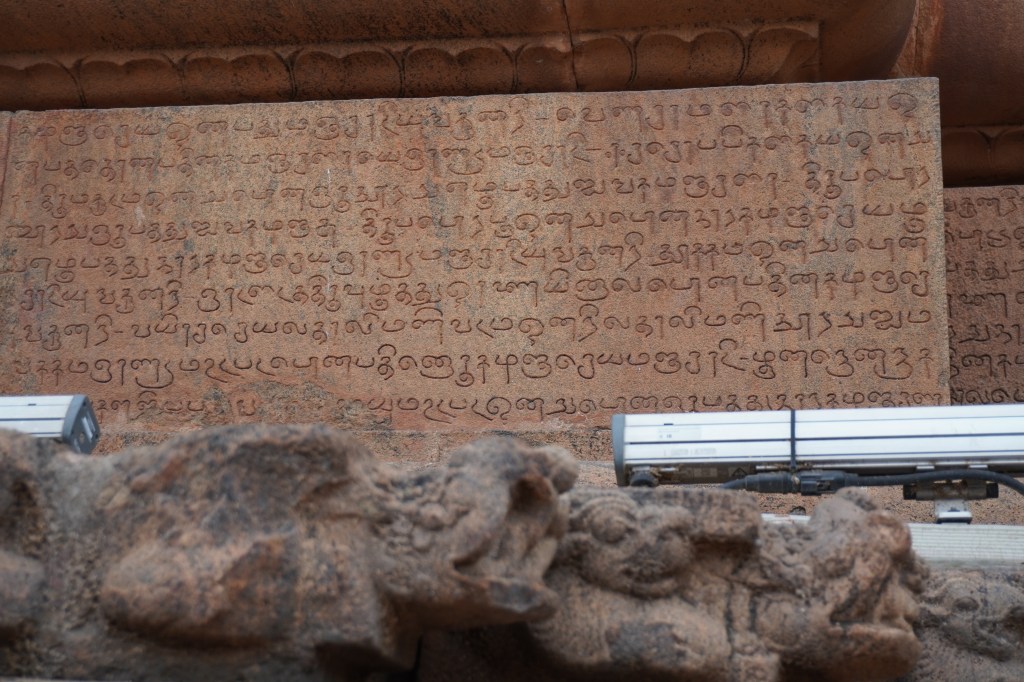
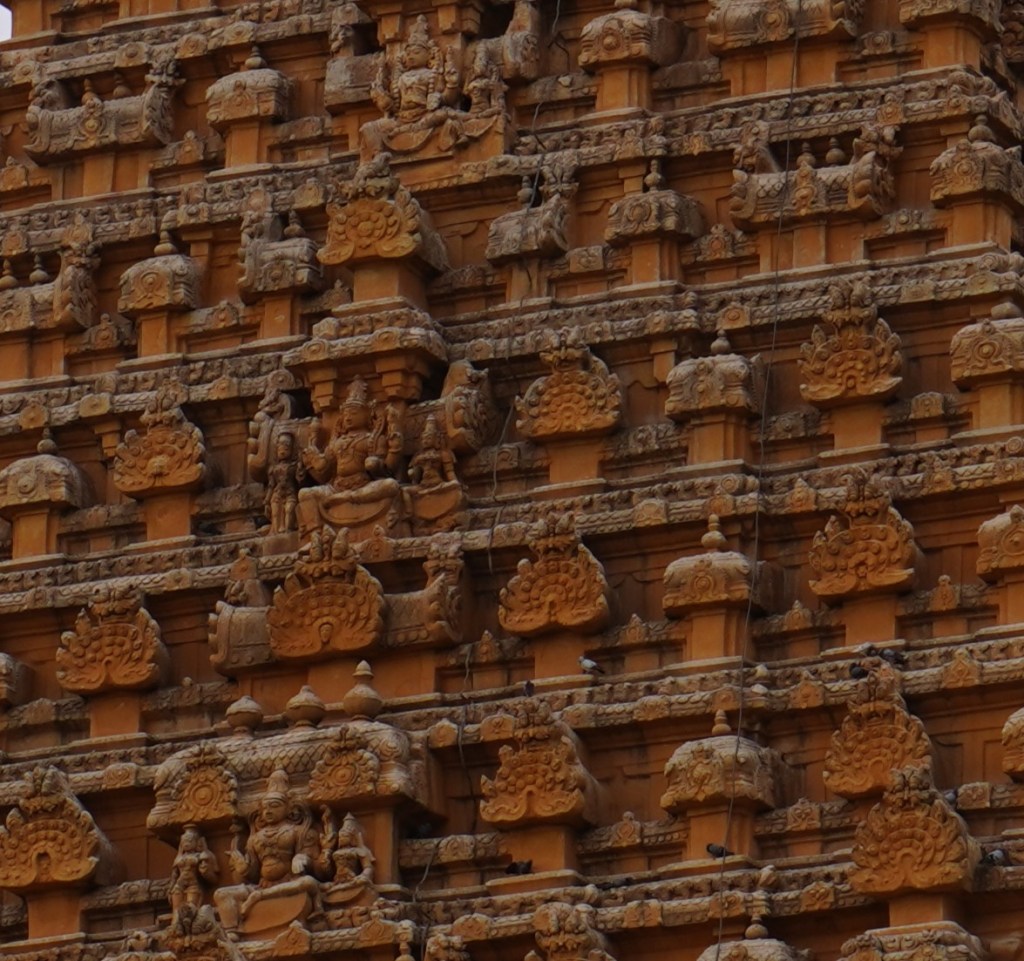
What makes this Big Temple even more fascinating is the 64 inscriptions in stone that are set in its walls. They contain details about the social, cultural and political life in those times- a veritable treasure trove of history set in stone.
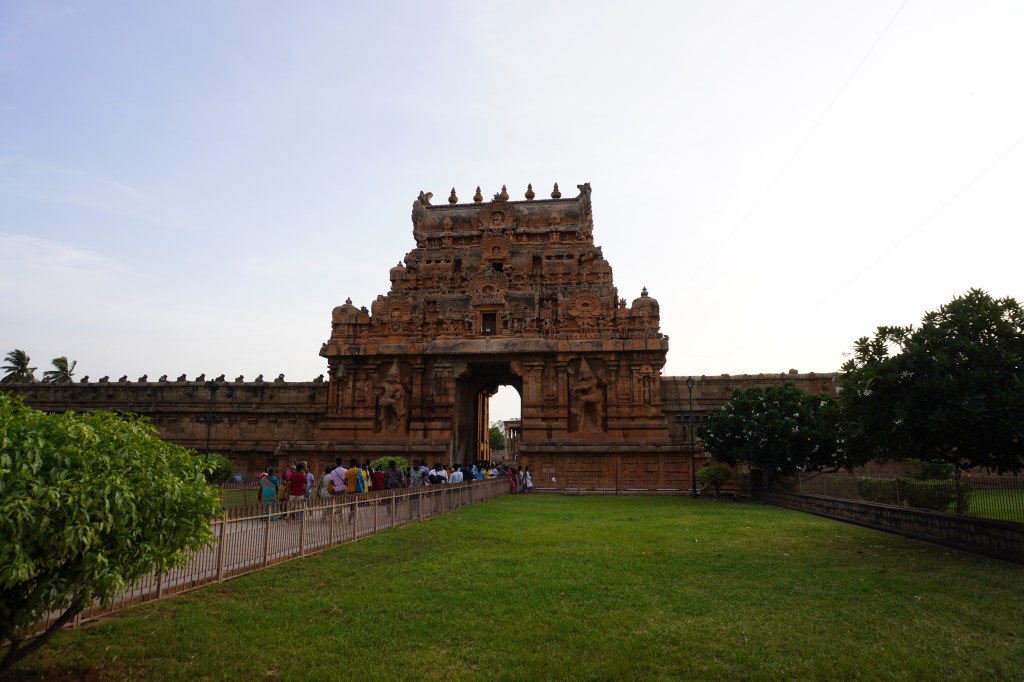
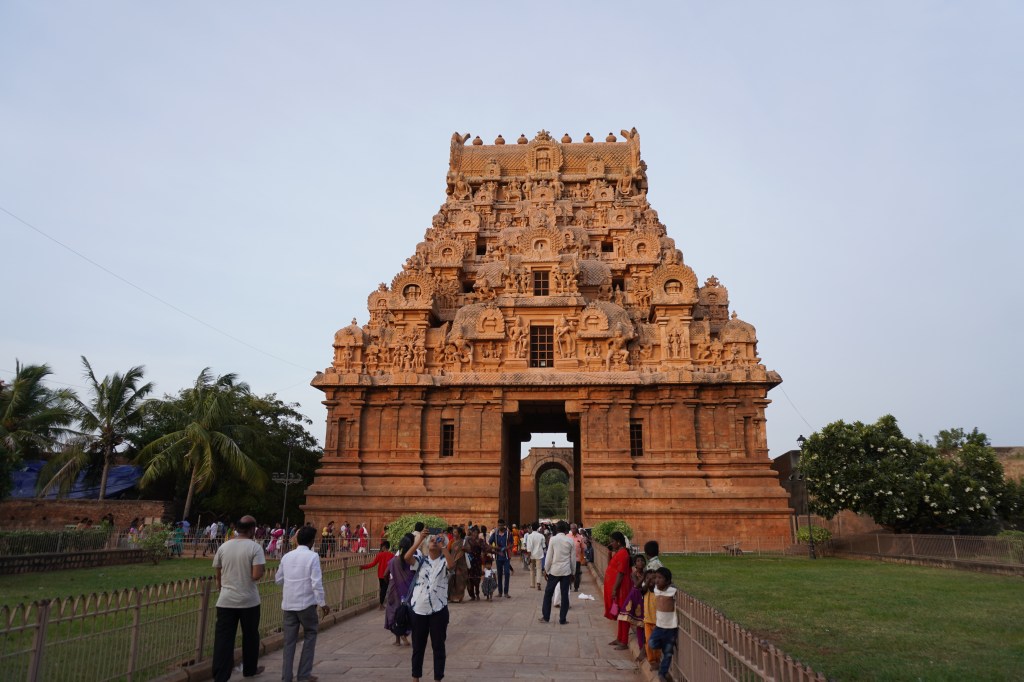
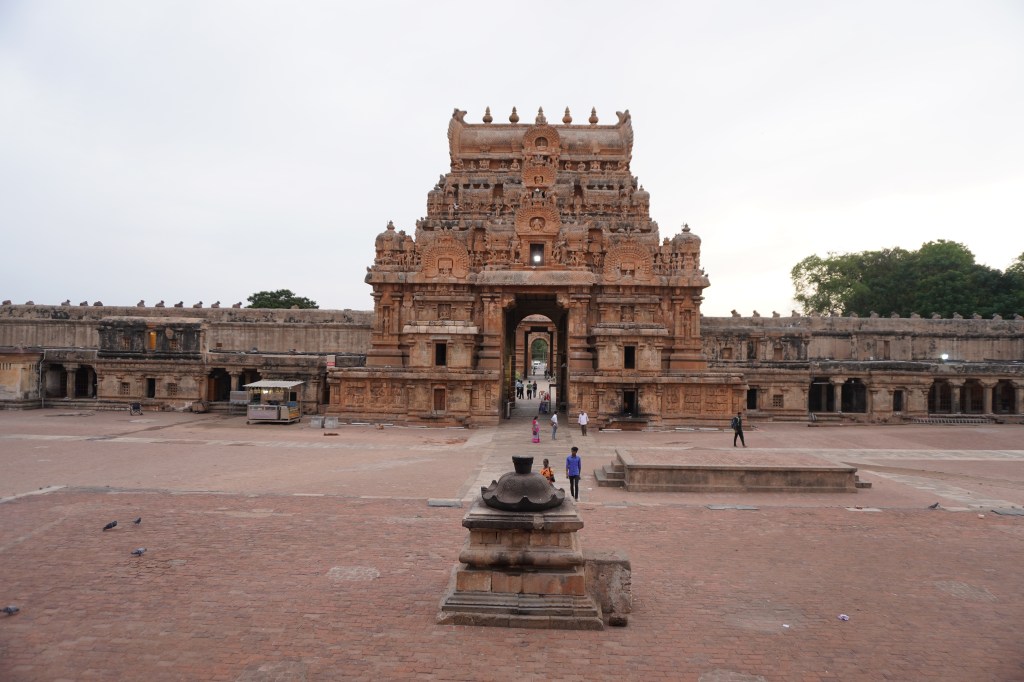
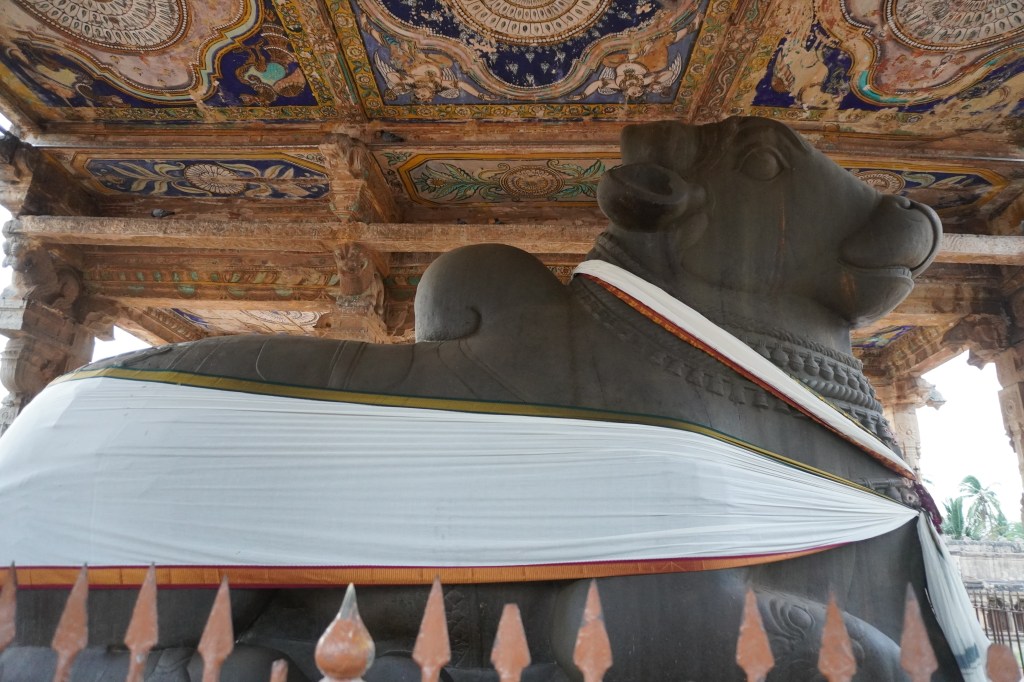
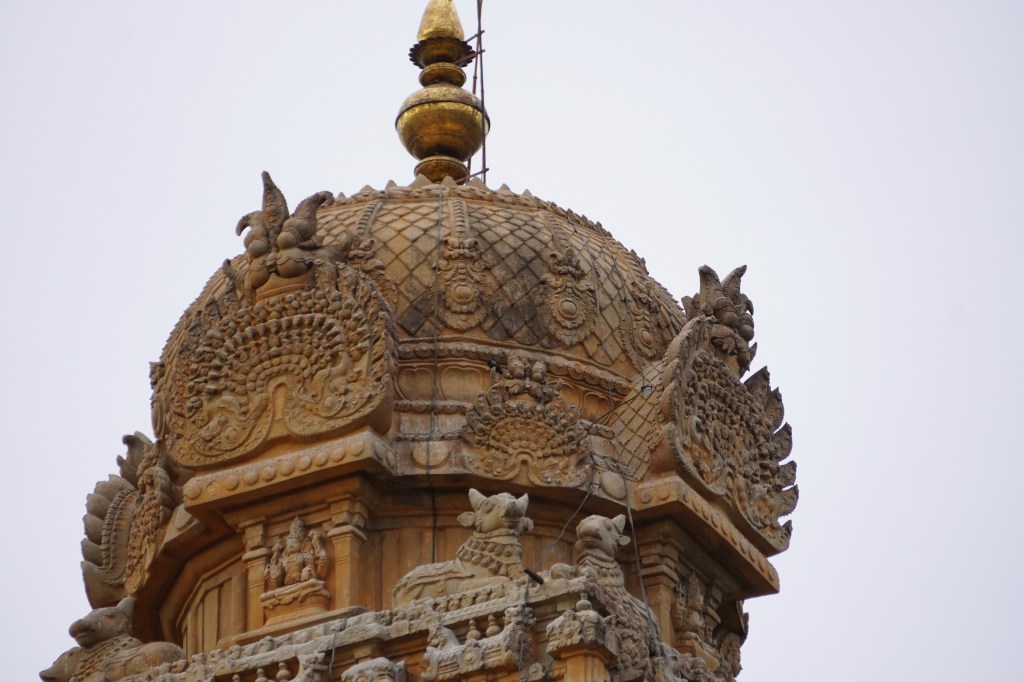
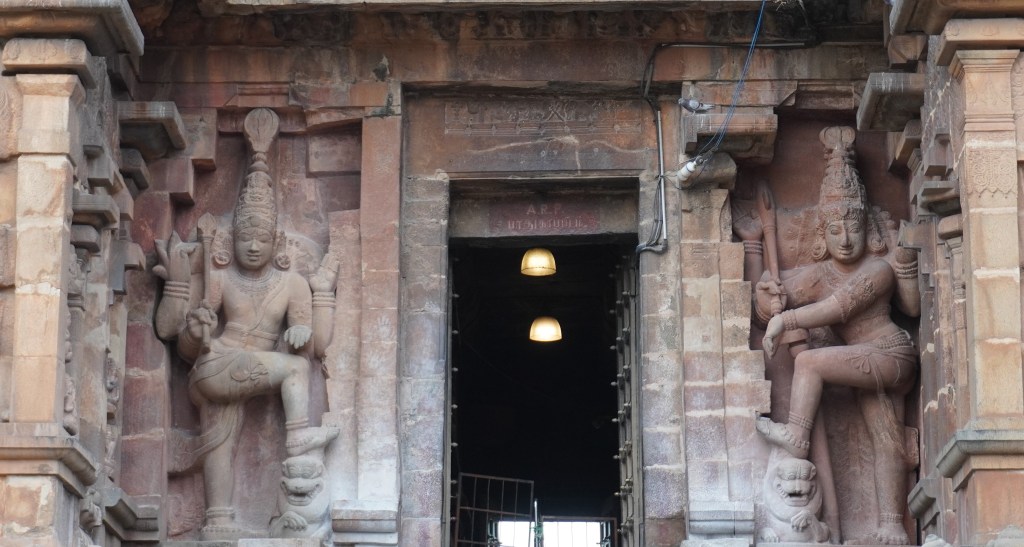
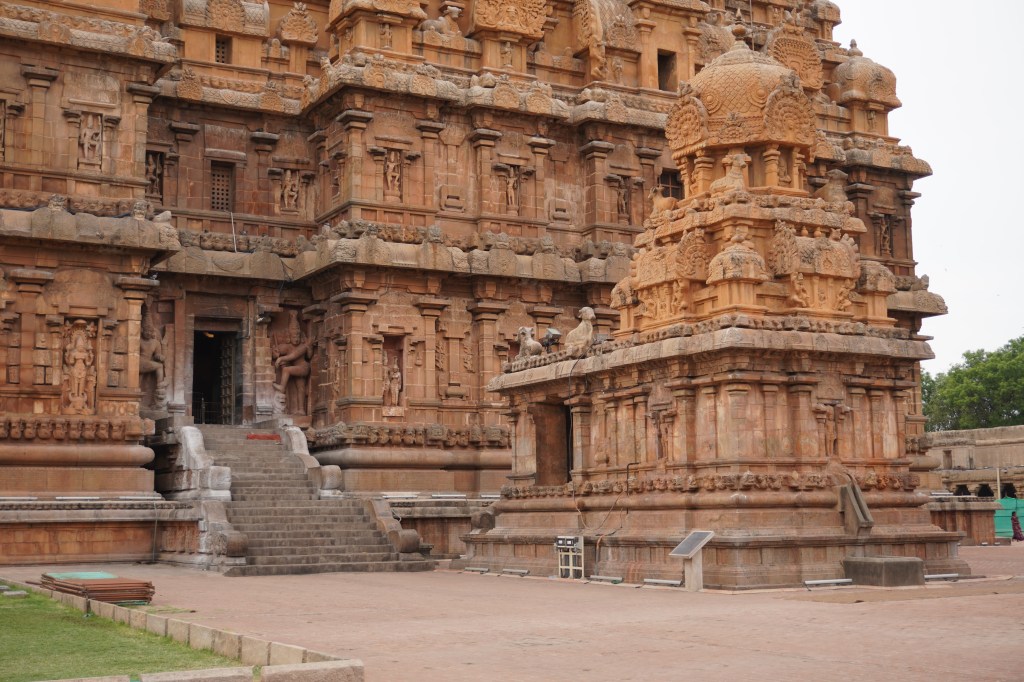
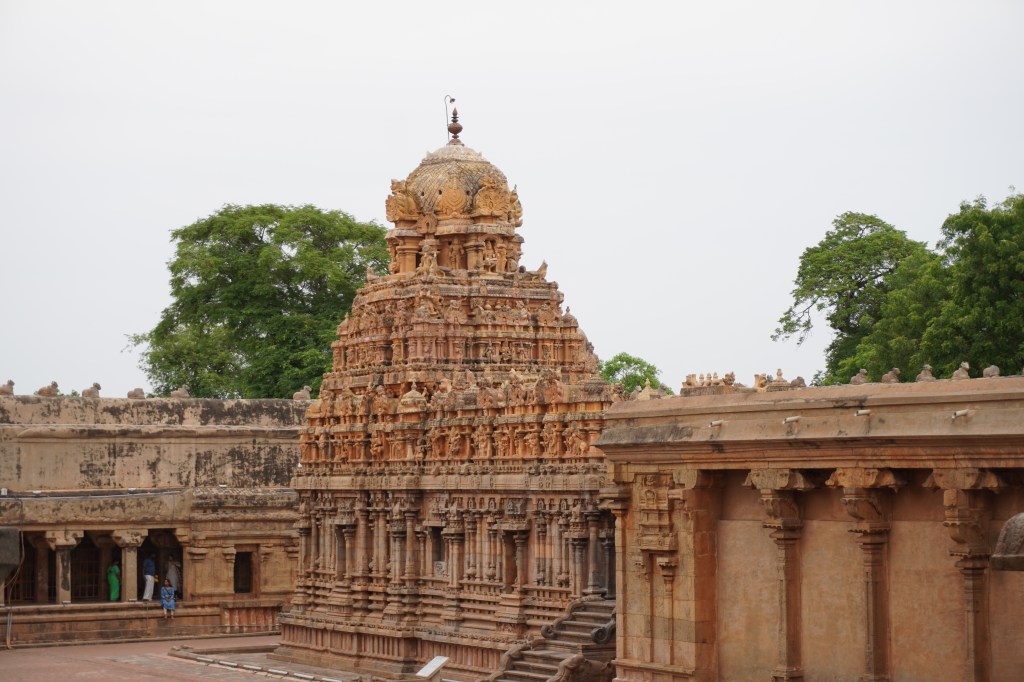
I also came across an interesting superstition regarding this temple- it is said that politicians avoid visiting it because it can bring bad luck. One Prime Minister was assassinated following a visit and a certain Chief Minister suffered a stroke after going there. And during a function to commemorate the 1000th anniversary of the temple, the then Chief Minister went in through a side entrance!
 butterfliesonmymindblog
Beautiful written on Chola Empire❣️✍️❣️
LikeLiked by 1 person
That time,the Bay of Bengal was called by the name of Chola’s Bay🥰🙏🥰
LikeLiked by 1 person
Interesting!
LikeLiked by 1 person
❣️🥰❣️
LikeLike