Revisiting Kerala one snapshot at a time.
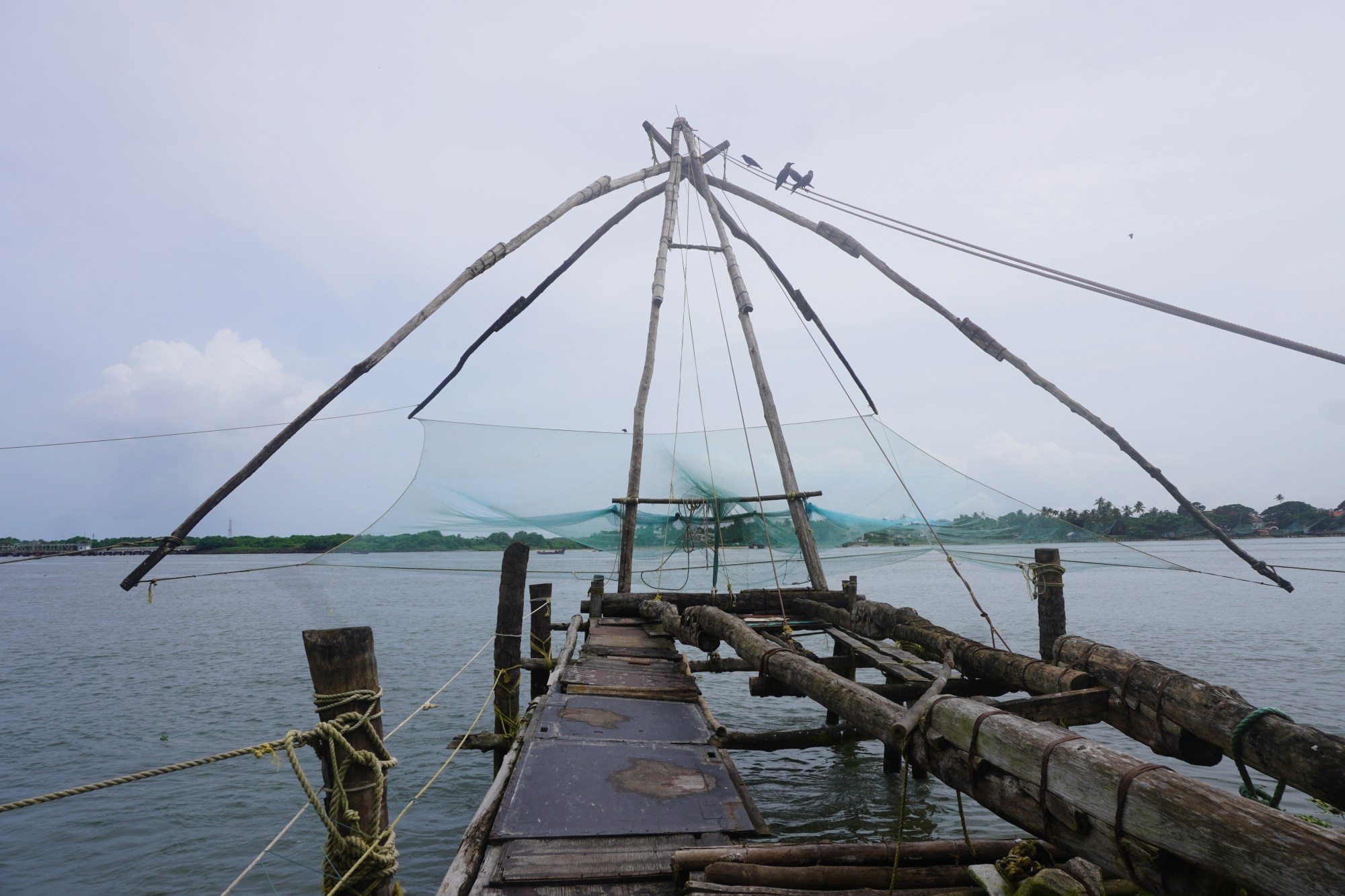
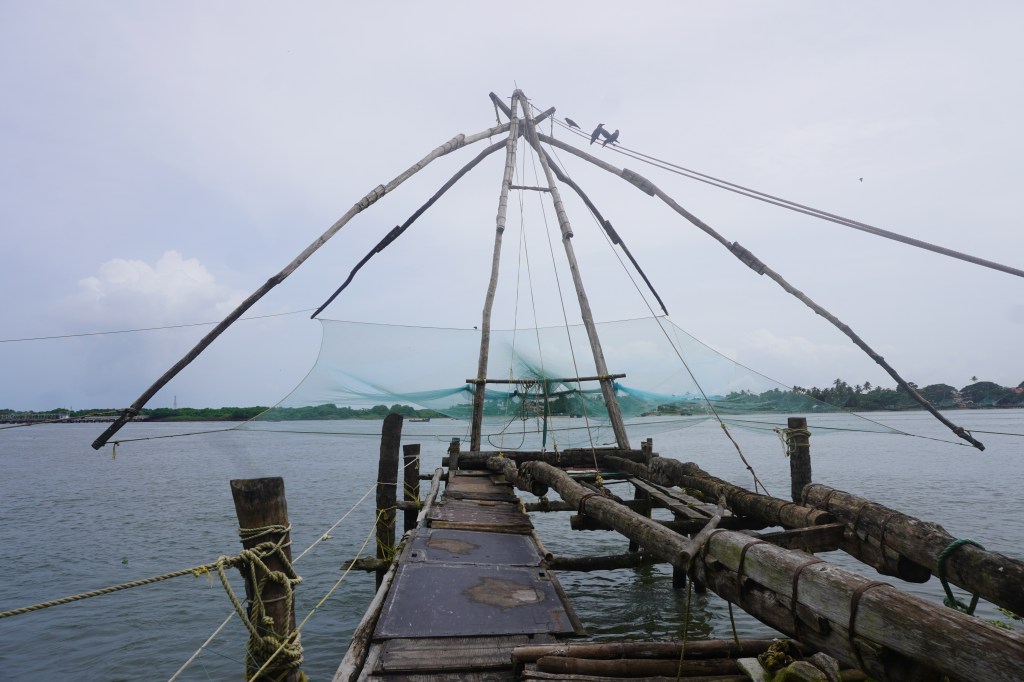
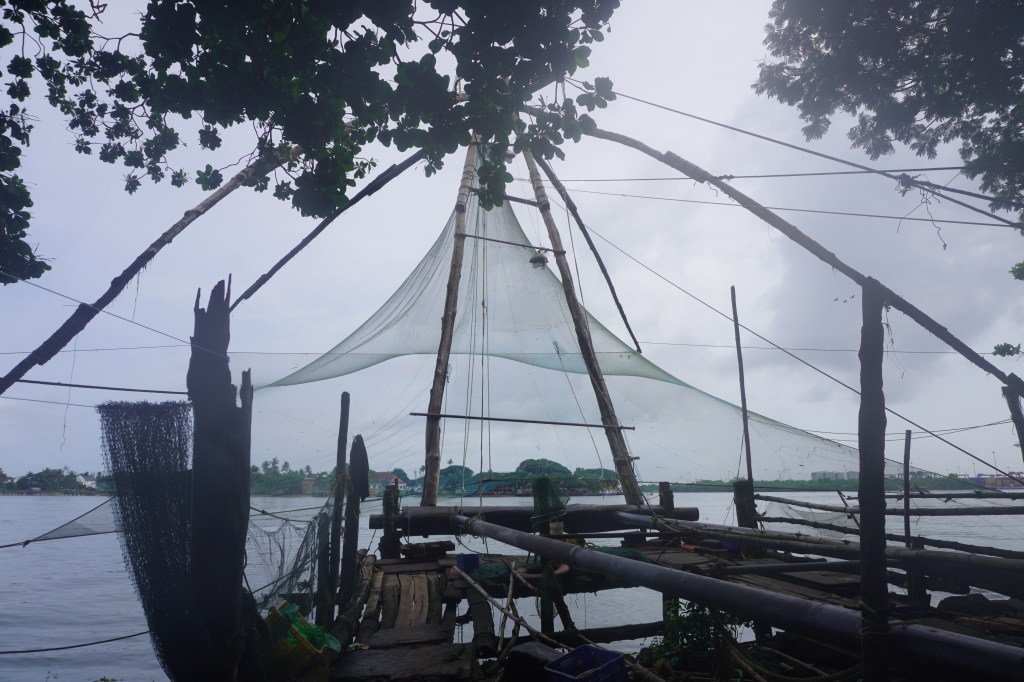
I’ve started on part 2 but still haven’t moved out of Fort Kochi. It’s surprising how much one can learn about a city in just two days. Especially by walking around the place. A lot of Fort Kochi is very touristy and there are souvenir shops everywhere. But look beyond the souvenir shops that line up on both sides of River Road and there you will see one of Kochi’s best-known landmarks: the Chinese fishing nets or ‘Cheena Vala’ as they are called. These nets are around 500 years old and some are still being used. But their numbers are decreasing mainly due to the cost of maintaining them and also because of the diminishing number of fish in that area.
And how did these huge fishing nets reach Kochi? For that we need to go back to the years between 1405 and 1433. And we need a map!
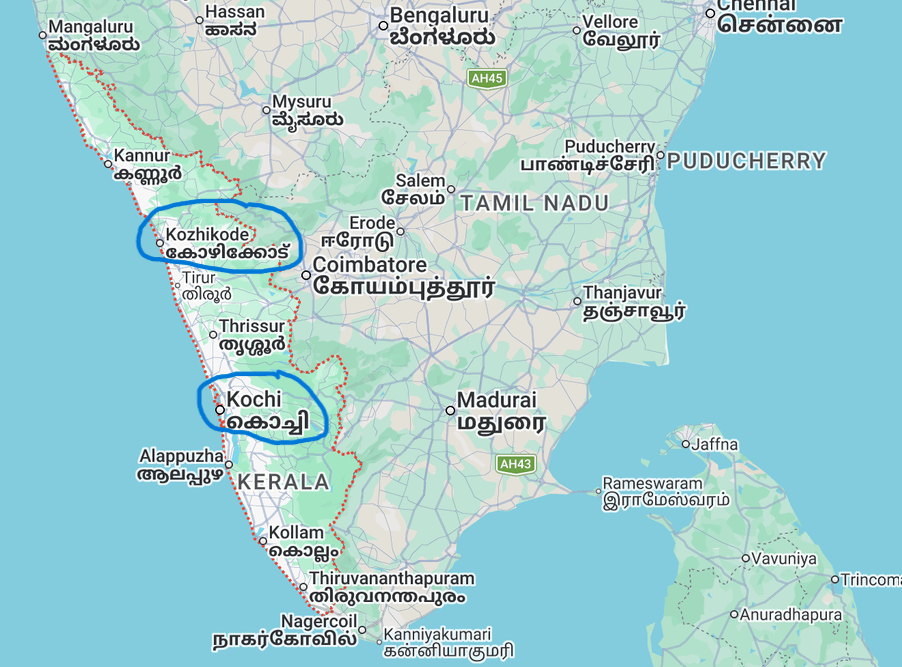
There was a time when Kohzikode (Calicut) and Kochi (Cochin) were major ports for the spice trade. They were also rivals because although Calicut was economically and politically stronger, Cochin was fast catching up. Not very surprising then; that the Zamorin of Calicut wanted an unfriendly takeover of Cochin. Enter Admiral Zheng He, commander of one of the seven ocean voyages commissioned by the Ming Dynasty of China. Cochin was of crucial importance to the Chinese as a trading port. Admiral Zheng He decided to confer special status to Cochin and bestowed upon it a seal in the form of a stone tablet, proclaiming that Cochin was under the protection of the Yongle Emperor. The Zamorin of Calicut had to back off and this is how the Chinese and their fishing nets established themselves in Cochin.
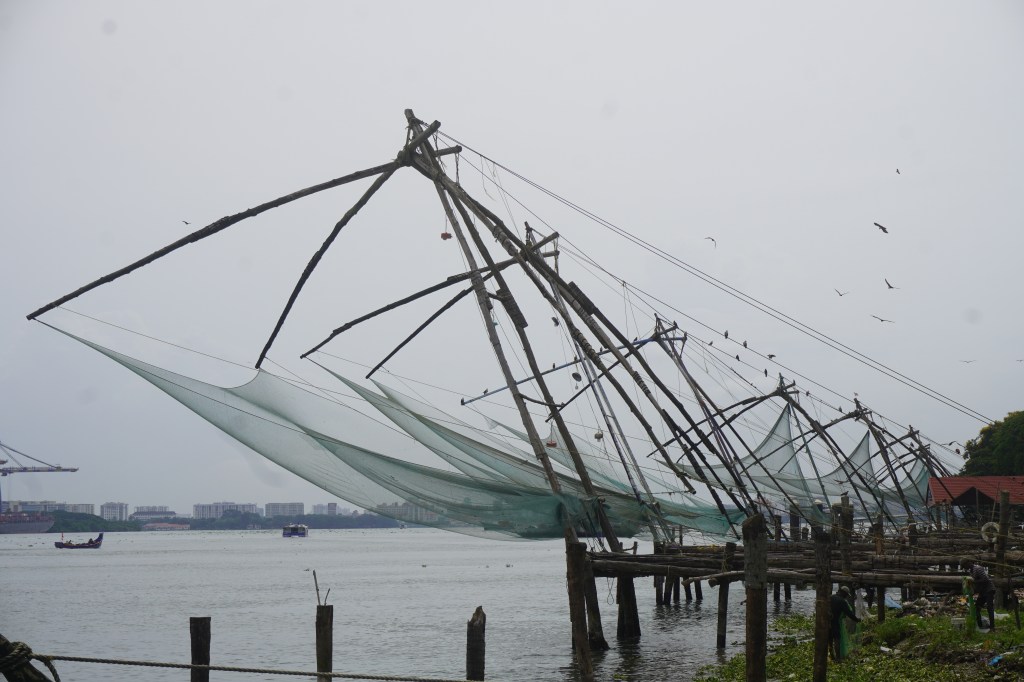
Only 8-10 of these nets now remain and they are an interesting blend of history, tradition and engineering. They are approximately 20 metres tall and are operated from the shore by a team of fishermen. The nets are attached to wooden rods which are in turn attached to huge wooden beams that use a cantilever system with counterweights. This allows the nets to be lowered into the sea and then raised up, bearing the catch of the day. Unfortunately we were not able to see the nets in action.
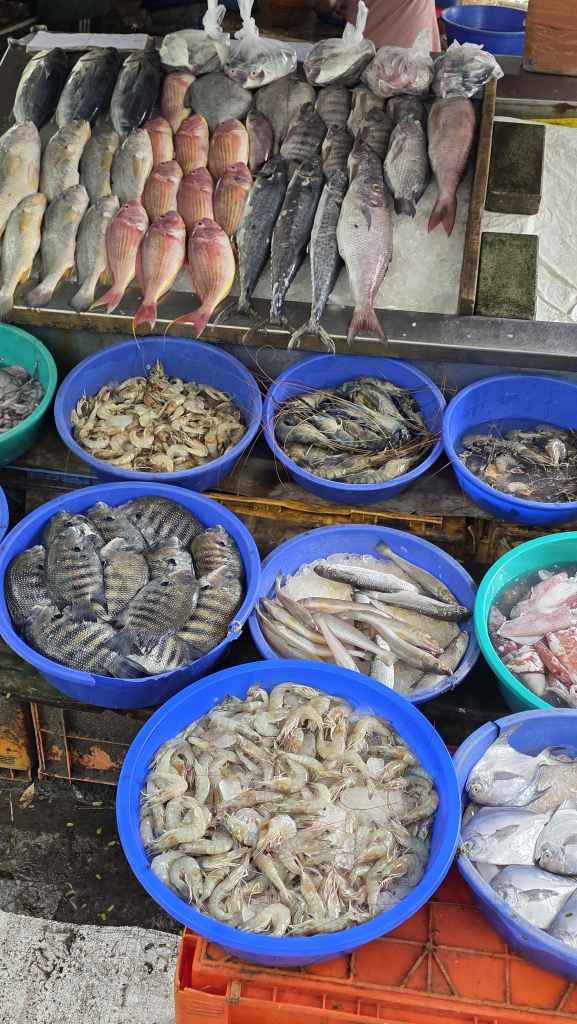
This seems to be ending up as a water-y and fish-y post so I’ll take a figurative plunge into my next memorable experience of Kochi- the Water Metro!
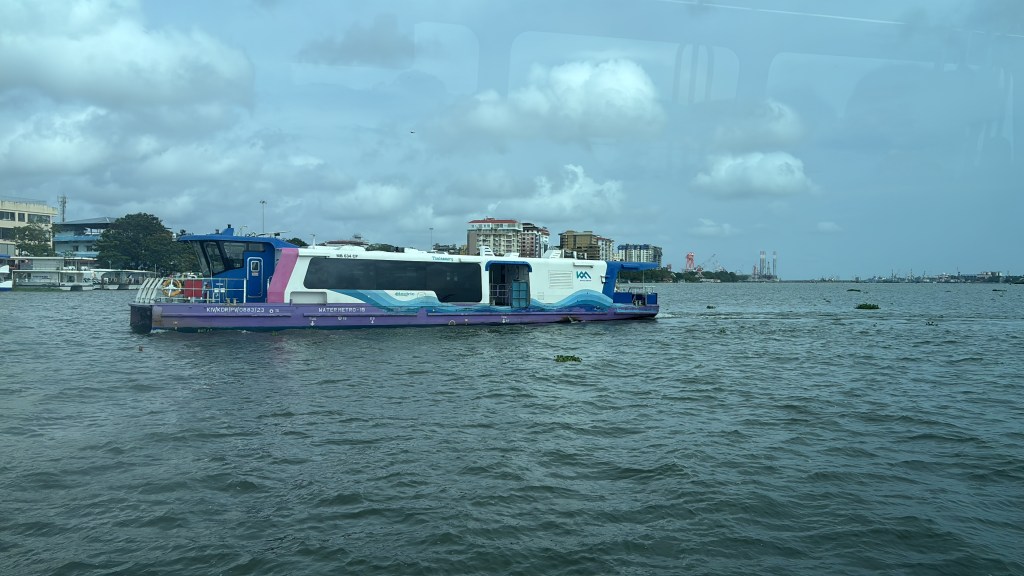
These are battery-operated electric boats that ply through the waterways of Kochi and connect different parts of the city. They are eco-friendly (but air-conditioned!), spacious and CLEAN. The picture was taken through the tinted window of the metro, hence the reflection and the unnatural blue.
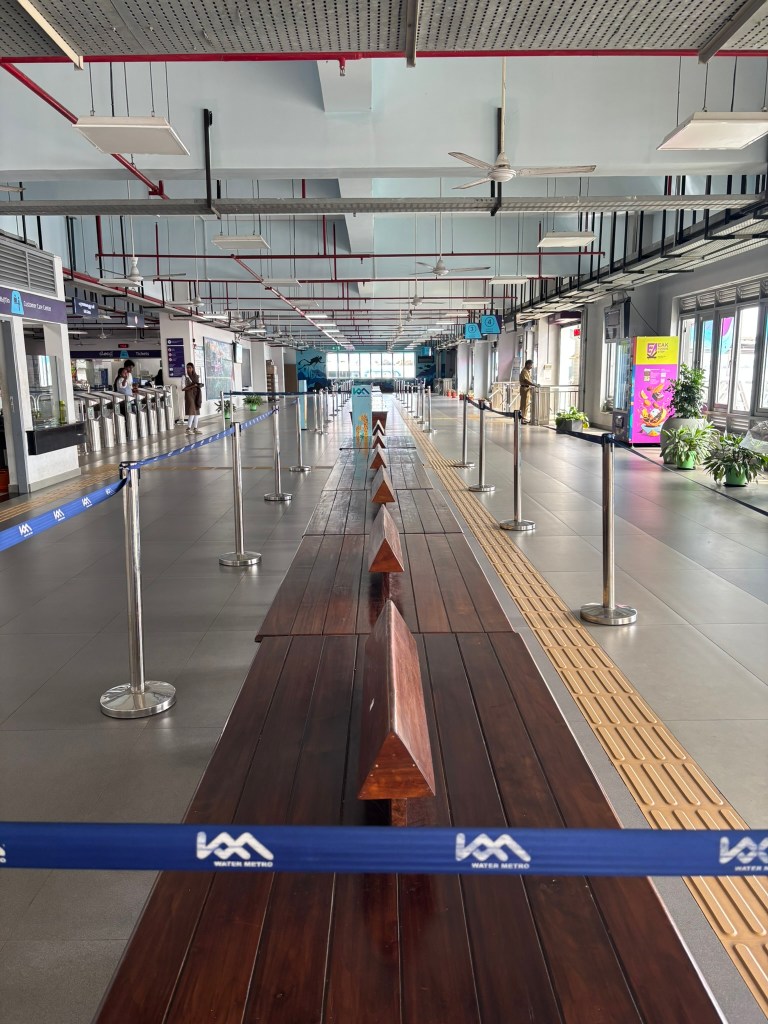
The above picture was taken inside the metro station. CLEAN!
We took a leisurely ride in the water metro, enjoying the views of the shipyard and the huge ships that we passed on the way. I was almost sorry to get off. We were lucky because it was a bright, sunny day and the sea was calm. I wonder what it’s like on a rainy day when the sea is rough and wouldn’t really care to find out.
From Chinese fishing nets to the water metro to a kalaripayattu performance seems quite a leap but there is a link.
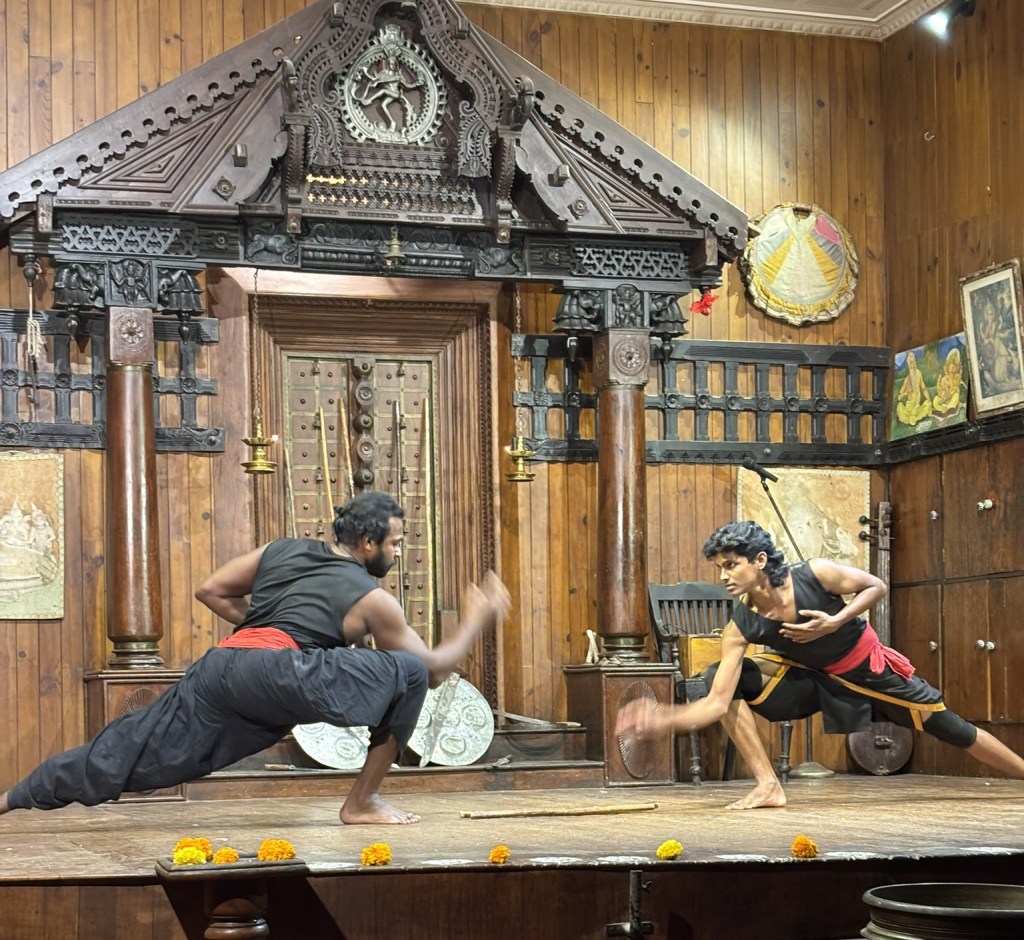
Kalaripayattu is an ancient martial art that goes back to 600 BCE. Kalari- the place or centre, Payattu- rigorous practice or the fight. The performer on the left is a fisherman who we met the day after the show, while we were walking around the fishing nets. Fisherman by day and kalaripayattu warrior by night. Another memorable snapshot from Kochi.


The Real Kerala Story 2 ❤️❤️ Though I am from Kerala Deeps, your blog wants me to revisit Kerala as a traveller ..
LikeLiked by 1 person
Hope you can make it happen!
LikeLike