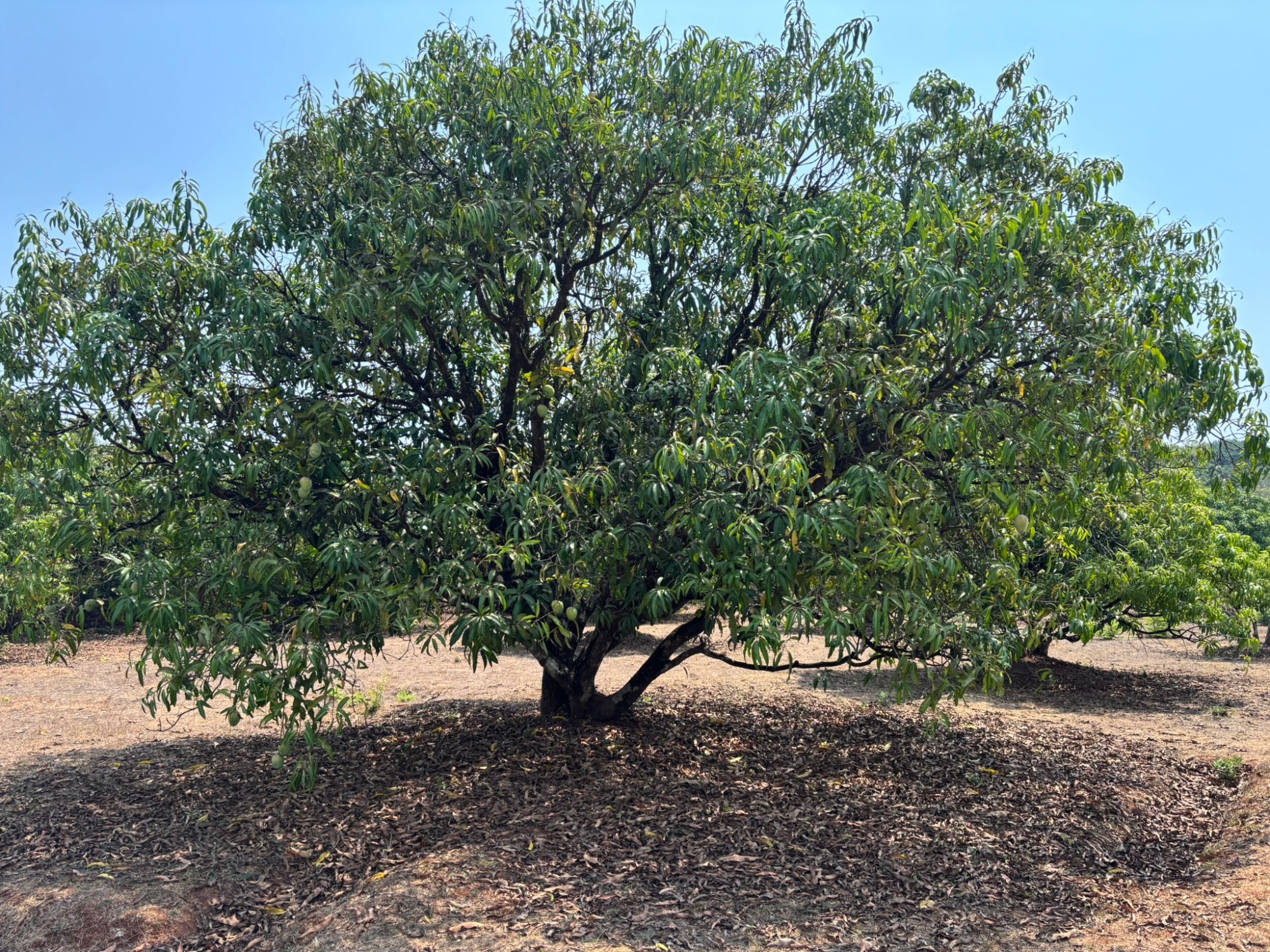
It was in the second week of May that we were booked to go on a tour of Ratnagiri district in Konkan for mango picking. Mangoes had begun entering the market from March itself and going by the number of stalls that had come up; people seemed to be buying them in copious quantities, never mind the exorbitant rates. Why have we humans lost the patience to wait and enjoy fruits and vegetables in their season? Mangoes are at their best in April and May when they get just the right amount of heat and sunlight to help them ripen and acquire that rich, complex depth of flavour and colour. So it baffles me as to why so many are willing to spend so much to take home quantities of artificially ripened mangoes that look and taste insipid.
The renowned Urdu poet and satirist Akbar Allahabadi expressed his love for mangoes in these few lines:
नामा न कोई यार का पैग़ाम भेजिए
इस फ़स्ल में जो भेजिए बस आम भेजिए
ऐसा ज़रूर हो कि उन्हें रख के खा सकूँ
पुख़्ता अगरचे बीस तो दस ख़ाम भेजिए
मालूम ही है आप को बंदे का ऐडरेस
सीधे इलाहाबाद मिरे नाम भेजिए
ऐसा न हो कि आप ये लिक्खें जवाब में
तामील होगी पहले मगर दाम भेजिए
In other words:
“O beloved do not send any messages
This season if you want to send just send mangoes
I should be able to keep them and eat
If twenty are ripe ten should be raw
You know the address of yours truly
Send them directly to my address at Allahabad
It should not so happen that you reply
That you will follow my order but first I should send the money!”
The English version lacks the charm and humour of the original, but one gets the idea!
Here’s another ‘nazm’ titled ‘आमों का सेहरा‘ by Sagar Khayyami
जो आम मैं है वो लब ए शीरीं मैं नहीं रस
रेशों मैं हैं जो शेख की दाढ़ी से मुक़द्दस
आते हैं नज़र आम, तो जाते हैं बदन कस
लंगड़े भी चले जाते हैं, खाने को बनारस
होटों मैं हसीनों के जो, अमरस का मज़ा है
ये फल किसी आशिक की, मोहब्बत का सिला है
आमद से दसहरी की है, मंडी में दस्हेरा
हर आम नज़र आता है, माशूक़ का चेहरा
एक रंग में हल्का है, तो एक रंग में गहरा
कह डाला क़सीदे के एवज़, आम का सेहरा
खालिक को है मक़सूद, के मख्लूक़ मज़ा ले
वो चीज़ बना दी है के बुड्ढा भी चबा ले
फल कोई ज़माने में नहीं, आम से बेहतर
करता है सना आम की, ग़ालिब सा सुखनवर
इकबाल का एक शेर, कसीदे के बराबर
छिलकों पा भिनक लेते हैं , साग़र से फटीचर
वो लोग जो आमों का मज़ा, पाए हुए हैं
बौर आने से पहले ही, वो बौराए हुए हैं
नफरत है जिसे आम से वो शख्स है बीमार
लेते है शकर आम से अक्सर लब ओ रुखसार
आमों की बनावट में है, मुज़मर तेरा दीदार
बाजू वो दसहरी से, वो केरी से लब ए यार
हैं जाम ओ सुबू खुम कहाँ आँखों से मुशाबे
आँखें तो हैं बस आम की फांकों से मुशाबे
क्या बात है आमों की हों देसी या विदेसी
सुर्खे हों सरौली हों की तुख्मी हों की कलमी
चौसे हों सफैदे हों की खजरी हों की फजरी
एक तरफ़ा क़यामत है मगर आम दसहरी
फिरदौस में गंदुम के एवज़ आम जो खाते
आदम कभी जन्नत से निकाले नहीं जाते
There is plenty of humour and wordplay in the above verses and none of it translates well into English, which is why I am not sharing any other version of it. But I have highlighted a few lines that I relished as much as the fruit. Some working knowledge of Urdu is also required. Suggestion- Avoid Google Translate! Although I’ve listened to it being recited several times (thank you, YouTube), the last 2 lines are my favourite.
फिरदौस में गंदुम के एवज़ आम जो खाते,
आदम कभी जन्नत से निकाले नहीं जाते
In Paradise, had Adam consumed mangoes instead of wheat (what, no apples??), he would never have been expelled from the heavens!
Oh well… to answer my earlier question as to why people spend so much etc, this could be an explanation. Lines credited to Munawwar Rana
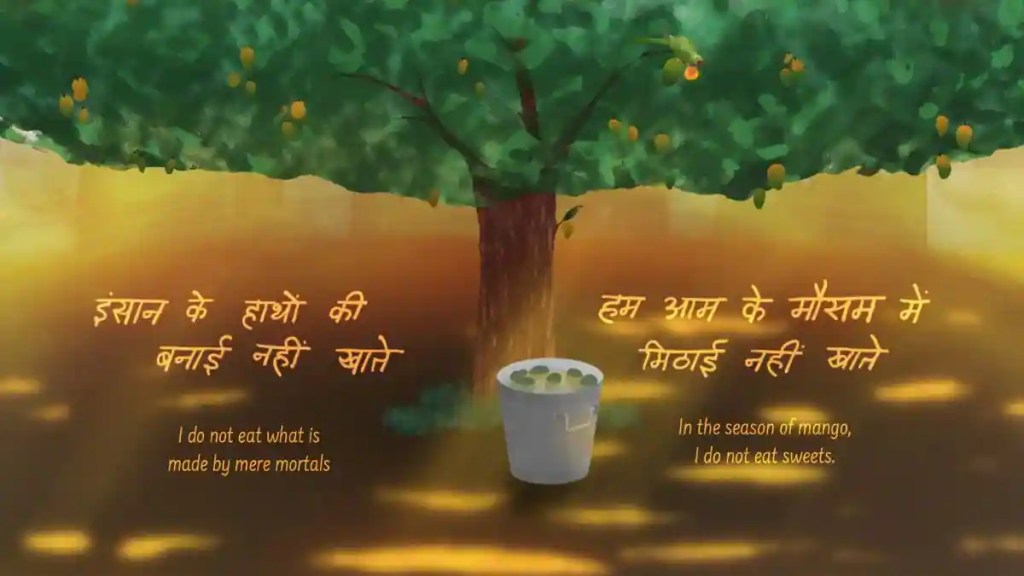
But since this post is about my mango experiences in Konkan, I will return to the topic and to Ratnagiri- the home of the Hapus which has everybody hooked. One reason for the delectable taste of this variety is apparently its proximity to the sea. ‘Closer the sea, sweeter the mango’ it is said. But the sea is just one of the factors that contribute to the sweetness of the Hapus. The soil, the weather and even the genetic composition of the fruit can affect its taste.
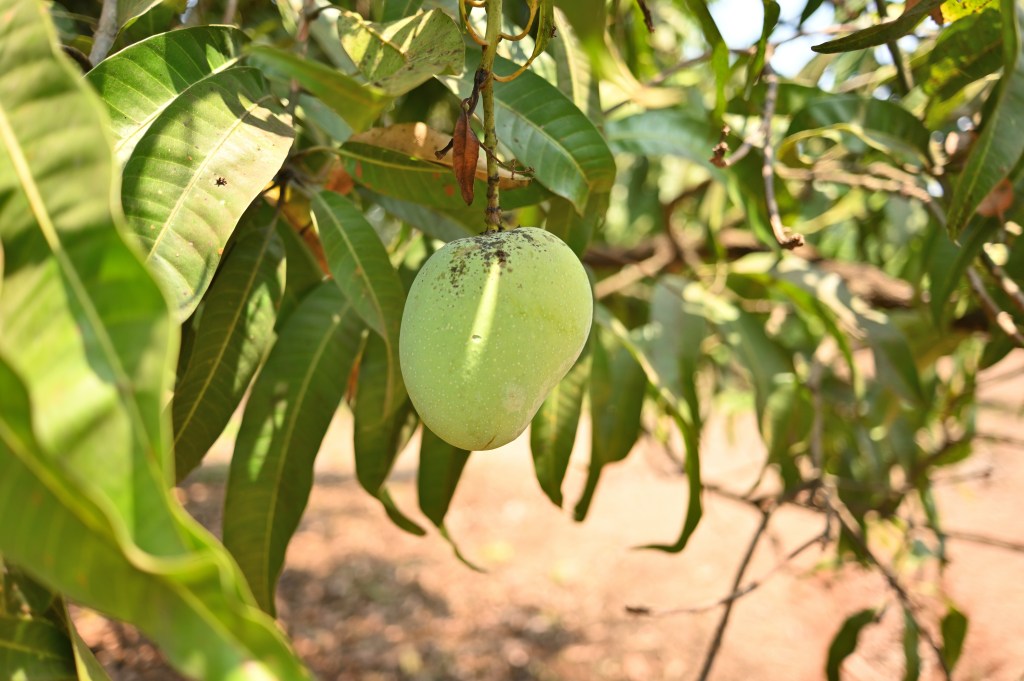
As an experiment, grafts of the best Hapus variety were taken from Ratnagiri and planted in neighbouring Karnataka; which is also a coastal state. The best weather and soil conditions were provided. And voila! The trees yielded mangoes three to four times higher than in the Konkan. And yet, they could not compare in taste, aroma or texture to the ones in their home state. Lesson learned: “The Alphonso of Ratnagiri cannot be duplicated away from the coastal region in regard to its fruit quality.”
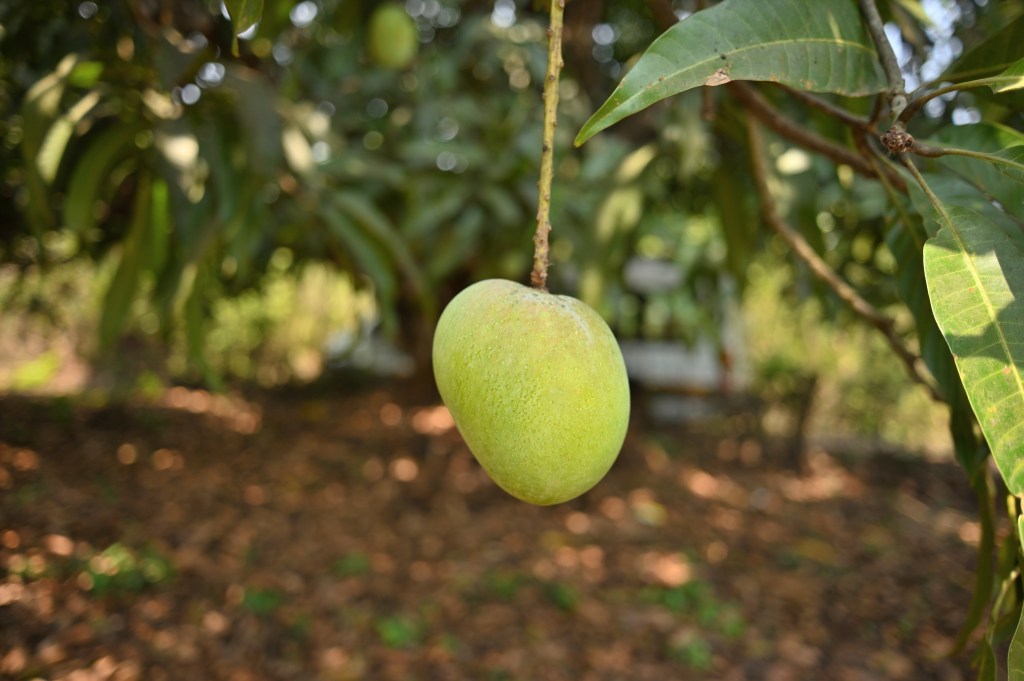
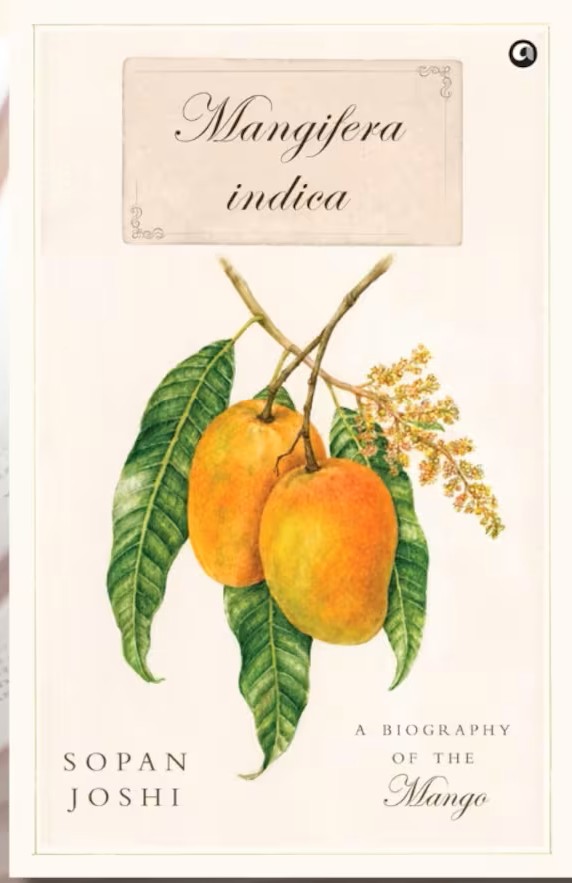
I came across such interesting accounts and more in this book titled ‘Mangifera Indica- a biography of the mango’, written by Sopan Joshi. He travels the length and breadth of the country, discovering and sampling as many varieties of mangoes he can come across, talks about their histories and stories, not to mention their tastes.
He also mentions that since the Alphonso tree can be quite temperamental and high maintenance, most fruit juice brands prefer the more reliable but less flavourful varieties like ‘totapuri’ and ‘neelampari’ for pulp from which to extract the juice. And all juices have only 10 % of Alphonso pulp which is added for taste and aroma! That takes away all the ‘Maaza’ from the ‘Frooti!!’
Apologies for the detour. Back to the tour. Before the tour I had been reading articles on how climate change was affecting the mango crop every year. And this year had been particularly bad- delayed, mild winter, unseasonable rain and hailstorms, extreme summer- and many mango growers were feeling the brunt of it. The owner of an ‘aamrai’ we were to visit had saved the mangoes of one tree for our group, most of the other trees had lost their fruit. Which was really unfortunate.
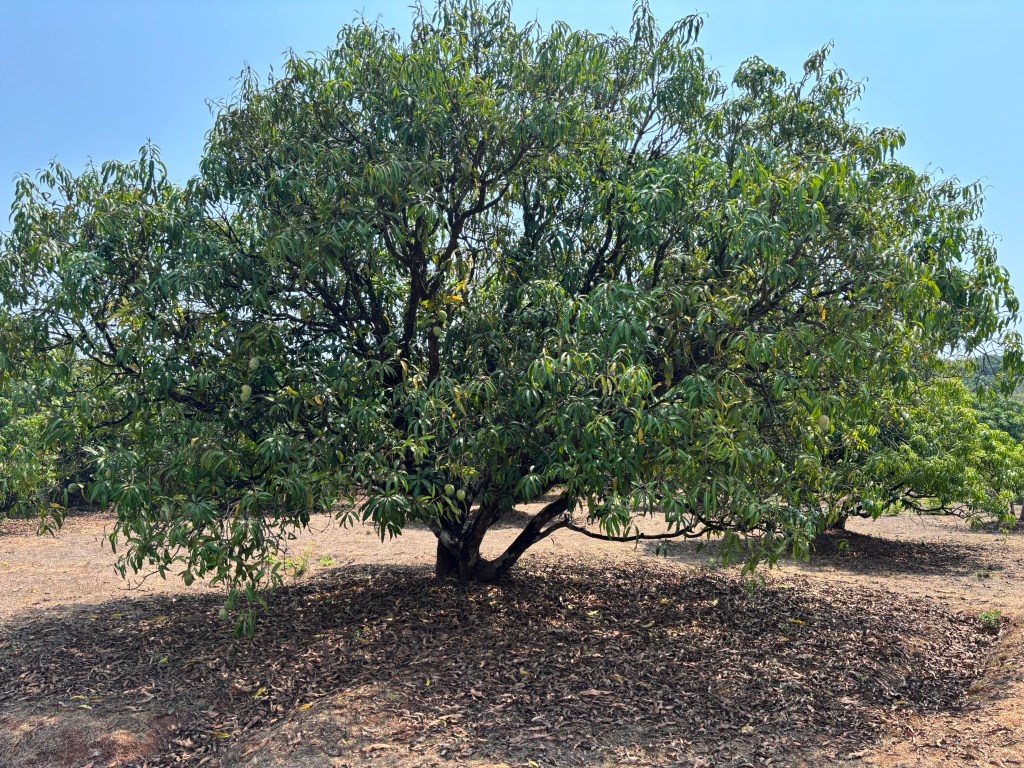
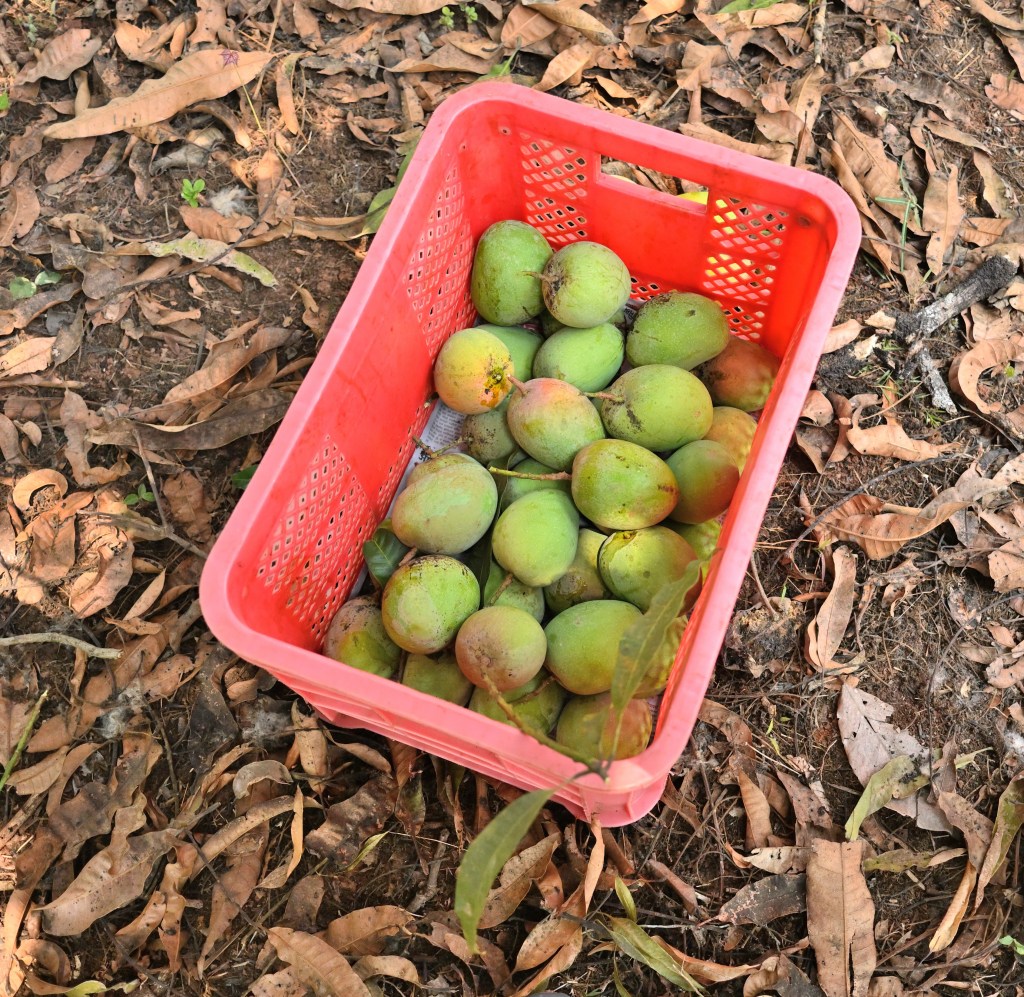
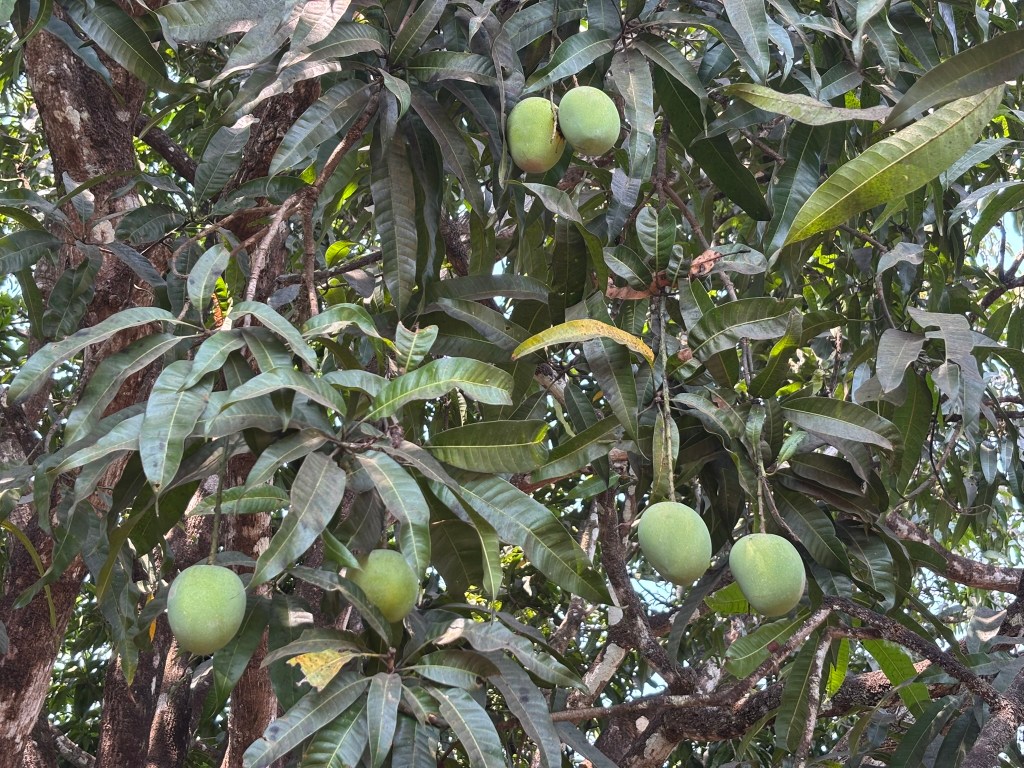
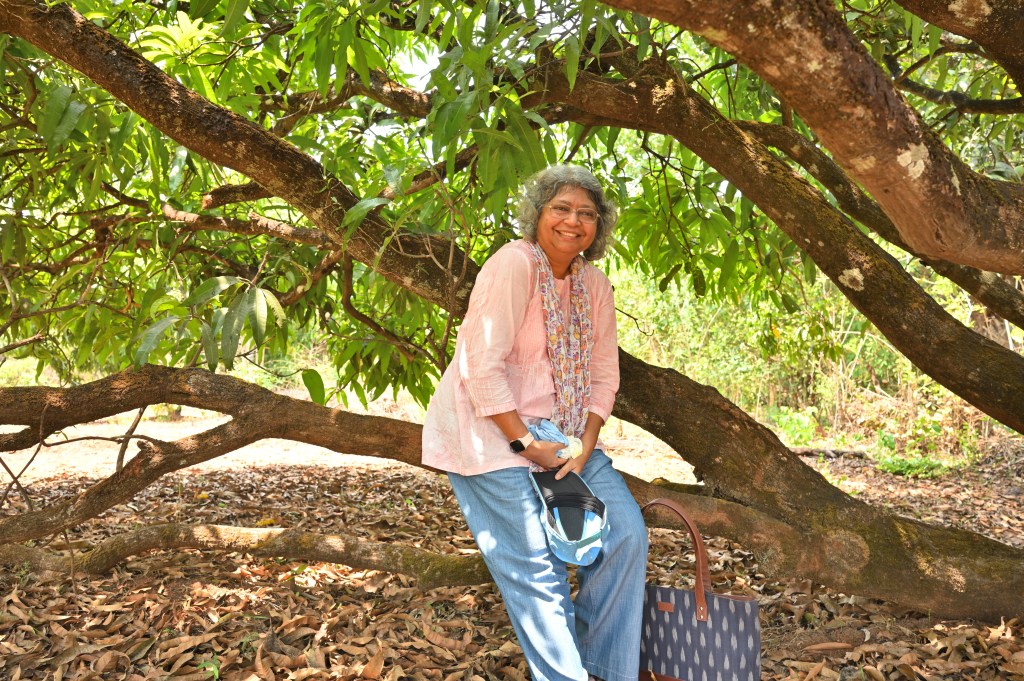
The orchard itself was in a scenic location- around 200 trees spread out on a plain land with green hills standing guard at the back. We were shown how to wield the long stick that had a net attached to one end and use it to pick the mangoes. While the rest of the group took turns at maneuvering the stick to get at the mangoes, I preferred to look for the low-hanging fruit. Literally! It was much more fun to wander among the branches and pluck the mangoes. And then I found something even more fun to do- look for fallen mangoes among the leaves that carpeted the ground beneath the trees. It was like a treasure hunt! I pounced on several mangoes that; when turned over, were half eaten by birds. But some were all ripe and ready to be eaten. And that was the best part of the experience. The mangoes were peeled by hand and passed around for us to bite into.
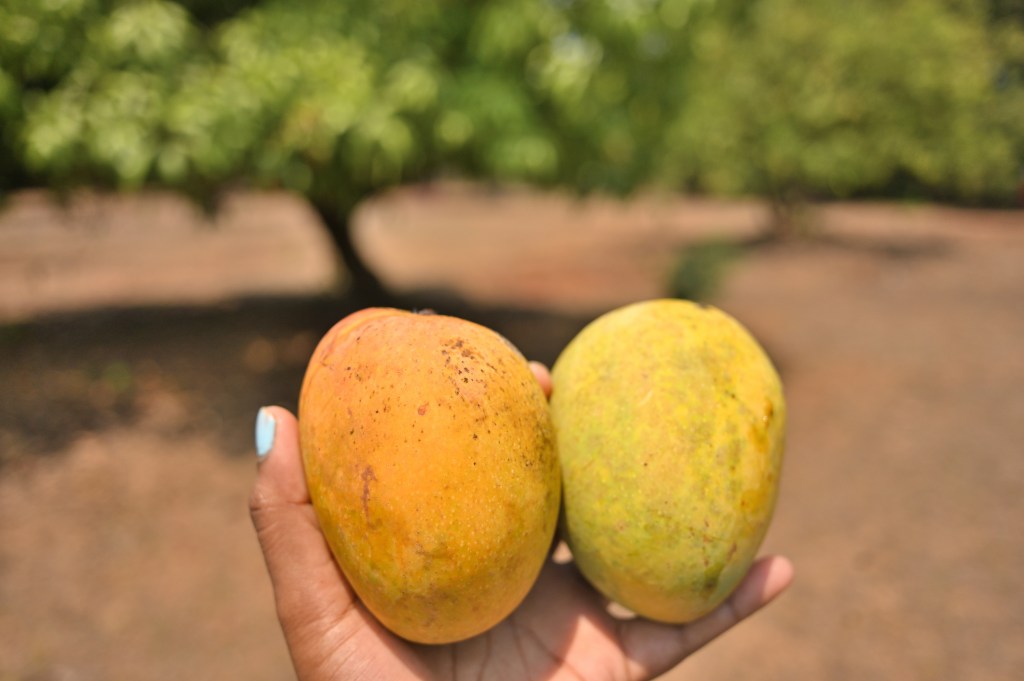
We stood there under the blazing sun, surrounded by mango trees and sank our teeth into the warm, sun ripened mangoes. The taste was indescribable. It was heavenly. It tasted of the sun, summer, nectar and ambrosia. It was juicy, sweet but a little tart. It was glorious.
As Sagar Khayyami put it :
वो लोग जो आमों का मज़ा पाए हुए हैं
बौर आने से पहले ही, वो बौराए हुए हैं.
In other words- Those who have savored the delight of mangoes,
Are already intoxicated, even before the madness sets in.
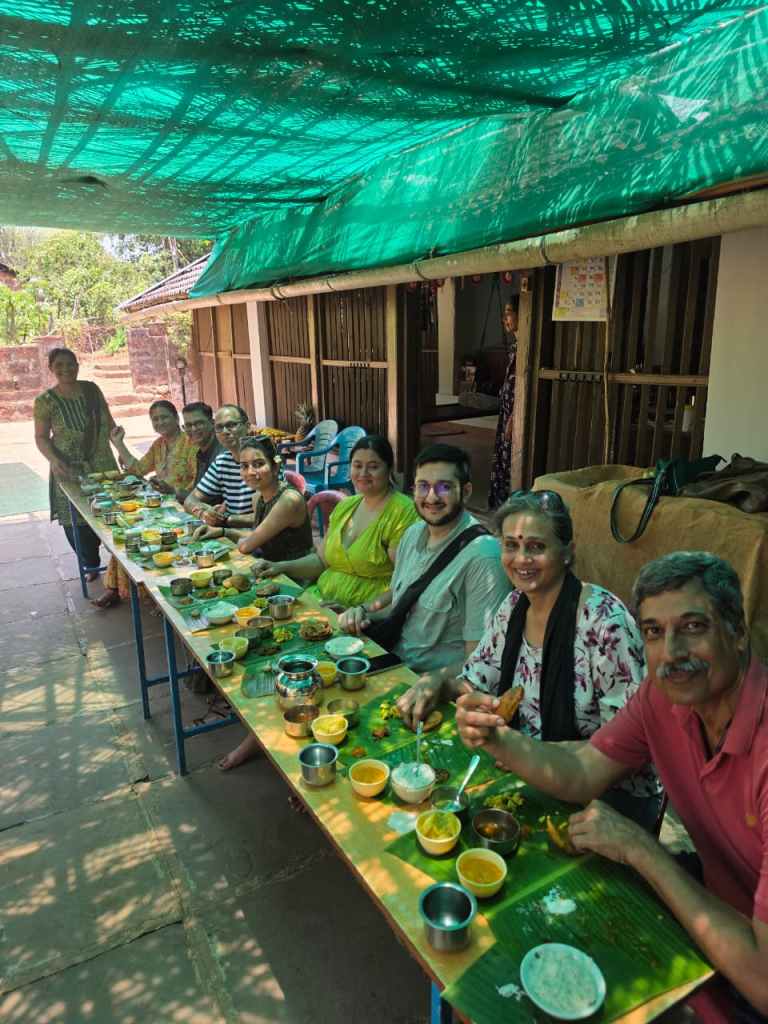
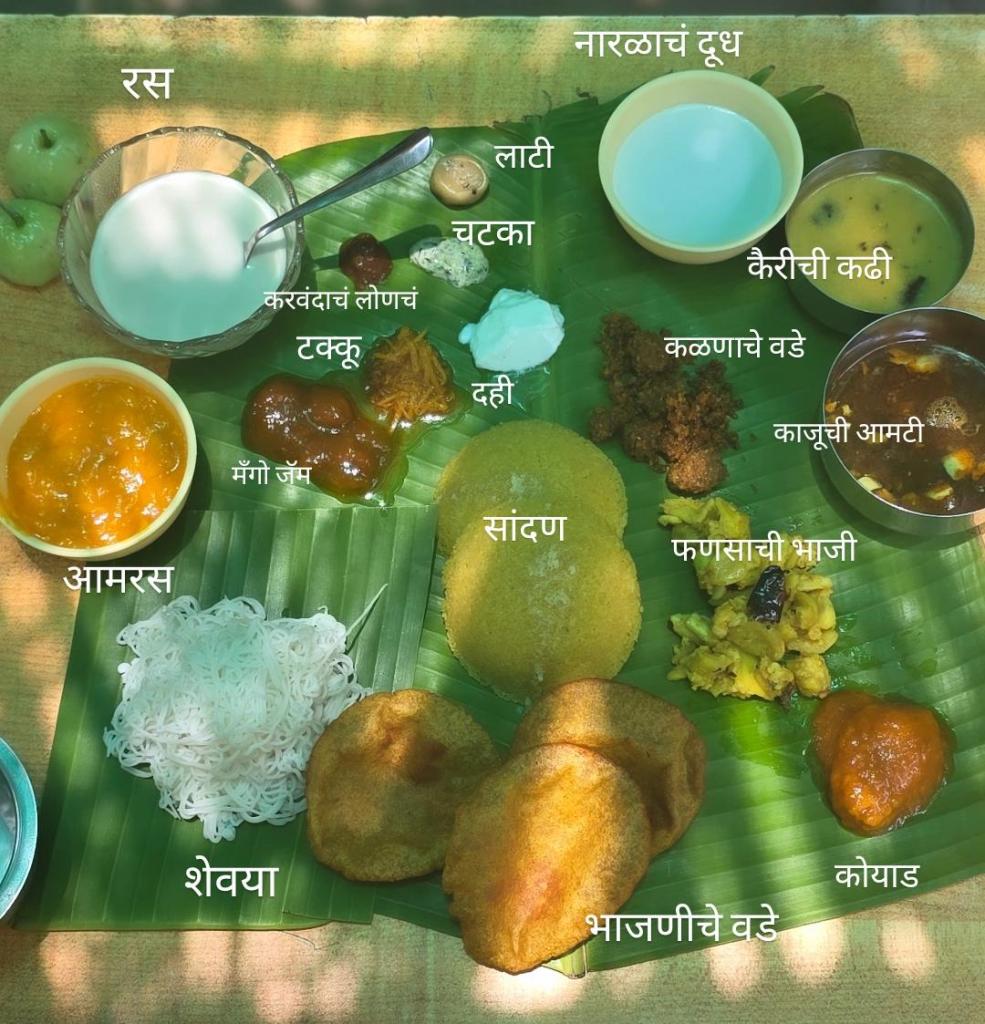
After feasting all our senses on this divine treat, we headed out for a typical home-cooked Konkani lunch. We were taken to an over a 100 years old family residence in the middle of an orchard. A sumptuous (all vegetarian) meal was laid out before our appreciative eyes, of which the only item that I could recognise was the steamed rice. Our hostess explained each dish to us- with name, main ingredient and preparation. I forgot the names as soon as they were told because I was so busy tasting them all. There were so many different flavours, textures and aromas that we were in awe. We were also so stuffed that there was no room for seconds.
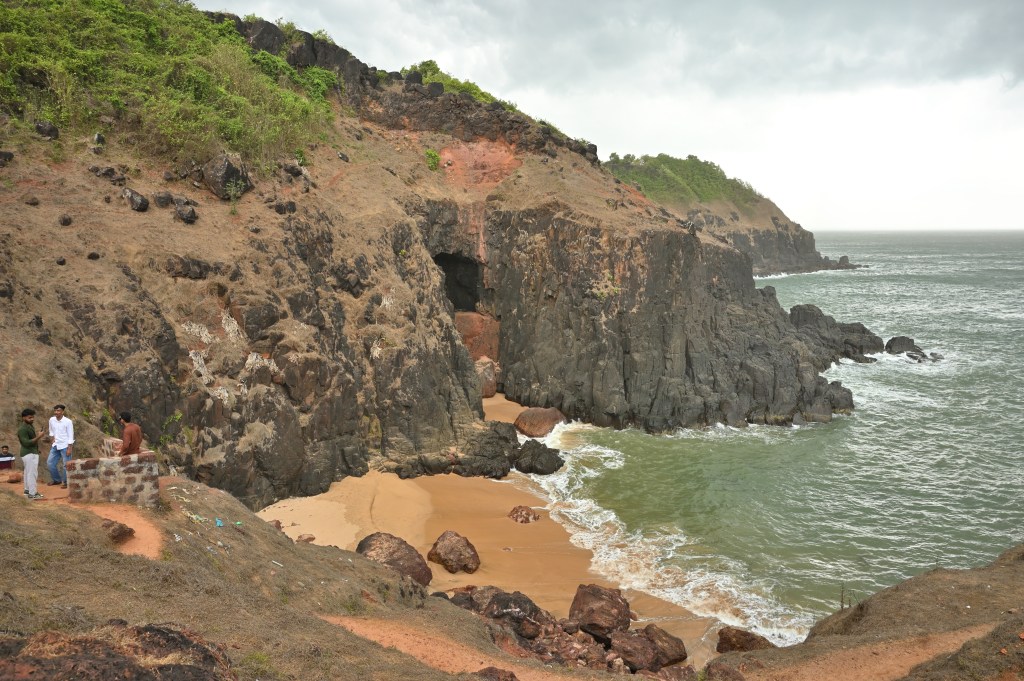
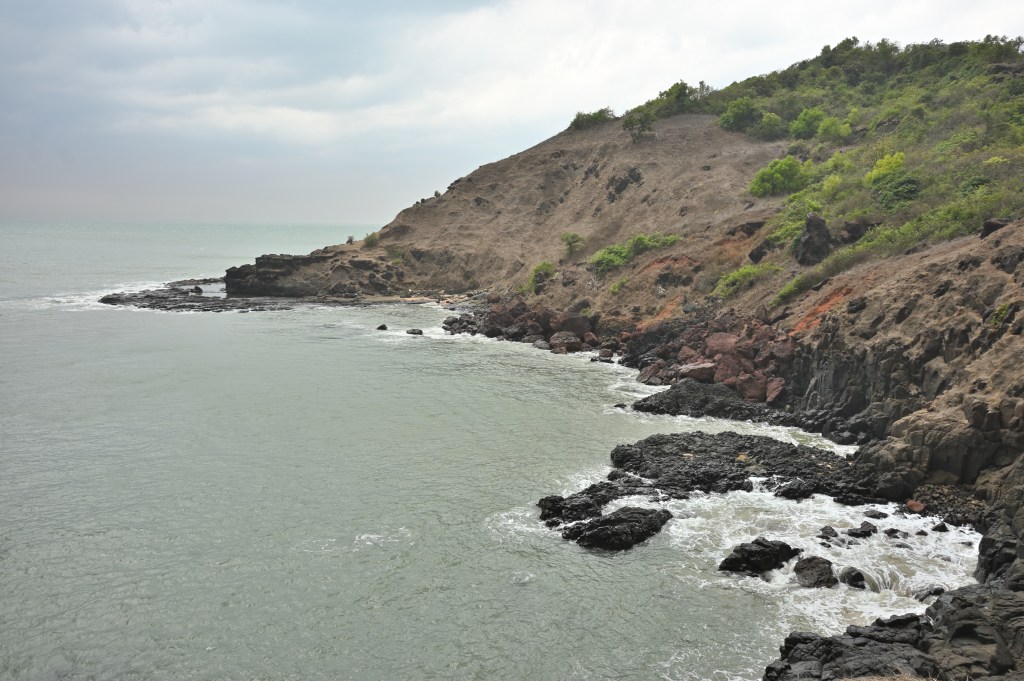
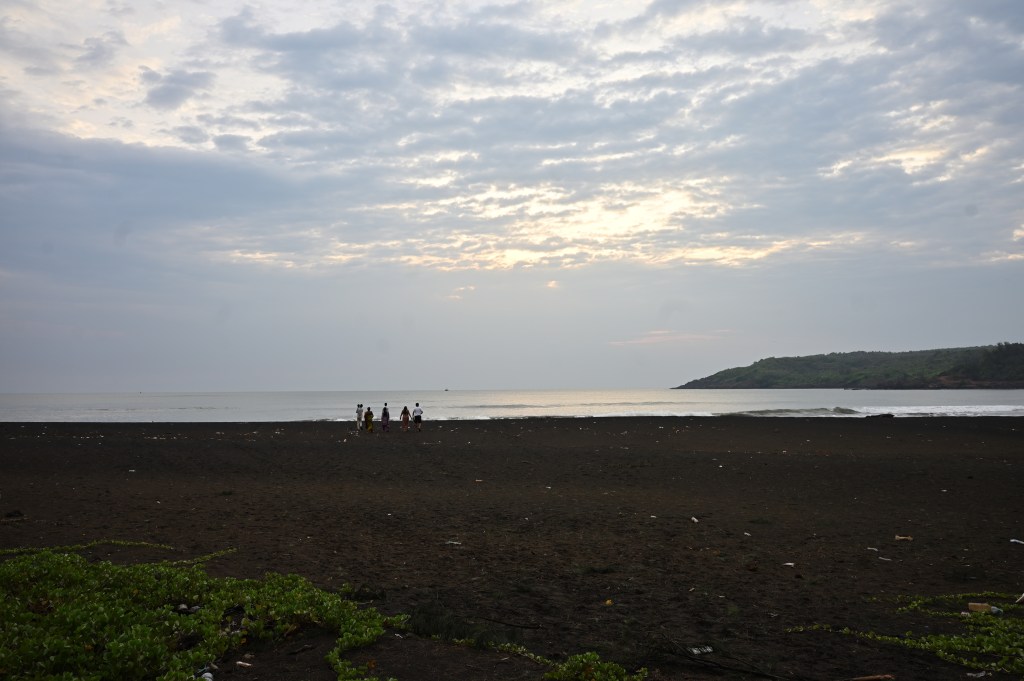
The more one sees of Konkan, the more one falls in love with the place. It is truly the land of abundance- from the mountains to the sea, its towering cliffs, its rocky shores and crescent shaped beaches, its forts and its ports and of course, its food. After all, it is this very geography that imparts to the Alphonso its special taste. At the risk of sounding like a cliched tourist brochure that has been written by AI… one visit is not enough. You just want to keep going back.
But since this post is about mangoes, let me end with a verse by Amir Khusrau:
barsā baras vo des meñ aave,
muñh se muñh lagā ras piyāve.
vā ḳhātir meñ ḳharche daam,
ai sakhī sājan nā sakhī aam
“He Visits My Town Once A Year,
He visits my town once a year.
He fills my mouth with kisses and nectar. I spend all my money on him.
Who, girl, your man? No, a mango.”
Nothing more to add.

