I’m still on Day 2 of my trip, but this is Part 3 and another memorable experience also unrelated to mangoes! Seriously, this was meant to be a ‘Mango-Picking Tour’ but the second day turned out to have more experiences that had nothing to do with mangoes.
But first, one more word to add to my vocabulary- ‘arribada’. It’s Spanish for ‘arrival.’ But arrival of who? or whom? and where? from where? and why?? So, ‘arribada’ is the term used for the mass arrival of thousands of female turtles to particular beaches where each one lays hundreds of eggs in the sand. Then they leave (what’s the Spanish word for departure? Hmm…) and head back into the ocean. The eggs hatch after 40-45 days and all the baby turtles make their way to the ocean, thus continuing the circle of life.
And what does this have to do with Konkan? First petroglyphs, now arribadas- what about the mangoes?? For context, see map (here we go again…)
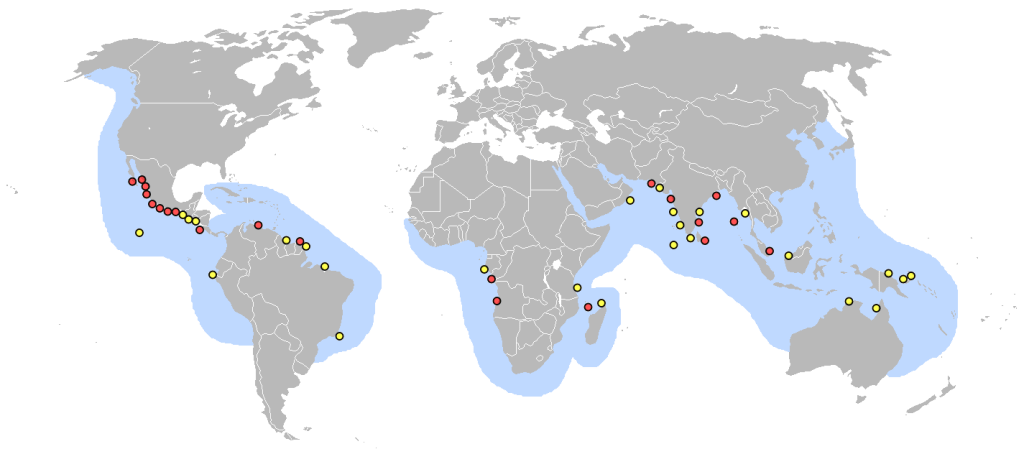
Zooming in for more context; sorry can’t resist. Once a teacher, always a teacher. We have this compulsive urge to make things as clear as possible.
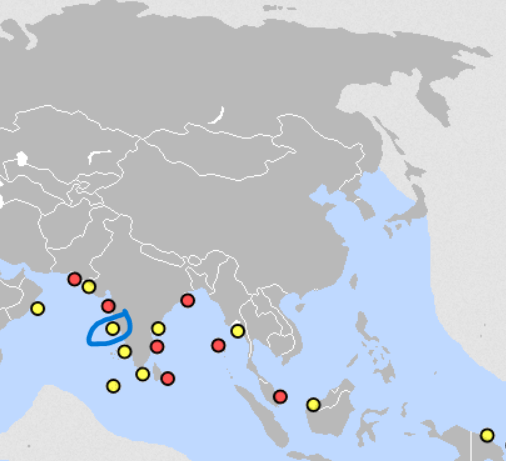
That yellow dot on the west coast; circled in blue, that’s the Konkan region which has some of the nesting sites of the Olive Ridleys. Which is where we were, ICYMI! Ok, somebody stop me!!
To resume, in my best teacher voice- here are some interesting facts about Olive Ridley Turtles:
- The most important one is that they are either a threatened or endangered species, depending on which part of the world they are found.
- They are among the smallest in their species but they used to be among the most abundant of sea turtles. At one time more than 10 million of them were found near the Pacific coasts.
- Their numbers have declined drastically thanks to human related activities like coastal ‘development’, excess fishing, mass killing of females and collecting their eggs for human consumption, pollution of the oceans and of course, climate change. Wow! Take a bow, humans. One more species endangered thanks to us. Damn, we’re good.
- Like all sea turtles, Olive Ridleys too are migratory. They swim long distances; either to breed/nest or to forage for food and more recently, to cope with their rapidly changing environment.
- They have been hunted for their meat, oil and skin and their eggs are collected for food, medicine and even used as cattle feed, In India! Yes, you got that right.
- Also in India, turtles or ‘Kurma’ are considered to be the second incarnation of Lord Vishnu, who took on the form of a giant tortoise and supported the Mt. Mandara on his back.
- Olive Ridleys are open sea turtles and have been seen up to 2400 miles away from the coast. During nesting season they move closer to the shores.
- The temperature of the sand, the local topography and changes in season- these factors influence not just the choice of nesting site but also determine the gender of the hatchlings! Something known as known as temperature-dependent sex determination. In sea turtle nests, warmer eggs produce females while cooler eggs tend to be males.
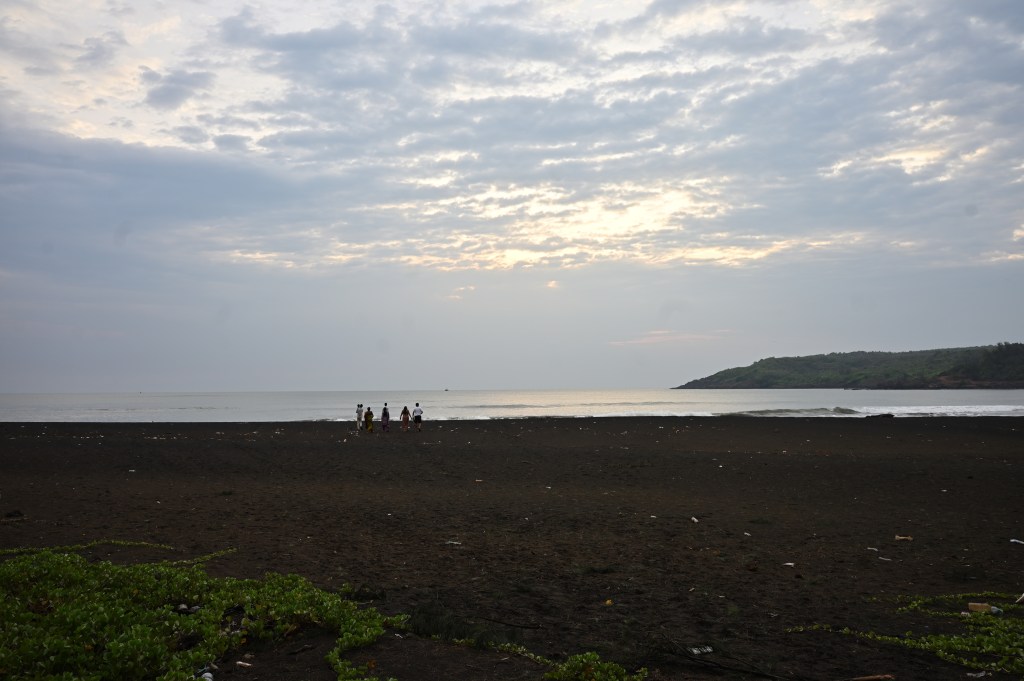
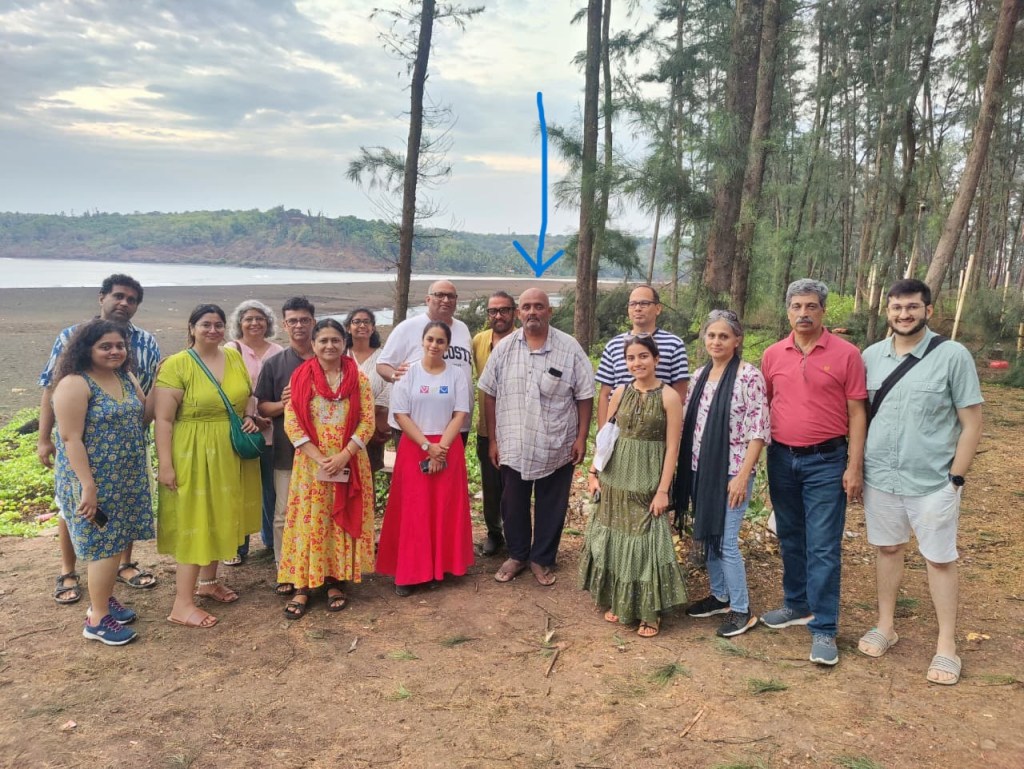
Our group visited a small beach in Ratnagiri district which was used a nursery for the eggs of the Olive Ridleys. This is part of a community conservation project which involves the local villagers in the task of protecting the eggs from predators (both human and non-human), safeguarding them till they hatch and then finally releasing them into the ocean.
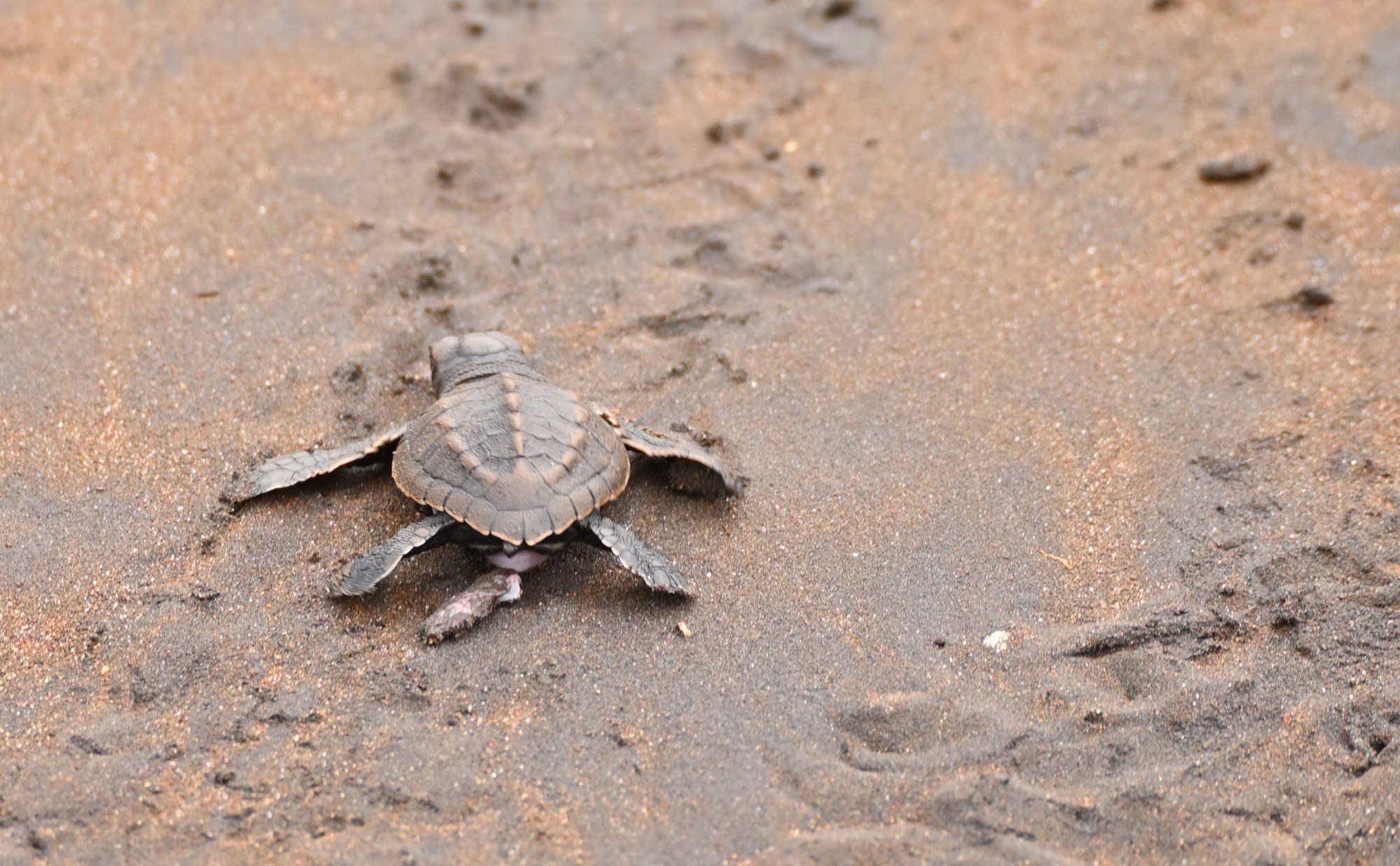
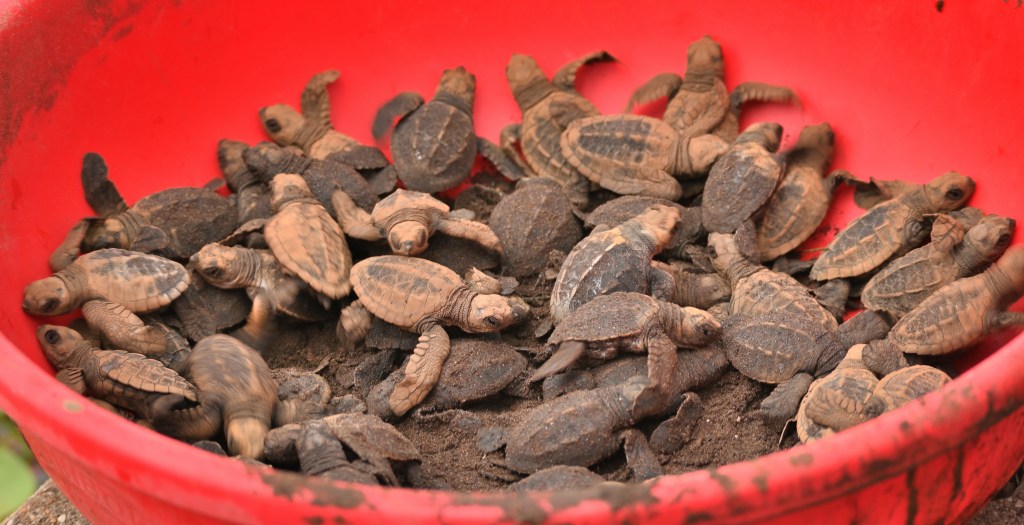
We were extremely lucky that day because there was a batch of almost 100 baby turtles ready for release into the ocean. One look at them, scrabbling around in the plastic tub, climbing over each other to find their way out was enough to tug at our collective heartstrings. They were so tiny, so vulnerable, so defenseless. As our local expert informed us- female Olive Ridleys have no maternal instinct. They simply dig holes deep on the sand, lay their eggs, cover them well with more sand and return to the ocean. The welfare of their future offspring is left to Mother Nature!
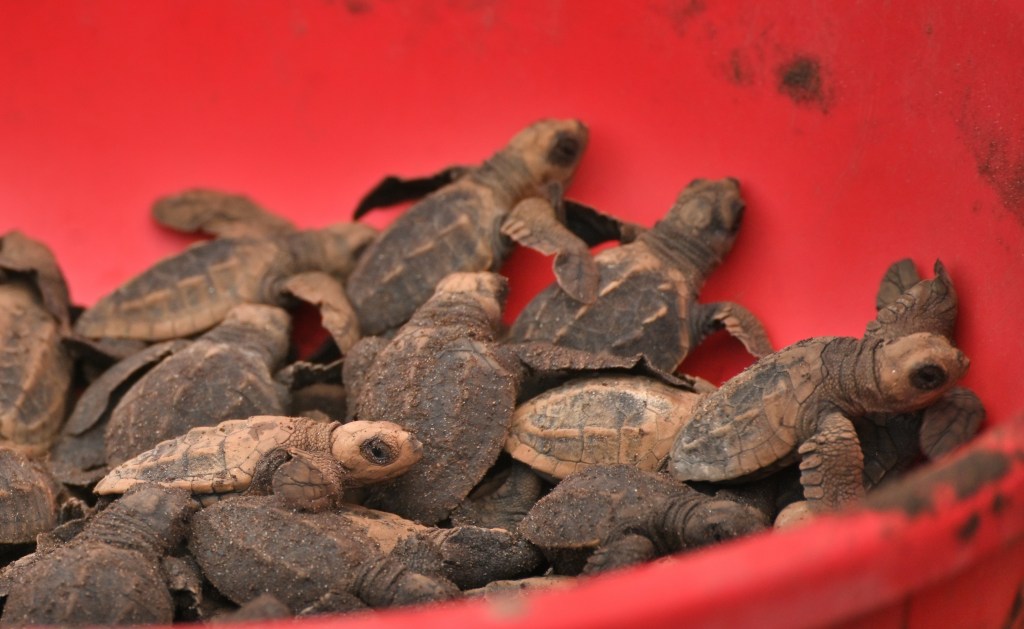
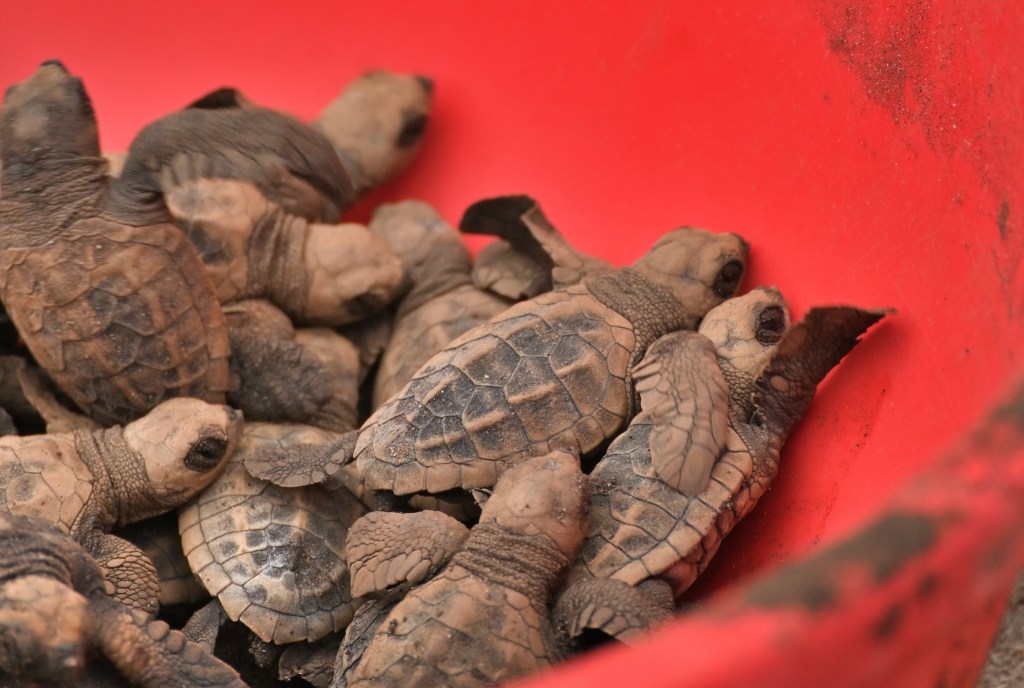
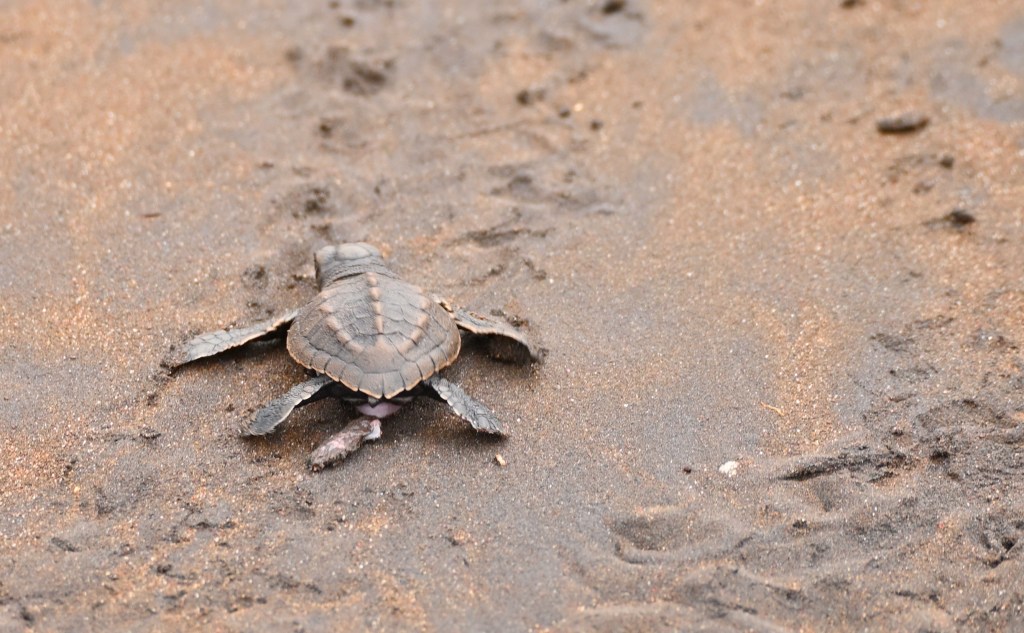
We were led to the beach and one of the locals drew a line in the sand, close to the water. We were requested to not cross that line once the hatchlings were released, since the waves sometimes knocked them back and they risked coming underfoot. And then the babies were placed on the sand and we watched as they unerringly began to crawl towards the water. Some were swept away within seconds, as the waves gathered them up and took them along. Many others were turned turtle as it were; but managed to regain their balance and continue on their path. It was a memorable and stirring sight.
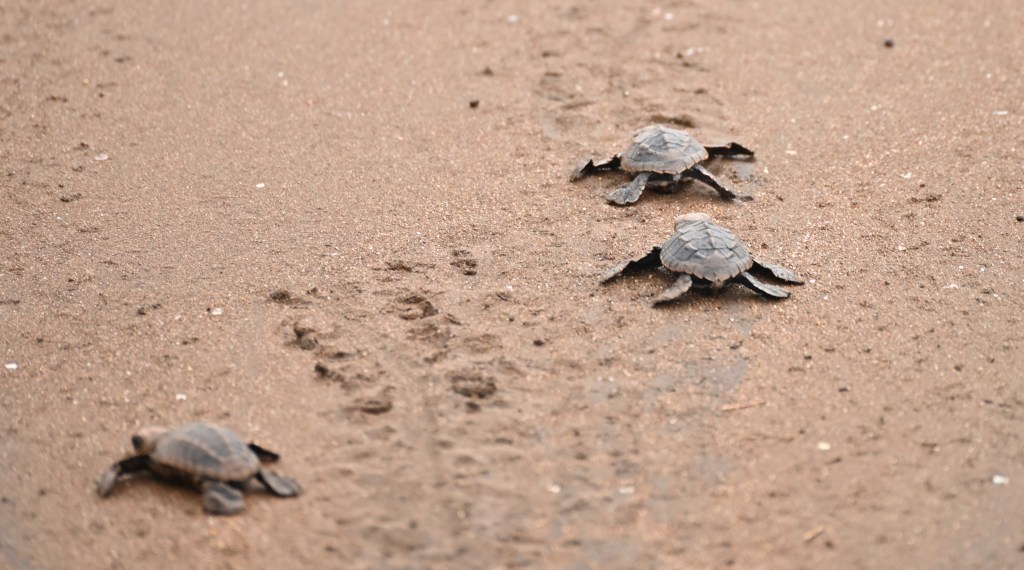
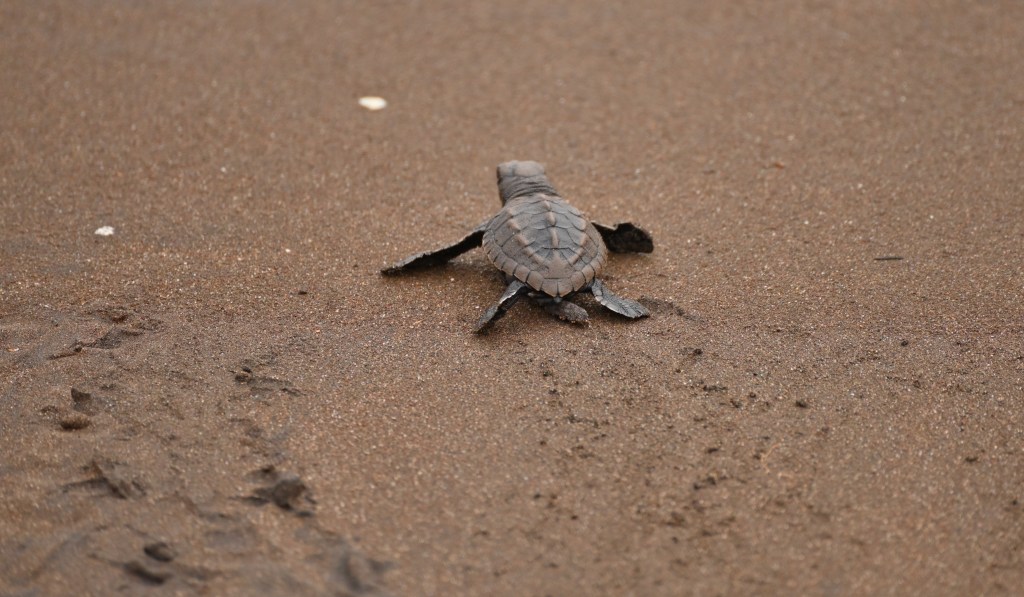
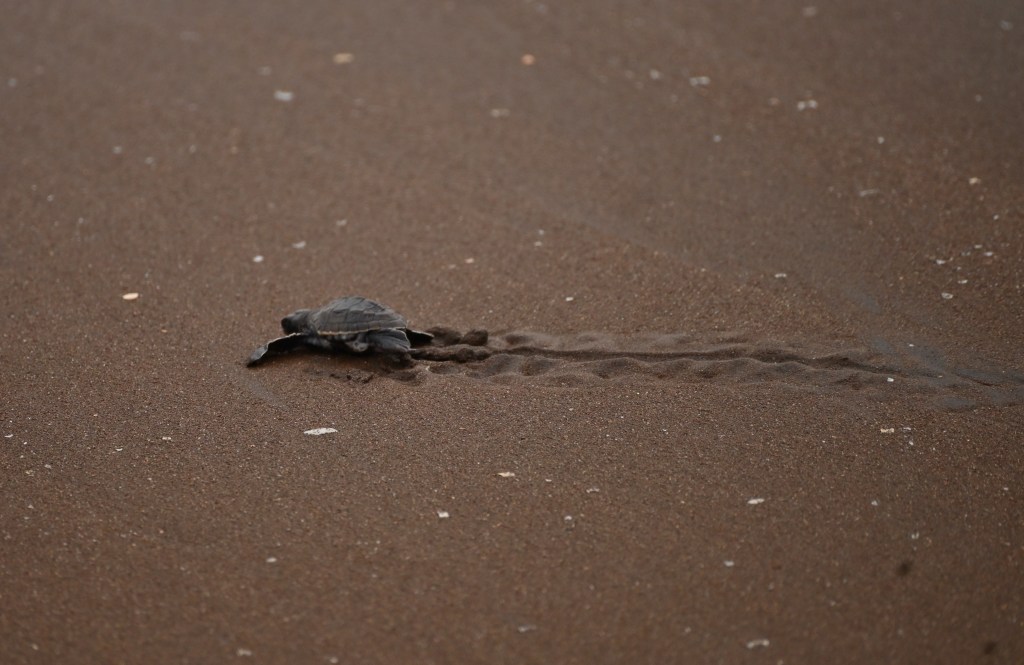
One final very fascinating fact about these turtles: Females return to the very same beach where they were born, to lay their eggs; using a built-in geomagnetic compass that helps them navigate the Earth’s magnetic field. It’s almost unbelievable, but the location of their birth is imprinted in their minds. And this is why it is important for the hatchlings to make their way across the sand to the sea. So that they can return to the same beach to nest. Incredible!
The sun was beginning to set as we slowly left the beach and made our way towards the bus. It had been a humbling yet awe-inspiring sight. From the past to the present- from the land to the sea- the petroglyphs that went back 40 thousand years to the newly hatched baby Olive Ridleys as they went forth into an uncertain future, fraught with danger. And yet, some of them will survive, return to their ‘natal beach’ to nest and the circle of life will continue. As it as been for millenia. Amen!