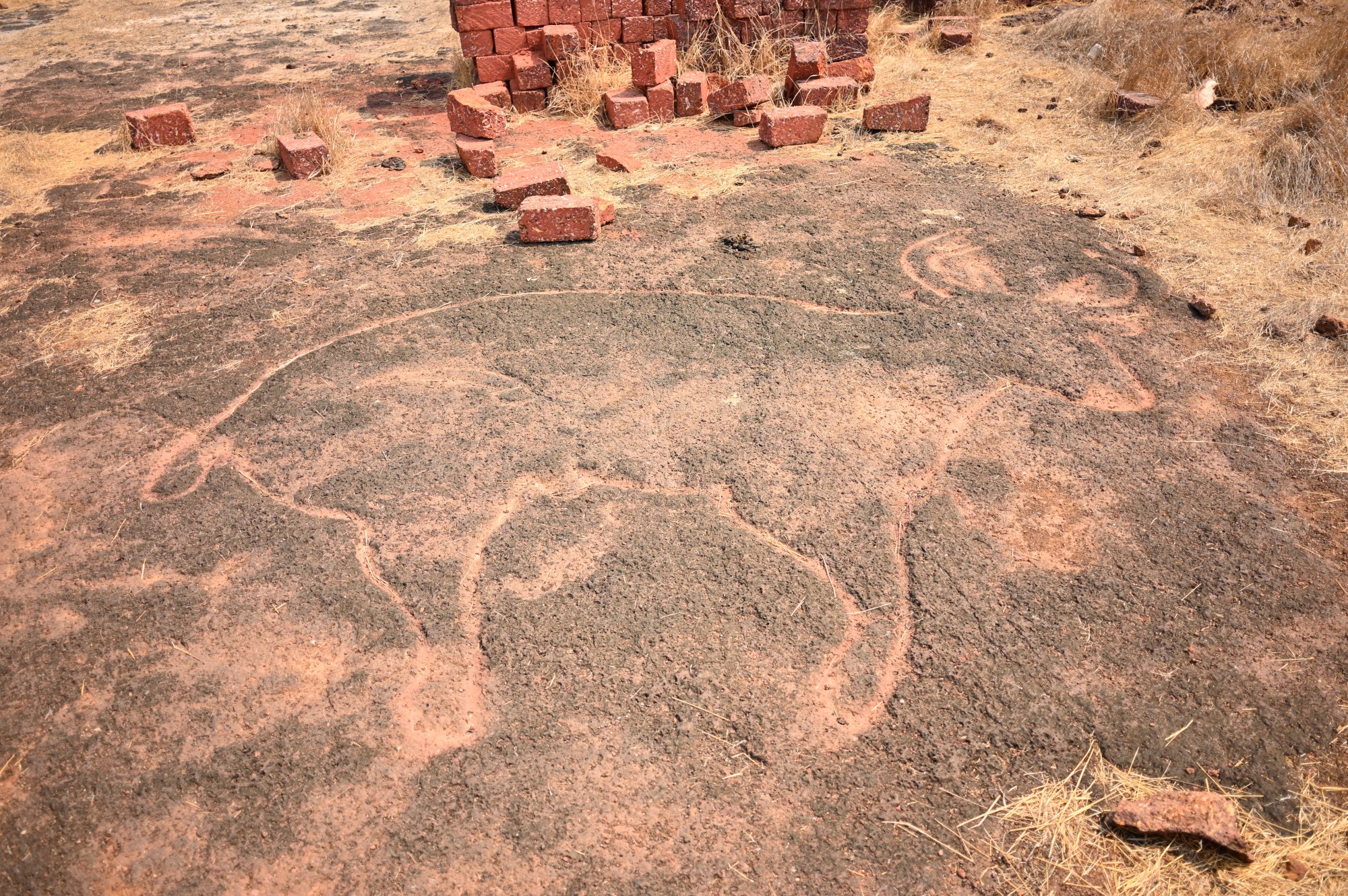
We learned a new word on day 2- petroglyphs. Till then, we had been having visions of mango orchards and mango trees and mangoes ripe and sweet or mangoes green and sour. But we were told that the first item on our itinerary of the day was -Petroglyphs. Clearly travel not only broadens the mind, it also expands the vocabulary.
A hurried Google search informed us that “A petroglyph is an image created by removing part of a rock surface by incising, picking, carving, or abrading, as a form of rock art. The term generally refers to rock engravings of ancient origin, often associated with prehistoric peoples.” Hmm… curiouser and curiouser. Prehistoric rock art in Ratnagiri?? That’s the first time we had heard of the three being mentioned in the same sentence. However, Wikipedia reliably informed us that “Petroglyphs have been found in all parts of the globe except Antarctica“
That did it! Mangoes receded to the back of our minds and were replaced by Petroglyphs. This looked like becoming a completely new experience. But before I wax eloquent on the rock art that we saw; some context. Usually it’s maps but this time it’s a Timeline!
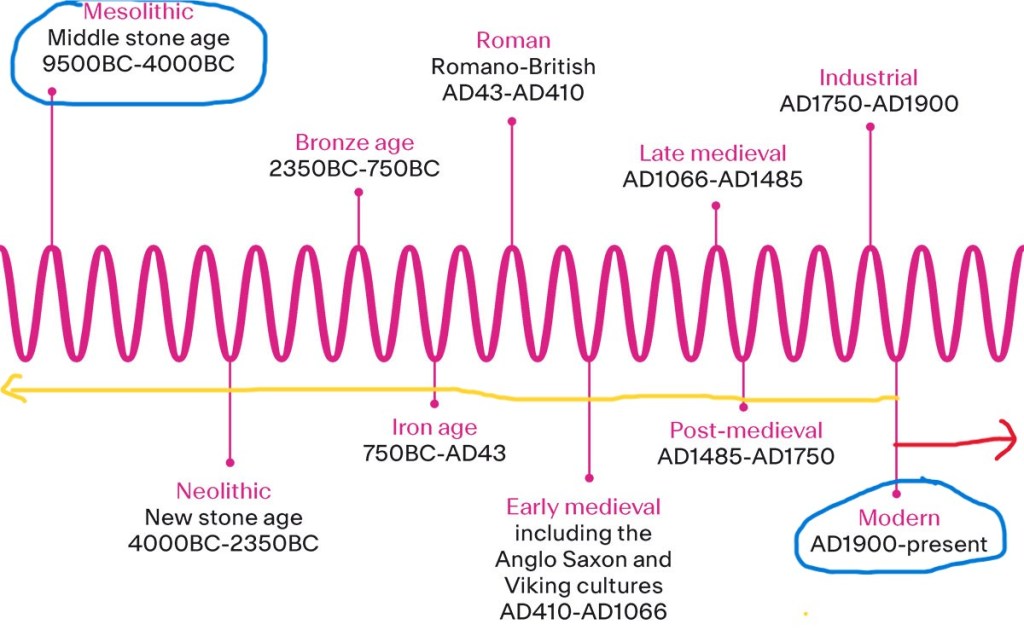
Some more context-
The petroglyphs of Konkan were discovered quite by chance in the 1980s. A group of amateur historians, archeologists and nature enthusiasts came across strange and unfamiliar patterns in the laterite plateaus of the region. What was remarkable was that these designs were not on standing rocks or walls of caves, they were etched into the stones of flat hilltops. They met villagers who knew of their existence but were unaware of what they represented. The villagers thought of these carvings as a kind of legacy from their ancestors and accorded them due reverence. Some even attributed mythological significance to them.
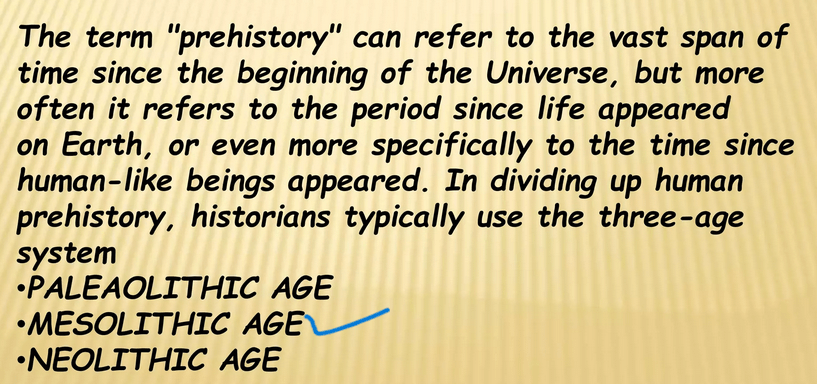
Once the explorations became more systematic, several other samples of rock art were found. Excavations began and stone tools from the Mesolithic age were uncovered. Many mysterious geometric patterns were found, along with those of animals that could have been prehistoric versions of the present day rhinos, hippos, elephants and even tigers. Archeologists began looking for evidence of the people who made these drawings- the kind of society they lived in and how they survived.
As we stood on that plateau under a blazing hot sun, I couldn’t help but wonder the same. Who were those people? And why had they made those carvings in stone? Was it their version of taking pictures? Keeping records for the next generation to find? Is this how they spent their time in between hunting and foraging for food? How did they even make those patterns in the hard rock! It was an eerie feeling to realise that this rock art dated back to nearly 40 thousand years. And it had survived. We don’t know if our planet will even survive till the next century!
On reaching home and after some digging around on the internet, I came across images of tools from the Mesolithic age. They were made of animal horns and tusks. Some were made of stone, wood or bones. None of them looked capable of carving designs and complicated patterns in hard rock. And yet, there they were, for us to marvel at and wonder.
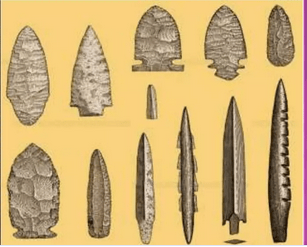
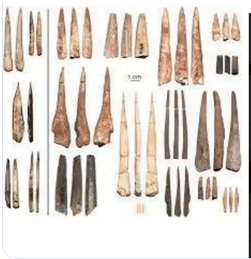
Till date around 1200 of these etchings have been discovered in the Konkan region. Who knows how many more there could be. And whether they will lie hidden under soil and stone for a few more centuries. Or will they be ruthlessly dug up from their resting place and blown to pieces for the noble cause of ‘development’.
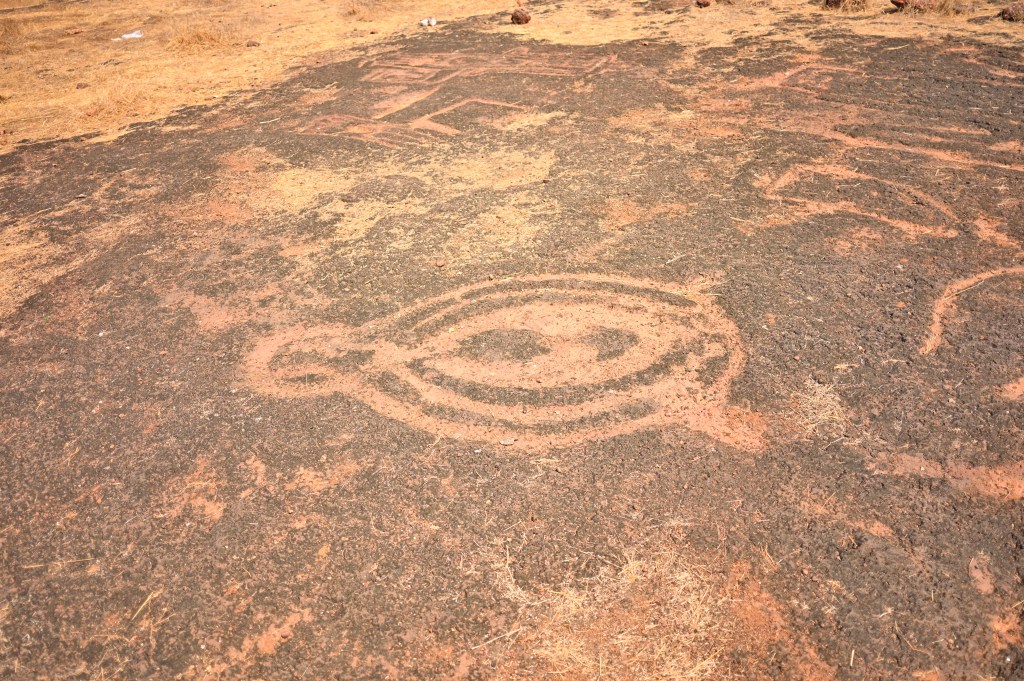
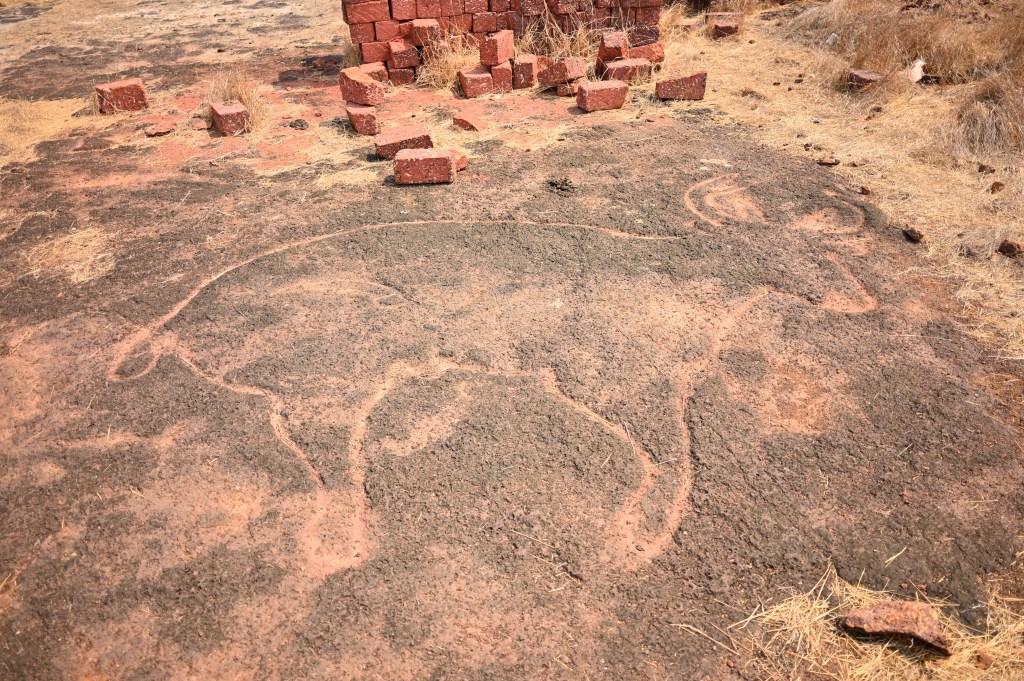
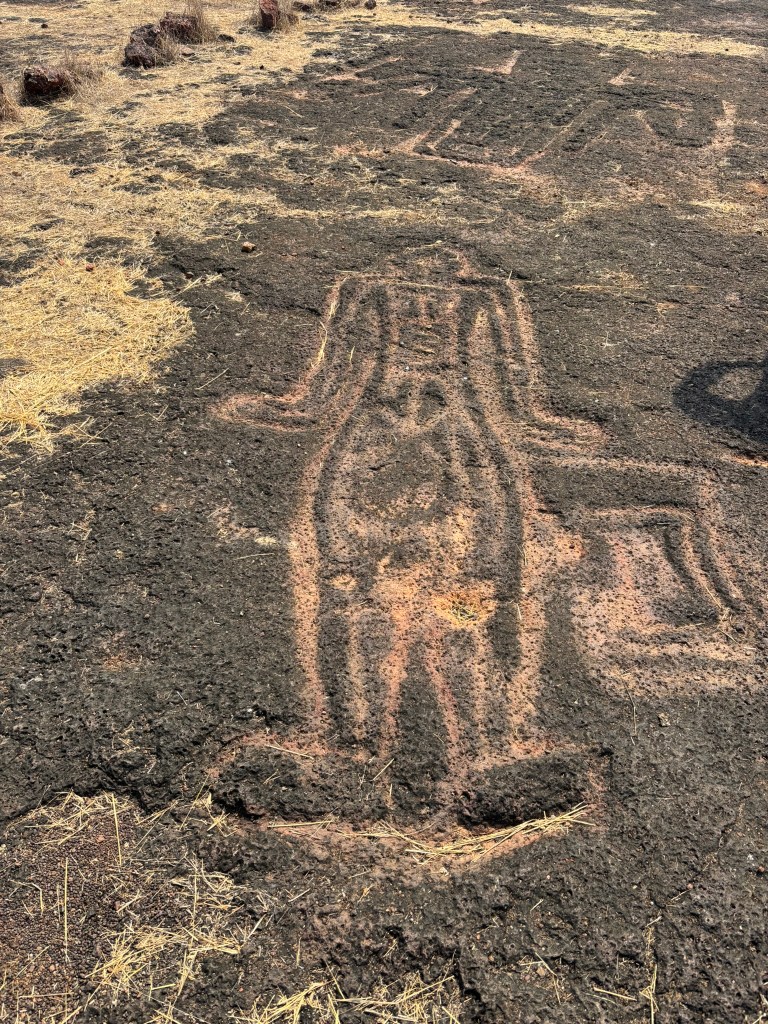
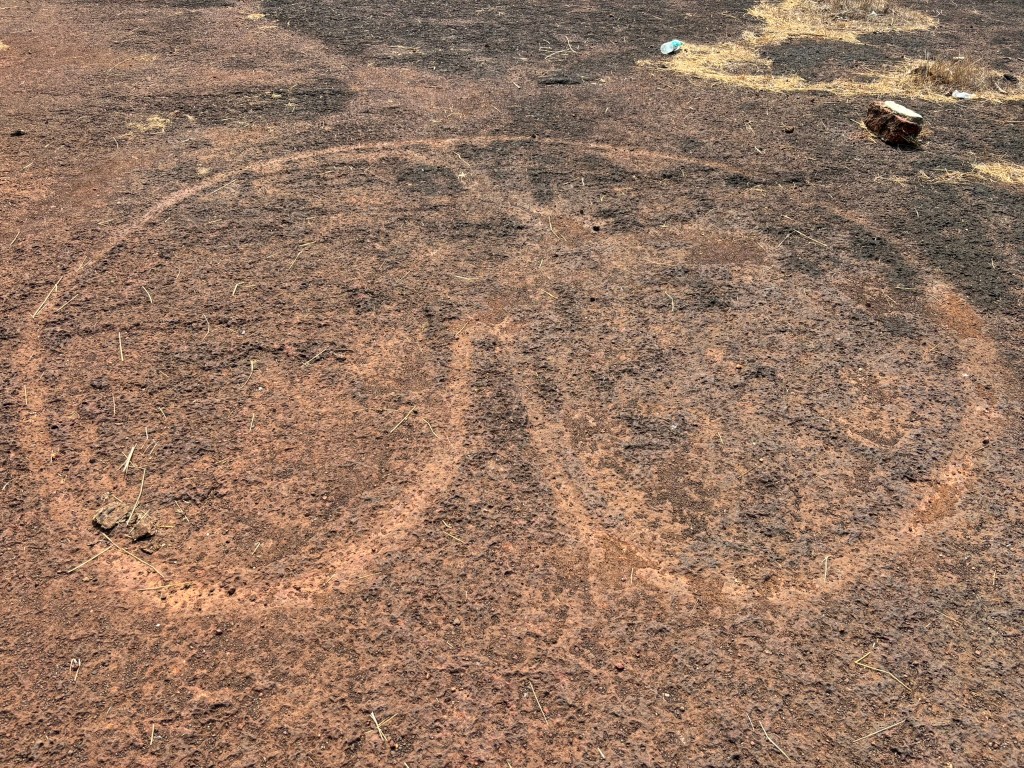
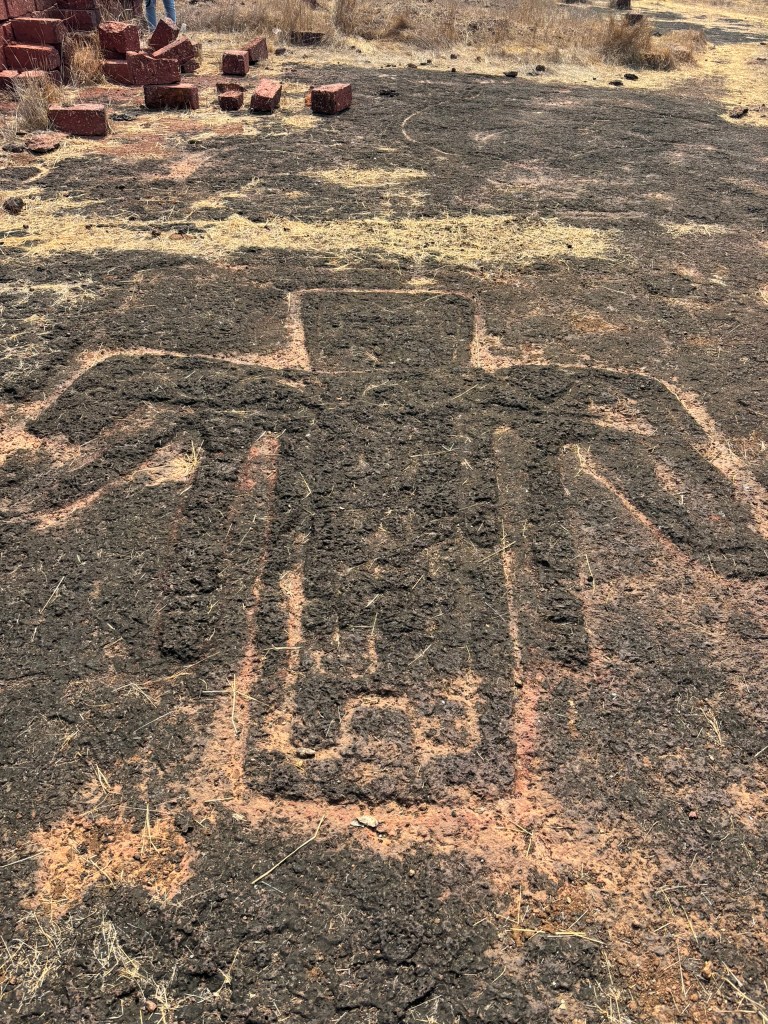
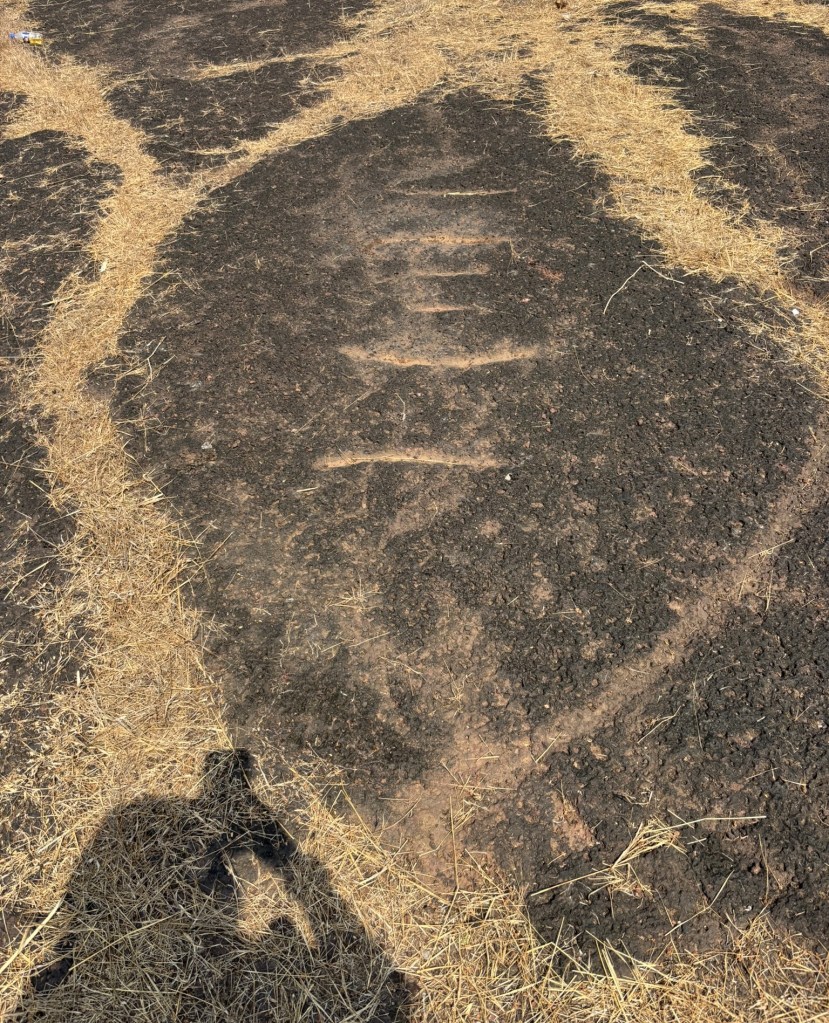
As can be seen, some of the patterns have sand sprinkled around to fill up the groves and protect them from being further eroded by the elements. These petroglyphs stirred our imagination and interest to such an extent that as we drove around the region; our eyes kept searching the landscape for sites where more of these mysterious patterns lay hidden, waiting to be discovered.

