In Gratitude.
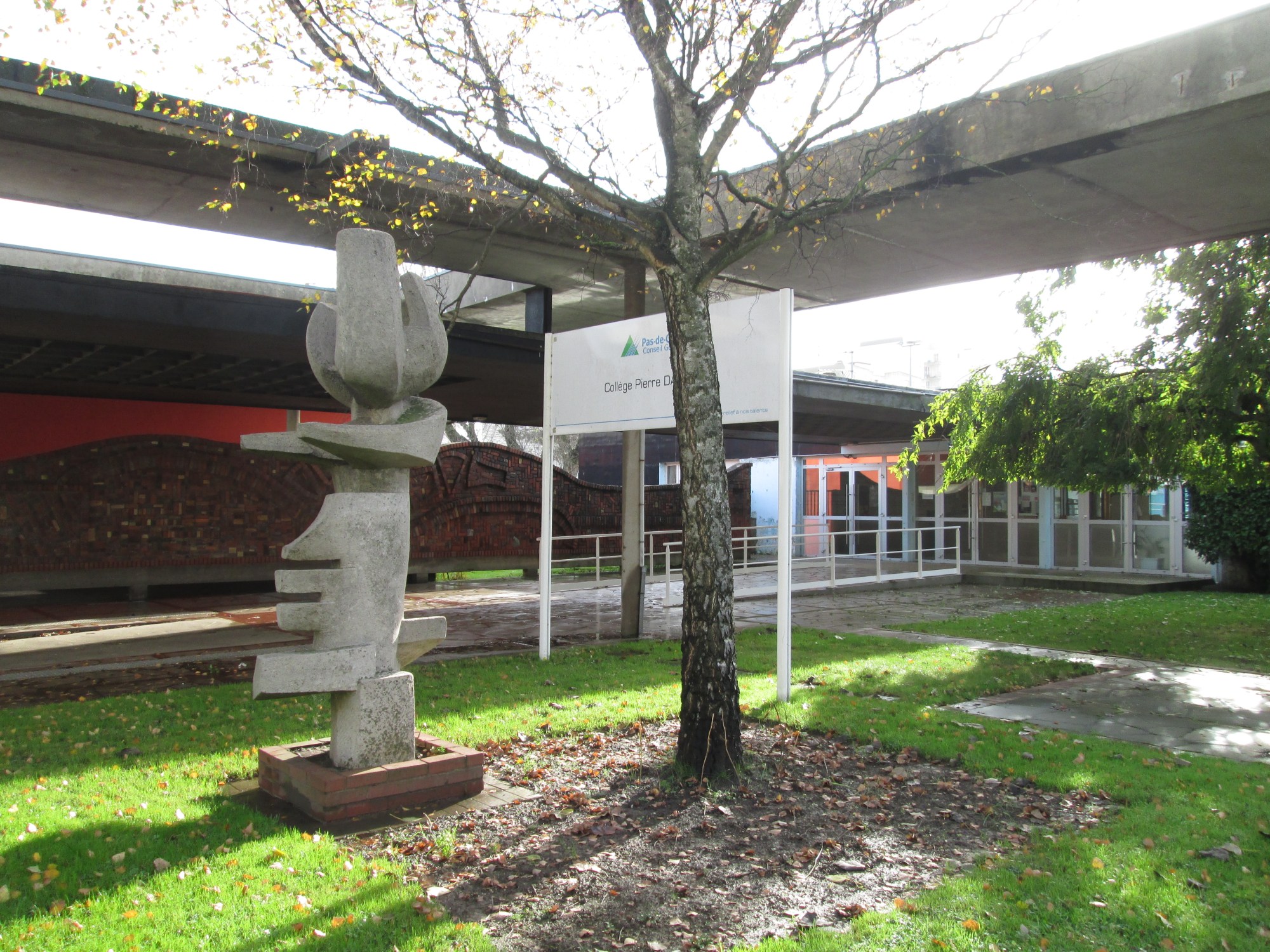
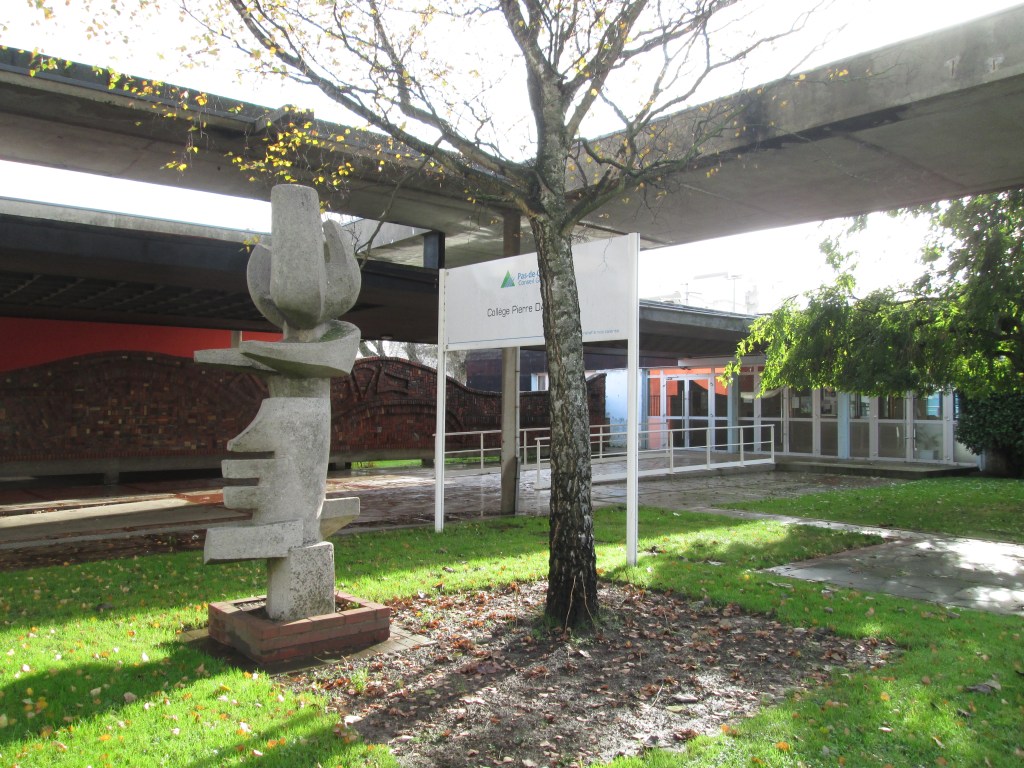
The year was 2016, the place was a secondary school in a picturesque town called Boulogne-Sur-Mer, in the north of France. I had accompanied a group of students from the school where I was working, on an exchange program; and as part of the program, we were attending classes in a secondary school there.
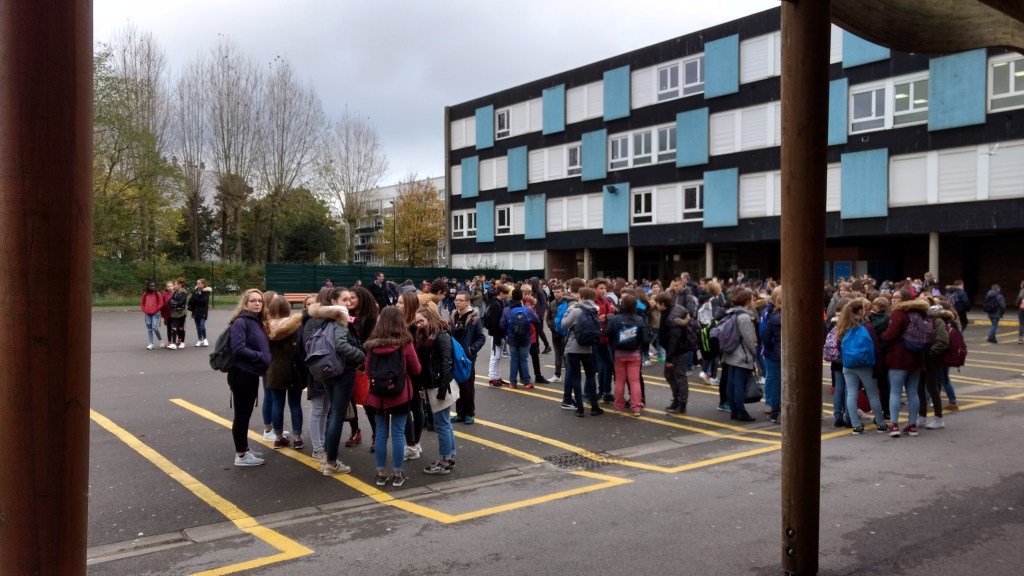
The teacher invited me to stand in front of her class and take questions from her students- about India, our school and so on. I was happy to agree. One of the questions was about the language we spoke at home. After all, I was with a group of Indian students who were learning French but were very comfortable communicating in English. It sounded a bit complicated! When I mentioned that most of us spoke at least two languages apart from English, there was a murmur of surprise. Which surprised me too, because this is something we take for granted. Their teacher asked if these languages had their own script, to which I replied that they very much had their own scripts and that only added to the surprise and awe. “C’est très riche!” she exclaimed a few times.
That incident stayed in my mind and from then on, I made it a point to mention this to every new batch of students who opted to learn French. “Most Indians are bilingual, we speak a minimum of two languages and can understand at least one more.” This was the hook on which I would place my next point- that French was going to be added to that list and how learning a new language would help them understand their own language better and even discover interesting things about it.
We’re in 2026 now and the scene has started looking a little different. Foreign languages are being slowly phased out of most schools and Indian languages are to take their place. There’s a certain irony about it- because when I was in school, I opted for French as soon as I got the chance. I had struggled to wrap my mind (and tongue!) around the regional language without much success. French was my escape route and I grabbed it with both hands.
In the late 1970s, foreign languages were not taught in schools the way they are now. At the end of the two years that I spent learning French, I could spell the most complicated of words with accents, rattle off the conjugations of all the irregular verbs in all the tenses- right from ‘le présent’ to ‘le passé historique’, I knew all the rules and their exceptions, but I COULDN’T SPEAK A WORD OF FRENCH! Except for the nursery rhyme ‘Frère Jacques’; I don’t think my classmates and I could say anything in French other than ‘Bonjour’ and ‘Merci’ at the beginning and end of each class.
Thankfully the next seven years helped me transition from spelling French to speaking it and at each step I fell more and more in love with the language and wanted nothing else except to teach it so that others could appreciate it as well.
Which brings me back to my ‘Point de Départ’ – school. Incidentally ‘Point de Départ’ was also the name of my first textbook! In the course of my teaching life spanning over 30 years, I have taught students of varying ages and at different levels: from 11- year olds to pre-teens, from adolescents to under-graduates and also adults. And here’s where I stick my neck out and say that- in my experience- teaching school students was the most enjoyable and most enriching phase of all. Which does not mean I found older learners or adults difficult or more challenging to teach. It’s just that there is an openness and an enthusiasm among younger students which makes the teaching experience so rewarding. There is the phase when they are in their terrible teens and everything is ‘Meh’ or ‘I don’t care’ and ‘Whatever’. But even in that group there will be some whose presence makes one’s efforts worthwhile.
To prevent myself from rambling on, I have put together a list of reasons why I am grateful for having had the opportunity to teach the language that I love; to school children.
- It taught me how to break up concepts into smaller components so that I could place them before an 11 year old who did not know what an auxiliary verb is. Or a tense. Or a subject! And the deeper I delved into the basics of grammar, the better I understood how it functioned. It was like seeing the inner mechanics of a watch being put together to work in unison and it was fascinating. This became my go-to mantra when I was teaching more advanced grammar topics like ‘les pronoms relatifs composés’, ‘le gérondif’ and ‘le subjonctif’, to name a few. Step one was always: how do I break this up into smaller, more comprehensible bits.
2. The next step was to explain all this to a class full of 40 kids without the help of YouTube videos, PPTs and even colourful text books. At the risk of sounding like a dinosaur, those were the days of no internet, few textbooks and fewer resources. The teacher was the audio and the video, either with or without the animation and sound effects. Since I could not draw even stick figures or sing to save my life, I had to rely on actions and expressions. This is where having a class of youngsters helped. They participated in role play, miming and group activities with gusto. It made my work easier and they had fun. Think ‘Alouette!’ Another lesson learnt.
3. With older children who didn’t want to move from their places and rolled their eyes if asked to change seats, a change in tactics was required. This is when I hunted around for word games and used them to stir up some interest among those hard-to-impress teens. I taught myself to modify quizzes which could be used in class and the text book too became fodder for spelling competitions and hangman. It also gave me a kind of sadistic glee to watch the students leaf through the text in search of words for dictation and material for quiz questions.
4. In the days of pre-internet and scant resources, it wasn’t always easy to find interesting material about the language, the culture and history. These kids were not likely to relate to the wit of Molière or the history of Bourbon kings (unless a guillotine was involved!). But we persevered. I began to discover France through their eyes. We had class projects with tidbits of information and illustrations by the ones who had a flair for drawing. Nothing was too trivial or unimportant and their boundless energy and enthusiasm carried me along. This was in the late 1990s but all these lessons stood me in good stead when I returned to teaching French after a gap of more than 10 years.
5. The years between the arrival of the internet and the subsequent takeover of schoolwork by the trend of ‘cut-copy-paste’ and now Chat GPT- those were The Wonder Years. The wealth of resources that opened up at the click of a mouse was mind-boggling. It was like stepping into Ali Baba’s cave and we didn’t need to say ‘Open Sesame’. Text books too decided to come out of their stupor and became more student-friendly, better formatted and more colourful. But we teachers were happy making our own lessons and worksheets. We trawled the net for suitable material, did a whole lot of copy-paste ourselves, (heh heh), and refined, refreshed and rejuvenated our own learning of years ago. Little did we know that all these skills would come in handy during the pandemic and online classes.
6. The last is something all school teachers of all subjects will relate to- the feeling when you explain a concept to a classroom of children and watch their expressions change from befuddlement and confusion to dawning enlightenment and comprehension; that’s a high that cannot be beaten. We French teachers get accustomed to several other expressions as well: suspicion when yet another irregular verb is introduced, relief tinged with suspicion when we assure them that there are ‘no exceptions’ this time (doesn’t happen very often!), resignation when they are deluged with all manner of pronouns, face-palm when faced with all those inexplicable silent letters, doubt and disbelief when I encourage them to guess the meaning of a word and they get it right; I could go on… These are some of the moments I miss the most after retirement.
As French bids a quiet ‘Adieu’ to several schools, generations of French teachers will now have different experiences, all of which will come with their own learnings, highs and lows. Fewer students will chorus “Bonjour, Madaaame!” and “Bonjour et Merci, Madaaame!!” there will be fewer ‘bleu, blanc, rouge’ streamers decorating the bulletin boards on 14th July and all those Asterix comics will lie unread in the shelves of the school libraries.
But those of us who were fortunate enough to spend a good part of our teaching lives listening to “Bonjour Madaaame!” will have a lifetime of memories to look back on.
Adieu- français, langue étrangère. You will be missed. And thanks for the memories!
P.S A propos the regional language that I fled from learning in school? Within a few years of leaving school, I was able to speak and understand it quite well. Without the use of a textbook! (You get my point?)

